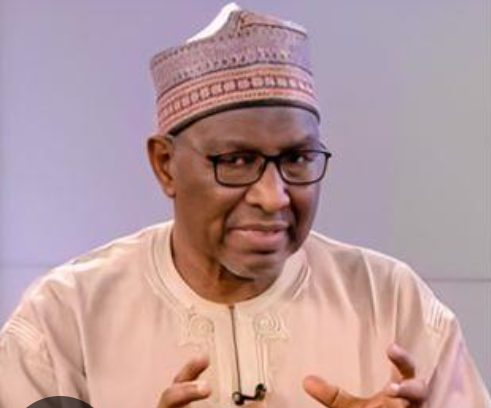
Usman Bugaje
•Says Tinubu is a man of ideas, but…
•’Tax bills handled in a suspicious manner’
The Tax Reform Bills recently sent to the National Assembly by President Bola Tinubu have continued to generate reactions from across the country. In this interview, a former National Secretary of the defunct Action Congress (AC) which later became Action Congress of Nigeria (ACn) and then one of the parties that formed the All Progressives of Nigeria (APC), Dr Usman Bugaji, speaks on the bills that have been opposed by many high profile people from the North among whom are state governors. Bugaje also speaks on what is wrong with the Nigerian political culture among other issues in the polity. He calls Tinubu a man of ideas, citing the interactions with him during his time in the ACN leadership, but says he is surrounded by incompetent people as President. Excerpts:
By Kennedy Mbele
You once described President
Bola Tinubu as a man of ideas surrounded by very incompetent people. Do you still have the same opinion?
Well, if this is a session to assess the presidency of President Bola Ahmed Tinubu, I think we will need more time to do that. But for all I know, and for all that many Nigerians remember, President Tinubu is associated with the suffering they have faced since he assumed office. Yes, I used to know him to be a man of ideas because we used to engage. If you remember, I was the National Secretary of the Action Congress, AC, which later became Action Congress of Nigeria, ACN. When I was serving in that capacity, I had occasions to interact very closely and consistently with him. But, I have found out that all that have evaporated; I don’t see those ideas anymore. I don’t see the dynamism, I don’t also see the progressiveness. What I see is somebody who is almost turning into a monarch. In his last (media) chat I watched, if I am correct, he talked about tax bills being sacrosanct. How can tax bills be sacrosanct? These are bills before the National Assembly, even though not properly presented to them because when the Senate presented it, it was not in the Order Paper, and you can’t discuss, by parliamentary rules and procedures, any matter not in the Order Paper.
So the idea was to smuggle in the bills and this idea of coming through the back door creates a lot of suspicion. I can go on but let me just make a few points. This is not just about President Tinubu, it covers almost all our political leaders. The leadership that democracy produced in the last 25 years is characterized by three things and unless you capture these three things or you address these issues, it is very difficult for anybody,, no matter how well intention, to… One, the fact that we don’t even have an appreciation of the future, when government spokesmen speak or Ministers address us about issues of their ministries, they don’t seem to have the figures.
They don’t seem to have idea of previous situations. I would say there is no vision. We can’t see far. Let me just use one or two things to illustrate that. One, in 2023, the grains deficit, just grains; food that Nigerians eat, the deficit, that’s the difference between consumption and actual production, was about 30 million metric tons. Since then, we have had floods in Borno, Jigawa, Taraba, Zamfara and so many other states. Insecurity has escalated, and that must have affected our grain. So what is our deficit this year and what are the measures to address it? If you can’t have food, you can’t have peace and you can’t talk about reforms and taxation. I don’t see any conversation that demonstrates a proper understanding of the issues in agriculture. So, the government, not just the APC administration; even the PDP and other political parties ruling states, don’t have appreciation of the future; still they speak about the problems of this country, that they want to fix it. I don’t see a proper understanding of the problems and that should be the starting point.
Again, in education, we did a rough survey and found out that nearly 60% is students, at least in the northern tertiary institutions, across universities, polytechnics, colleges of education, colleges of legal studies, are not able to return to school because either they can’t pay their registration fees or they have paid, but cannot pay for transport or that they have paid for both registration and transport but can’t find food they will eat when they get to the school. When I drew attention to this ugly trend, I was quite happy that the Minister of Education was there and he picked interest in that. He invited me and we had a very good discussion. But, the point here is that government doesn’t seem to be aware of these facts. Even in the Students’ Loan Scheme that they started, it’s not really working; there is no monitoring and evaluation of the program. All these are matters that affect whatever policy and programme of government. And, these are things that are can be addressed.
The next point is that governance in the 21st century is Corporate Scientific Business. Corporate government is about the people, purpose and performance. I don’t see governance in this country taking that shape. A lot of the policies like the tax policy have no process. They may mean well or fair enough, but there were no sufficient consultations. For example, the National Economic Council, apparently, had not been consulted, they rejected it. Governors had not been consulted, they rejected it. Taxation is on the concurrent list, and the President is saying it is sacrosanct.
The bills are in front of the National Assembly, they have to go through the normal processes, and the President is beginning to behave like a monarch in a way. If you go back to the Constitution, you will find out that the constitution is arranged sequentially. The National Assembly always comes first, Executive comes second, and if you look at Chapter Two which is the fundamental objective of state policy, you will see the focus on these things. Therefore, how can the President speak of bills he is presenting to the National Assembly as sacrosanct? How? This issue of governance has a huge problem that we need to address if we want anything to work. The other point is that, basically, the political culture that is reigning contradicts the principles of good governance. Good governance is characterized by accountability, transparency and rule of law which is the act of following policies established by the Constitution and regulatory authorities. But, you will find out that in the political culture, the demand on the politicians or holders of political offices are not even allowing them to do their work. There is a huge demand for money and we have seen what have happened in this festive season. Ministers were found in Abuja spending hundreds of millions of naira on ceremonies; sharing money while 90% or more of the citizens could not feed. The last statistics I read has it that 33 million Nigerians are on the verge of starvation; that they will starve, in this country. These are the issues I think we need to be looking at.
Can you share with us some of the clauses in the Tax Reform Bills you are not comfortable with and how you think they can be addressed, or you want it scrapped completely and look for something else?
Now, the team that crafted this nearly 300-page tax reform bills, I have had to engage with Mr. (Oyedele) Taiwo, at least I shared a platform with him on this discussion. It doesn’t appear that this team really understands the society for which that policy is made. It looks very much like some comfortable professionals living in Lagos or Abuja. They have no idea of the consequences of what they are really proposing. Admittedly, there were attempts to soften or to make things easy for the struggling citizens, trying to eke a living in terms of taxation, but on the other hand, there are a number of major things that they have done, to create a kind of disparity within the state.
Even the bills do not define the most controversial issue of what is attribution and derivation. There are no definitions for these in the bills. And, when you use words like that in a bill, there is need to define them clearly. Part of the controversy is that they have not defined it. Everybody will define it in his or her own way and it is one definition against the other, we don’t know which one exactly is going to hold. My own thinking is for these tax reform bills to be thrown into the dustbin completely and then a (new) process started. I appreciate tax reforms. I think we should broaden the net because there are many people who are supposed to be paying tax that are not paying.
There are a lot of things that we are supposed to do. Sao Polo in Brazil, some 25 years ago, was a city that became almost the helicopter capital of the world because the elites could not drive their cars on the streets, they could only use helipads. They flew helicopters to the office, everywhere they went. We are getting there and that is the kind of appreciation which, to me, is the absence of governance because the team around him (Mr President), I do not really know what they are thinking about. They are out of touch with the reality. I feel these bills have no relevance to the current economy and economic crisis that this country is passing through. I would rather suggest we start a whole process that takes cognisance of the kind of economy we have, the challenges our country is facing and, therefore, craft something that can gradually pick the economy up and facilitate production in a way that will make this economy to begin to recover. Today, we are about 250 million in population and, by 2030, which is barely five years from now, we are will be 300 million, going by United Nations, UN, projections. If we have 30 million grains deficits in 2023 and we are not improving in our grain production, how do we feed the population of 300 million people in the next five years? How do we provide jobs and social amenities for them? These are some of the things our politicians should be discussing but I don’t see them doing that. They are busy partying, throwing money around, exhibiting excessive consumption and they don’t seem to understand the society they are supposed to be leading.
Twice have you said that President Tinubu is turning himself into a monarch. Don’t you think that the Constitution makes it possible for every Nigerian President to function as a monarch? Also, the National Assembly proposes to conduct a public hearing on the Tax Reform Bills. Are you optimistic that the concerns raised by stakeholders would be addressed at the public hearing?
Let me start with the Constitution. With all its perceived faults, the 1999 Constitution still has certain elements that can check the excesses of an executive. Like I said, in Chapters 1 and 2 of the Constitution, the sequence of the institutions of government start with the National Assembly. The National Assembly is powerful enough to check the President. It is just that we don’t have a National Assembly. We have groups of people who are just out there to make money. They have no idea of what their job is and they just go to their poor constituencies and share rice, palm oil, etc and nobody talks about that. If we continue like this, one day, we will just wake up to a riot. Yes, we need to address those weaknesses in our Constitution because, as it is now, we are not doing things properly. Coming back to the tax bills and public hearings that are going to be held, I think public hearing is what we should do but it will be better for President Tinubu to withdraw the bills and start again the process of consultation.
This is more likely to achieve the right kind of reforms than rolling out these particular bills. There will be robust public hearing, I hope, many people are preparing their reports. I am part of about three committees, so many things have been said, it is going to be quite robust, but why do we have to fight for things that should ideally be for the benefit of the country? There are better ways to do this thing. Like I earlier said, the government in the 21st century is a Corporate Scientific Business with rules and regulations. There are also best practices which focus on people, purpose, process and performance. If we go by those things, we will find things a lot easier.
This is what Singapore and China are using that brought them to where they are today. All the countries that have been progressing in the last 25 years have been using these best practices. But here in Nigeria, they have all collapsed. People just wake up to do things the way that pleases them. I feel this country has gotten to a point that we must own it. It is not a question of party or President Tinubu or anybody. We, as a people, should tell ourselves the truth, that this country is about to collapse and we all have to come out as citizens and work out what we can do to salvage our country. This country is of a great promise. It is the largest country in population in Africa. It is about the 3rd largest country after China and India. It has great potentials and has a great role to play in the world. Why should we allow it to be stunted? Why should we allow it to be where it is today? We have the capacity to turn things around. Why can’t President Tinubu facilitate getting people to contribute in a very amicable manner that would raise the country again? The credit will go to him if he succeeds in doing that.
Disclaimer
Comments expressed here do not reflect the opinions of Vanguard newspapers or any employee thereof.