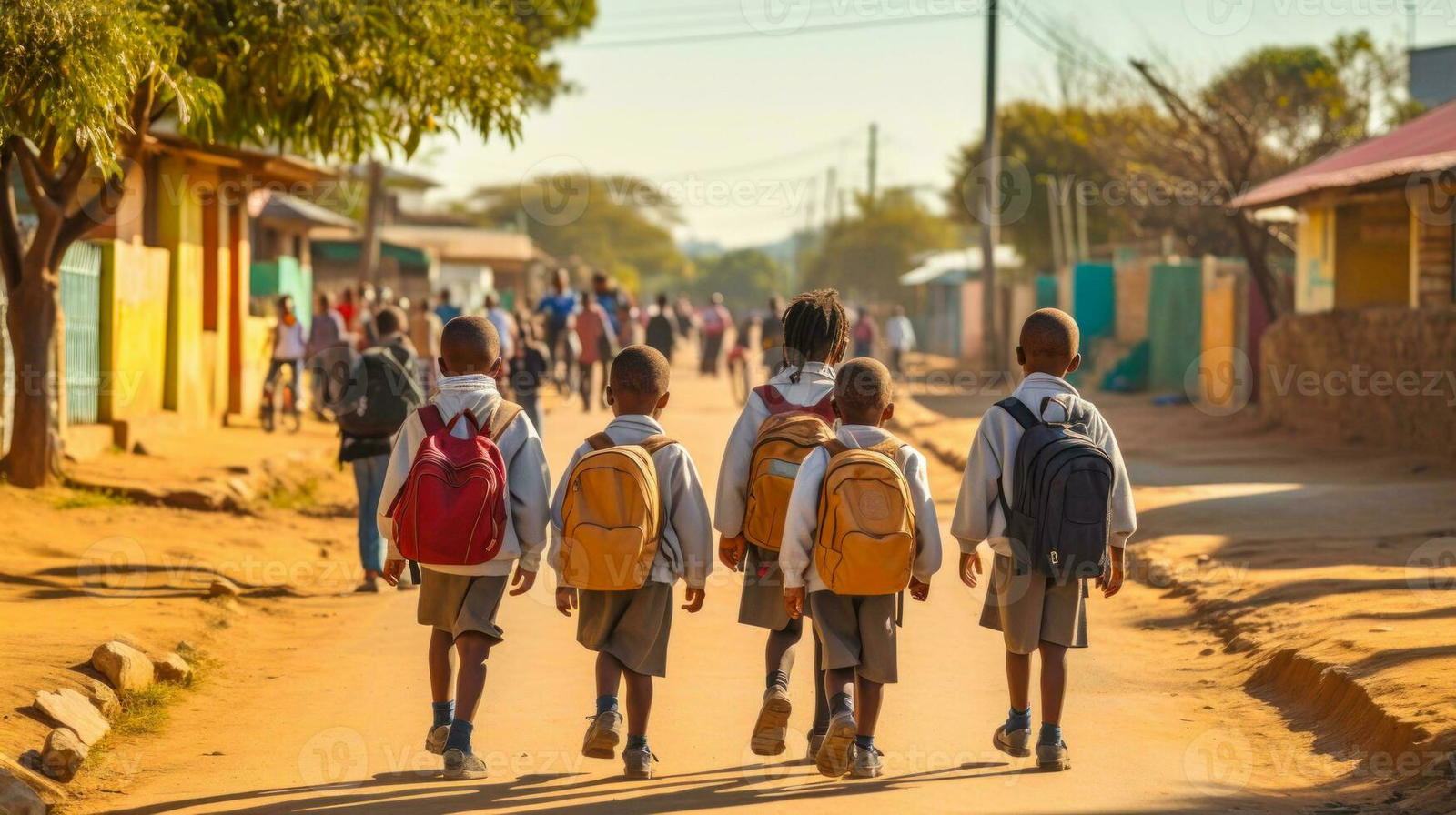
File image of African children going to school,
By CRISTIAN MUNDUATE
NIGERIA is home to nearly 110 million children and adolescents aged 0–17 years, representing about half of the nation’s population.
The 2024 Situational Analysis of Children and Adolescents in Nigeria, a joint publication by the Federal Government and UNICEF, should bring our collective commitment to change a stark reality: 67.5 percent of Nigerian children live in multidimensional poverty, deprived of essentials such as education, healthcare, and nutrition. In Nigeria, over five million children are moderately malnourished, over 1.5 million severely malnourished, and over six million stunted, wasted, or underweight.
In just three days, over 60 children and women tragically lost their lives, with many others injured, in stampedes that occurred in Oyo, Anambra, and Abuja during events distributing palliatives and a school party. These tragedies reflect the severe hardships that Nigeria’s most vulnerable populations endure. These heartbreaking incidents, which occurred during events intended to bring relief and joy, further highlight the deepening economic challenges confronting families across the country.
UNICEF is deeply saddened by this loss and extends its heartfelt sympathies to the families and friends of those affected. These incidents are not isolated—they reflect the harsh and systemic inequities that leave children in Nigeria disproportionately at risk.
There is an urgent need for systemic changes to ensure no child faces such dire circumstances again. A change where the rights, well-being, and safety of Nigeria’s children become a priority. Children in Nigeria should not have to fight for survival. They should not be at risk of harm in schools, at food distribution events, or in their communities. Instead, they should thrive in environments that provide them with education, healthcare, and protection. This vision can only become a reality if all stakeholders commit to transformative action in 2025.
What needs to change
Expanding access to essential services such as nutrition, healthcare, and education is crucial. Ensuring school and community safety through the implementation of robust policies will create environments where children can learn and grow without fear. Strengthening social protection systems by establishing sustainable programmes will provide families with long-term support, reducing reliance on one-time palliatives. Additionally, prioritising child protection by addressing insecurity and safeguarding children from harm, exploitation, and abuse should remain at the forefront of collective action.
A shared responsibility
The duty to protect and uplift Nigeria’s children lies with all government at all levels, civil society, traditional and religious leaders, communities, families, and parents. As 2025 begins, let this be the year where we collectively resolve to create a safer, healthier, and more equitable Nigeria for our children.
UNICEF commits with stakeholders to make this vision a reality. Together, we must work to create a present and a future where every Nigerian child can grow, learn, and thrive in an environment free from harm, deprivation, and fear—an environment that can give them the opportunity to realise their full potential.
Munduate is UNICEF Representative in Nigeria
Disclaimer
Comments expressed here do not reflect the opinions of Vanguard newspapers or any employee thereof.