…Says it is a national crisis
By Chioma Obinna
In recent times, the number of Nigerian children who are food insecure has increased. The challenge, coupled with cases of malnutrition has worsened the situation. Millions are in dire need.
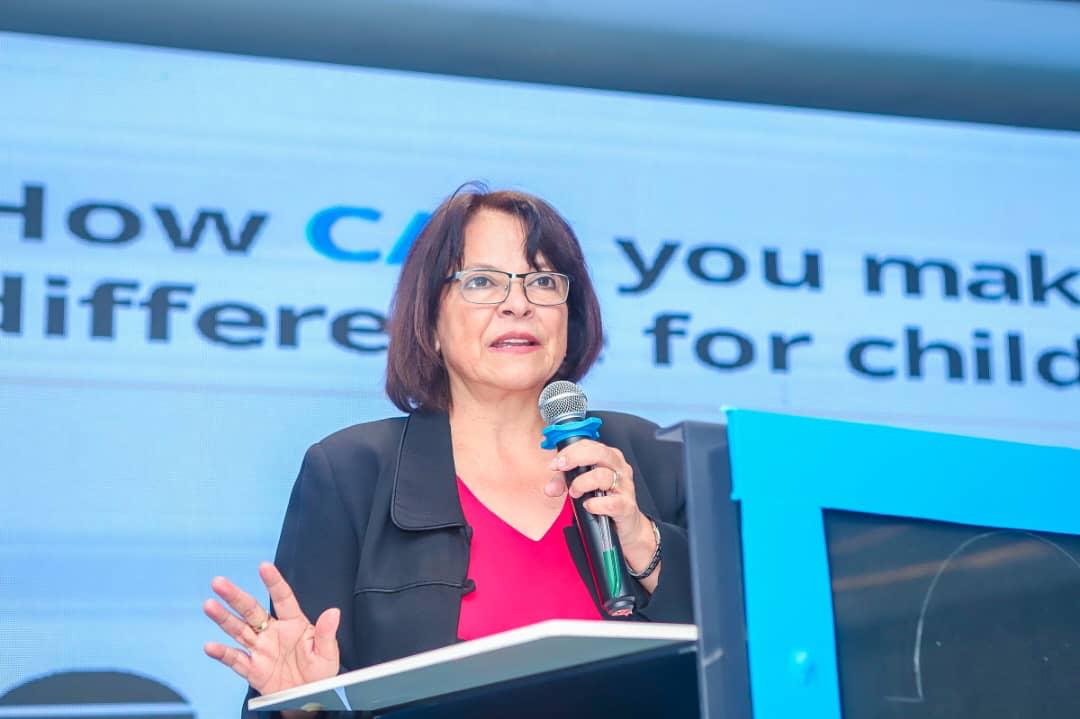
Chioma Obinna spoke to the United Nations Children’s Fund, UNICEF, Representative in Nigeria, Ms. Cristian Munduate, who spoke on wide range of issues affecting the health of children.
She lamented that an estimated 2.1 million Nigerian children are projected to suffer severe acute malnutrition by the end of 2024. Currently, two of three children in the country experience food poverty.
Excerpts:
Critical food insecurity challenges Nigerian children face
The first challenge children face in terms of food insecurity is widespread poverty, which has increased over the past two years for several reasons.
So, at this moment, what we have is that two out of three children in Nigeria experience food poverty. This food poverty comes along with lacking of diverse nutrients that are essential for growth. So, families do not have the necessary income to feed their children properly. This is the number one. I would say that, along with this, you know, in terms of poverty measure relating to income, there is also what we call multi-dimension poverty. This means, in terms of household, and the members of a household, what members of that household have are more vulnerable to poverty and these are children.
This is because it is a lack of nutrition, lack of health, and lack of sanitation, which in the end affects your capacity and hinders your opportunities for life and growth.
The other part is that in terms of economic pressures. So, it is obvious, and we have all the data, the macroeconomic data that the country produces, the rising food, the rising prices of food, and the inflation.
This means nutritious diets are unaffordable for many families. The food prices are making it very difficult. So, that’s the second part of the challenge.
The third challenge I would mention is cultural beliefs. You know, for example, the best feeding that a child can receive, for example, is exclusive breastfeeding during the first six months of life. However, there are cultural beliefs in some places that breastfeeding is not good.
In other places, breastfeeding is not enough. You have to combine it with other things during the first month of life. This is not true.
The best way to feed a child is just breastfeeding during the first six months of life, and then you can combine nutritious food for children.
You don’t need conceptions such as eating eggs might turn children into thieves. I mean, this is the first time I must say I have heard this, but apparently, this is what people believe, and this is not true, right? So, these types of things, instead of helping the children to grow and to be healthy, it is important that as many people as possible at the community level, and at the ward level, that they know that cull what is the proper way to feed their child.
Food and climate change
In terms of food production, you mentioned climate change, climate shocks are complicating access to food. The food chain is interrupted by floods, but also food production. So we have floods, which are common in the country, and we have drought, the very dry season, which also disrupts the farming cycles reduce food availability. They reduce food production, and reduce food transportation. So this is also working strongly against the availability and access to food.
Last but not least, a problem across the country0 is insecurity. So in many parts of the country, we have conflicts of diverse nature, so this limits farming, it limits food supply chains, and it limits market access. So as you see, I have mentioned five, five challenges that are putting children’s nutrition status and health at a very, very high risk.
It’s poverty, it’s rising prices of food, it’s cultural beliefs, it’s climate shocks, and it’s insecurity.
Impact on overall development of children
So food insecurity for children that had problems at birth, maybe low birth weight, or they got sick in the first 12 months of life, etc. Many of these children, and I say many, it may reach 2 million children plus this year, we have the projection that we are closing the year with 2.1 million children affected by severe acute malnutrition. Severe acute malnutrition is those children that need medical attention, and immediate hospitalization because they’re about to die.
But there are also the other children that are stunted. These children account for more than 45 per cent of the children under five in the country. The problem with this is these children are not only affected by their weight, their height, but when you have severe stunting, your brain doesn’t develop well in the first five years of life.
This is irreversible. It doesn’t matter if later on, you feed the child properly or the child is not stunted. Once your cognitive and intellectual capacities are affected, it is very difficult to turn back. That is why it is important to take early life-saving actions to address stunting. The first 1000 days are important because if you have poor nutrition during the first thousand days, this causes irreversible physical and cognitive problems in the child’s body.
Another negative impact is on education. So, when you have malnourished children, their performance is limited. It’s not because they are bad students. It’s not because they don’t want to learn. It’s because their capacities are limited and, as I said, irreversibly affected by their nutrition conditions. So, they face a lot of challenges like paying attention, focusing, and difficulties in learning. And there is, you know, three out of four children around the country are struggling.
They don’t know how to read and comprehend or do basic arithmetic operations. And this is due to this situation, but also, of course, to the quality of education. So, everything is tight.
Later on, this harms the human capital loss. So, children who are stunted, who have this chronic malnutrition, as they grow and as they reach adulthood, are not capable of being active economic actors. So, it affects the economic development of the country. And last, it impacts, it provokes a health burden. So, it brings weak immunity based on malnutrition. Then, it increases the risk of having major diseases.
Region most severely affected by this food insecurity and malnutrition
So, as we all know, it’s the poorest areas and the areas with major conflicts. Northwest, the levels of stunting are very high. But of course, the centre of the country, you know, what is alarming, because now the economic crisis, the access to food systems, etc., it’s a national problem.
Remember, the government declared a food emergency. And when you declare a national food emergency, this means it’s everywhere. So, I would say that, of course, the concentration and the high numbers of children are in the north, northeast, northwest, Niger, Kaduna, etc. But also, this is already affecting the South. So, we can say this is a national crisis.
UNICEF interventions
The first thing which is a priority, because we need to concentrate on saving lives. We are providing support, and we are also working hand in hand with the Federal Ministry of Health, but also with the state governments on attending to the severely acute malnourished children. And the only way is to work this with the provision of our UTFs.
But then, secondly, we are working with a lot of prevention. So, we provide support with vitamin supplementation, for example, vitamin A. We also provide micronutrient supplies, and we actively promote, of course, breastfeeding, but also work with communities on supplementary feeding. We are part of the Food System Transformation Programme and we are partnering with FAO, the World Food Programme, and the World Health Organisation, so that everybody, each one of these organisations, does what their best fit for purpose, and UNICEF takes nutrition on board.
We also have an active monitoring system. We do smart surveys. We have nutrition dashboards, and we collect data, because we need to know where are the children, the malnourished children. We cannot just say, oh, you know, it’s in the Northwest, but the Northwest is composed of several states, and each one with different Local Government Areas, LGAs, and the malnourished children are concentrated within a state in different parts of the state. That is why it is important to have these monitoring mechanisms.
Partnership with the Nigerian government for children’s treatment for malnutrition
Yes, for example, when we deliver the RUTFs to treat severe acute malnourished children, we do it through the health facilities at the state level and in the LGAs and ward level, because they need medical attention. The children need medical attention. So, these are provided there.
We also do it through NGOs, our NGO partners, both national and international NGOs, who have rehabilitation centres specifically for children who are malnourished.
Challenges in scaling up interventions
The first key challenge is that there’s still not enough and I think very low budget allocations for nutrition, both at the federal and state level. So, this is the number one cha If we want to address this structural problem of the country, we need that there are in place more national resources to address the nutrition problems that children face and that they urgently need to be a
The Nigerian governments have the political will, but I honestly think that they need to put more budget resources and focus more on implementation and the results they want to achieve.
Measuring impact of interventions
Yes, the only way you can measure is first, how you can register this at health care facilities, the primary health care facilities. So you follow up on children, malnourished children, the child comes in the health care facilities and then you have to follow up on how the nutrition situation of the child improves. The other way to monitor is through national surveys.
Long-term implications for human capital development
Well, listen, everything is complicated. First, you have the nutrition situation of many women and the high birth frequency they have, right? So a woman that’s already malnourished and besides, you know, and it happens that they are having babies year after year, that doesn’t contribute either to the woman’s health or the mother’s health, but also to the child’s newborns.
So that is the first challenge. Then, of course, we will have more population that does not have the necessary health conditions to be productive for their house, their communities, and the country.
Food insecurity and children’s health
For example, if you are a young mother and I want to highlight that, you know, there’s a lot of child marriage and teenage pregnancy, which goes against nature. So by nature, the body of a woman is not ready yet to have a child while they’re under 18 years old. So that’s number one. But on top of that, they are malnourished. They have anaemia. They are very thin. They don’t have access to food. So if they’re pregnant, what they will deliver are also very weak babies, that are very underweight. And this contributes to a very vicious circle.
Food insecurity in terms of mental health and psychosocial development.
It is irreversible, really irreversible once you have your cognitive and intellectual capacity affected because your brain did not develop properly during the first five years of life, you cannot compensate later. The neurons are already developed. So your brain develops during these first five years and whatever the brain didn’t manage to do because the body was weak, it will not happen later on.
So when you find, for example, adults that they don’t understand well that, you know, the capacity to do a job is not well done, despite your giving instructions, despite your training. This is because they were stunted when they were children.
Sustaining food security
We need to have not only the government or the families on board, we need to have the traditional rulers and the religious leaders because they have a voice at the community level and they are heard. So, they must send these messages everywhere. That is to inform families how to feed their children.
I was in Bauchi in an LGA that is called Toro, there I saw very poor families, but they were doing house farming and they were producing, you know, different types of nutritious flowers from beans, from sweet potato.
So, they were using leaves, which are very high in nutrients, to produce food for their children and their families. So, this is a way. The other way is to bring as well the private sector on board, right, to invest, to invest in agro-industry.
So, they can also create jobs and they can buy from farmers. So, it’s the private sector. It’s media, for example.
What you are doing helps improve the children’s nutrition status because you are informing them. You are informing, you are creating awareness of this problem that we have in the country.
Open defecation
Well, I must say, open defecation is a cost-effective action, meaning it doesn’t require billions of Naira.
Open defecation-free, meaning every household has a place where they can defecate, helps to keep nutrition conditions on children because if a child is, let’s say a child is well fed, but if the child gets diarrhoea, then the child gets weak, and it gets with, you know, malnutrition.
If a child is already malnourished because it is not well fed, and if the child gets diarrhoea, the child will get so sick that it might die. So open defecation attempts and works against the nutrition and the health status of a child. As I said, it doesn’t mean huge investments, and this is something where governments and state governments can rapidly move ahead. You know, the only place where we have a 100 percent open defecation-free state is Jigawa. And my question is, if Jigawa achieves this, why not the other states?
Role of open defecation in environmental degradation and water pollution
Open defecation contaminates the environment, helps contribute to the spread of cholera. If you see the cholera outbreaks, they are in communities where there’s an extensive practice of open defecation. Open defecation brings diseases, cholera, It brings diarrhoea, It brings typhoid fever. And it contaminates the few water resources that the country has.
Interventions
We bring the state governments on board because UNICEF is not accountable for all of this. It is the country that should be accountable.
So we are here to support and to cooperate. So that’s the number one. We work on community-led sanitation, and this is where jointly with some of the LG leaders, we mobilise communities so that they can adopt and sustain sanitation practices.
We do contribute a lot in bringing water and sanitation to schools and health facilities. But we would like this to be scaled up by the governments. And we are also helping local businesses so that they can, you know, we train toilet business owners so they can supply affordable sanitation solutions at the community level.
Open defecation impacts the dignity, privacy and well-being of individuals, particularly women and girls
I would say it impacts their privacy and protects them. And having a place, a secure place where they can go can also prevent sexual assaults that they might be subjected to, if they are practising the open defection outside in the bush, for example, and it also helps their dignity. The government needs to step because UNICEF doesn’t have the resources and we cannot take that accountability with us.
So, we want more government investments and commitments in these regards. You know, the federal government sometimes ago declared open defecation as an emergency issue and all that.
Is Nigeria really on track to eradicate open defecation?
Well, I would say, before the situation was worse, you still have over 40 million people practising open defecation in the country. So, yes, there has been improvement, but not enough. Forty million is a huge amount of people who are practicing open defecation
They go to the bush, but when it rains, and .when, for example, there are floods, the water runs, and it runs where people are open defecating.
So, there is nothing like, it is not true that there won’t be water contamination. There will be water contamination.
Cholera can be prevented through open defecation. Cholera can be prevented through vaccines. And if you have a person who has cholera and needs to go to the hospital or health facilities, the cost of that patient is five, or six, depending on the severity of cholera, ten times much higher than if you would have invested in a latrine in a home.
For open defecation, we don’t need sophisticated technology. We just need to invest in basic access to latrines, and that’s it.
Recommendations for states in eliminating open defecation
I think, reaching 100 percent of the neighbourhoods and the LGs, declaring them open-defecation-free is easy. They can do it in a very short period if it is considered a priority.
States like Lagos still have problems with open defecation, and the challenge is the concentration of the population, so there is no surprise that this year the first outbreak of cholera was in Lagos.
Lessons from Jigawa
It’s simple, the governor was committed, the governor put funds, the governor made sure that these funds reached the LGAs, the LGAs made sure that they reached every community, every ward, teaching people, promoting with people, helping them get their electives, and this is how it was made.
Take home message
My final advice is that people should know that if they continue practising open defecation, they will always have sick family members. Their children and their adults struggle with health diseases, diarrhoea, with cholera, and in many cases, some of these family members will die. This is what they need to know.
Again, food insecurity is about reaching millions of children and serving millions of people, so a couple of thousands is not enough because Nigeria is a 220 million population country. So whatever is done has to be done at a big scale.
Disclaimer
Comments expressed here do not reflect the opinions of Vanguard newspapers or any employee thereof.