…agric sector can’t be without extension workers- stakeholders
By Gabriel Ewepu
ABUJA – THE Managing Director, Extension Africa, Tajudeen Yahaya, yesterday, asserted that panacea to food security challenges remains proper extension services and they are proffering the solution already.
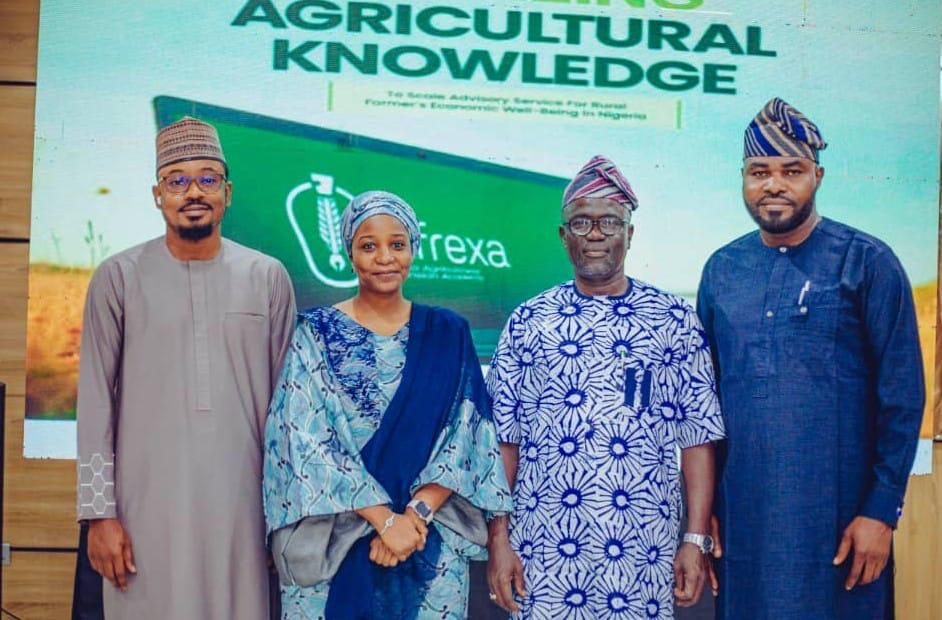
Yahaya made the assertion at the conference on ‘Digitising Agricultural knowledge to scale Advisory Service for Rural Farmers’ Economic Wellbeing in Nigeria’ organised by Extension Africa in collaboration with The Alliance for a Green Revolution in Africa, AGRA, in Abuja.
According to him, the lack of effective extension services and low number of extension agents as major contributors to Nigeria’s food security challenges demands serious attention, thereby making farmers not producing enough for the over 200 million mouths, which has resulted to food insecurity and hunger, however, he disclosed that his organisation has developed a platform to provide farmers with access to relevant information and capacity building for greater productivity, and the platform is called the Africa Agribusiness Extension Academy, which is basically to empower and equip young graduates with the skills and knowledge needed to provide effective extension services to farmers.
Meanwhile, the MD also introduced FarmX, a tech tool that connects companies with extension agents who can provide services to farmers and according to him, the platform would make extension services more sustainable and attractive to young people.
However, he decried the current ratio of one extension officer to be serving over 10,000 farmers, saying it is below the standard, therefore, the digitization in extension service delivery remains the ultimate and modern way for food production.
He said Nigeria needs to move beyond paper-based information and provide video and audio content that explains better what these things are to farmers.
According to the MD, the lack of internet connectivity in rural areas is a major challenge, but Extension Africa has developed offline solutions to address this issue.
He said: “Looking at the fact that we have farmers but they’re not producing well enough, we have to ask ourselves, why is that happening? One of the issues we see is how well-informed these farmers are in terms of what they’re producing. How well-informed are they about the best produce or inputs they can use to get the right output? This gap is what we identify as the gap in extension service delivery.
“If you don’t have enough extension workforce, imagine having students without teachers – that’s how our farming system is. In a country like Nigeria, having only one extension officer working with over 10,000 farmers is a significant challenge. Our approach is to bring more extension agents into the market, and the only way to do that is to target young people.
“To attract young people, we need to address how conveniently they can access this information, given their tech-savviness. We also need to equip them with the right capacity. That’s why this session is important. In this project, we’ve brought together relevant content from various institutions into one place, which we call the Harmonized Extension Model.
“After harmonizing this content, we’re digitizing it, as having video or audio explanations is more effective than just paper-based information.
“Our next step is to put this content on one platform, the Africa Business Extension Academy, where our young people can access it. By doing so, we can increase capacity, reduce the challenge of limited extension services, and get more people well-informed.
“To sustain these agents, we need to create a platform where they can be introduced to a marketplace, connecting them with companies that need their services. That’s what we call FarmX. FarmX is a platform and a tech tool, similar to Uber, but for extension agents. When these agents are trained, companies can engage them through FarmX.
“For instance, a seed company can connect with an agent trained through our academy, and that agent can educate farmers on the seeds and facilitate sales. Our goal is to decentralize information, making it accessible to more people, and create a marketplace where companies can engage farmers directly through an extension workforce.
“Our content is downloadable, allowing users to access it offline, even in areas with limited connectivity. Similarly, FarmX has been designed to work offline, enabling companies to connect with farmers in rural areas and collect valuable data.
“We are seeing interest from various companies, including banks, seed companies, and agriprocessors, who want to tap into our extension workforce. Currently, investing in farmers can be challenging due to limited visibility. However, with our equipped agents, companies can gain insights into what’s happening on the ground and make informed decisions.”
Yahaya stressed the need to transform young graduates into a positive workforce in the agricultural space, and called for support from stakeholders to achieve this.
Meanwhile, the Country Director, AGRA, Dr Rufus Idris, pointed out that the rationale and idea behind digitising extension knowledge and content is to ensure extension services are more attractive to the youth who are tech savvy, therefore, with little capacity building It would enable them to offer better services to smallholder farmers, including linking farmers to improved seeds, practices, and varieties, as well as ensuring they have access to real-time information to combat climate change.
“Instead, one extension agent should be servicing 500 or less number of farmers to ensure efficiency in the quality of the service that is being delivered to smallholder farmers in Nigeria”, he added.
Also the President, Nigerian Forum for Agricultural Advisory Services, NIFAAS, Dr Fadlullah Issa, acknowledged that Nigeria’s food production sector really needs help and solutions, where extension services supposed to be the nucleus of every value chain and powerhouse for massive food production, therefore, cautioned that research without corresponding technology is futile and waste of taxpayers’ money.
“So who takes it to the field? That particular chain, as long as it is broken, we are not going anywhere. The government must realize that we don’t have anywhere to go if extension is not functional. And that is why it must be on top priority.
“It is extension that picks the technology, processes it in a manner that every farmer will understand, puts it in languages that is understandable by every farmer all over the country. You know the complexity of our country in terms of languages. That it why it is so important that the government must support extension adequately”, he said.
Disclaimer
Comments expressed here do not reflect the opinions of Vanguard newspapers or any employee thereof.