By Ayobami Okerinde
A significant shortage of cybersecurity professionals in Nigeria has raised concerns about the country’s digital security, with experts calling for immediate action to bridge the gap.
According to a 2023 report by the International Information System Security Certification Consortium (ISC2), Nigeria has only 8,352 cybersecurity professionals, a worrying figure given the global cybersecurity workforce deficit of nearly 4 million.
As financial institutions, government agencies, and businesses increasingly adopt digital solutions, the lack of skilled cybersecurity professionals poses a major risk.
In response, various initiatives have been launched to address the gap. The Cyber 30-30 Project, backed by the World Bank and the Federal Ministry of Education, aims to train 30,000 cybersecurity professionals by 2030.
Meanwhile, the Centre for Cohesion and Development (CCD) announced plans to create 3 million cybersecurity-related jobs within the same period, highlighting the sector’s potential to drive youth employment in Nigeria.
Industry Leaders Discuss Cybersecurity at CIO & C-Suite Africa Conference
The urgency of Nigeria’s cybersecurity skills shortage was a key focus at the CIO & C-Suite Africa Conference and Awards 2024, held on November 30 at the Civic Centre, Victoria Island, Lagos. The event brought together top executives, industry leaders, and cybersecurity experts to discuss digital security challenges and potential solutions.
A critical panel discussion, titled “Digital Banking in Nigeria: Balancing Security, Accessibility, and Mitigating Fraud Risks,” explored the state of cybersecurity in the financial sector. Panelists included Toye Soladoye (CDO, Union Bank), Olusegun Philips (CIO, Polaris Bank), Myke Koledoye (Group Head IT, Premium Trust Bank), Harrison N Nnaji (CISO, First Bank), and Celestina Appeal (Head, Card Business & Solutions, Zenith Bank Plc). They emphasized the need for stronger cybersecurity frameworks, enhanced fraud detection mechanisms, and workforce development strategies.
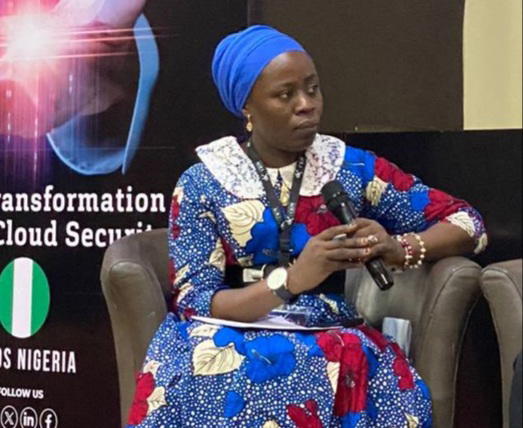
A Nigerian Technology expert and key organizer of the event was Rahmat Lasis. She was actively involved in driving cybersecurity awareness at the Africa Cloud & Security Summit, organized by Dx5 in May 2024.
Lasisi who is also a gobal women in tech advocate, led a panel discussion on Bridging the Cybersecurity Talent Gap, as she highlighted the urgent need for hands-on cybersecurity training and AI-driven security measures.
Call for Action: Industry, Government, and Academia Must Collaborate
Speaking, Lasisi stressed the need to move beyond theoretical learning and equip professionals with real-world cybersecurity skills.
“In today’s digital banking ecosystem, cybersecurity must evolve beyond compliance checkboxes,”
She stated. “We need a workforce that understands real-time cyber threats, from phishing to ransomware, and can actively respond to them. Bridging the cybersecurity talent gap is not just an industry need; it is a national security priority.”
Lasisi has been instrumental in cybersecurity education at the grassroots level through Brain Branded Edutech, where she has trained over 100 children in AI, cybersecurity, and ethical hacking.
She buttressed the role of public-private partnerships in addressing cybersecurity challenges, calling for investments in training infrastructure and policy reforms to create clear career pathways in the sector.
Cyber Threats on the Rise: Banks Urged to Strengthen Security Measures
The increasing cases of bank fraud, digital identity theft, and ransomware attacks in Nigeria underscore the need for skilled cybersecurity professionals. Harrison N Nnaji, Chief Information Security Officer at First Bank, warned that cybercriminals are innovating at an alarming rate.
“As banks embrace digital transformation, cyber threats have become more sophisticated. We must develop proactive cybersecurity strategies backed by AI-driven fraud detection tools,” he said during the panel discussion.
A Digital-First Economy Needs Cybersecurity Transformation
Lasisi’s advocacy efforts and industry engagement continue to push for sustainable solutions to Nigeria’s cybersecurity talent crisis. As the country accelerates its digital transformation, strengthening cybersecurity resilience remains a top priority.
“As we push for digital transformation across Africa, we must equally push for cybersecurity transformation. The digital economy cannot thrive without a secure foundation,” Lasisi concluded.
With strategic collaborations, structured learning programs, and industry-wide awareness initiatives, experts believe bridging Nigeria’s cybersecurity talent gap is achievable—but urgent action is required.
Disclaimer
Comments expressed here do not reflect the opinions of Vanguard newspapers or any employee thereof.