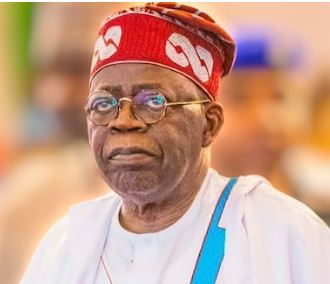
President Tinubu
By Haroon-Ishola Balogun
The Israeli-Palestinian conflict has been a longstanding and contentious issue in the Middle East, with the Gaza Strip being a focal point of tensions. For decades, the region has witnessed recurring conflicts, humanitarian crises, and failed peace negotiations. However, the recent Saudi Summit brought together Arab leaders to reaffirm their commitment to a lasting peace, revitalizing the two-state vision as the most viable solution.
The Gaza Strip, home to over 2 million Palestinians, has been under Israeli blockade since 2007, following Hamas’s rise to power. This has led to dire living conditions, crippling unemployment, and dilapidated infrastructure. The strip’s residents face severe restrictions on movement, access to basic services, and economic opportunities. The humanitarian crisis has become synonymous with desperation, underscoring the urgent need for a comprehensive and lasting solution.
The two-state vision, endorsed by the international community, including the Nigeria, United States, European Union, and Arab League, especially during the just concluded summit in Saudi Arabia seeks to establish an independent Palestinian state alongside the State of Israel. This solution acknowledges the right of self-determination for both peoples, ensuring Palestinian sovereignty over Gaza and the West Bank, while addressing Israeli security concerns through negotiated borders. Jerusalem’s status as a shared capital remains a critical aspect of the vision.
Nigeria’s position on the Israeli-Palestinian conflict is not informed by its membership in the Organization of Islamic Cooperation (OIC), but by the principle of justice and fairness in all aspects of life, including international relations on the one hand and the importance of protecting human life and dignity, as well as the need for self-determination of the Palestinians on the other hand. The Quran emphasizes the importance of this in Surah Al-Ma’idah, verse 8, “Be just, that is nearer to righteousness.
The ongoing conflict in the Middle East has resulted in immense human suffering, displacement, and loss of life. Nigeria’s advocacy for a peaceful resolution is in line with Islamic values that prioritize human well-being and security.
The Saudi Summit’s reaffirmation of the Arab Peace Initiative (API) marked a significant milestone in revitalizing the two-state solution. Conditionalizing normalizing Israel-Arab relations on Israeli withdrawal from occupied territories and the establishment of a Palestinian state, the API provides a framework for regional peace. Leaders emphasized the need for direct Israeli-Palestinian negotiations, international community facilitation, and economic support for Palestinian state-building.
International stakeholders have welcomed the renewed emphasis on the two-state solution. The United States reiterated its support for a negotiated settlement, while the European Union encouraged Israeli-Palestinian dialogue. The United Nations stressed the urgency of a comprehensive agreement, highlighting the deteriorating humanitarian situation in Gaza.
Despite renewed momentum, significant obstacles remain. Israeli settlement expansion continues unabated, undermining Palestinian trust and complicating border negotiations. In the last 24 hours, over 25 Palestines were said to have been killed by the Israeli forces just as regional tensions and security concerns persist. The international community must address these challenges through concerted efforts.
Fostering Palestinian unity is crucial, as a divided leadership undermines negotiations. Addressing Israeli security concerns through robust mechanisms and intelligence cooperation can alleviate fears. Mobilizing international economic support for Palestinian state-building will help create a viable economy and strengthen institutions.
The two-state vision offers a glimmer of hope for Gaza’s embattled residents and the region at large. By revitalizing this solution, leaders can transition the Gaza Strip from a symbol of conflict to a beacon of peace and cooperation. The international community must seize this opportunity, supporting negotiations and addressing challenges to ensure a lasting and comprehensive peace.
However, the two-state vision remains the most viable solution to the Israeli-Palestinian conflict. The recent Saudi Summit’s reaffirmation of this vision and the Arab Peace Initiative provides a critical framework for regional peace. Leaders must now navigate the complexities, fostering unity, addressing security concerns, and mobilizing international support. The future of the Gaza Strip and the Middle East hangs in the balance, as the world waits with bated breath for a lasting and comprehensive peace.
Disclaimer
Comments expressed here do not reflect the opinions of Vanguard newspapers or any employee thereof.