By Evelyn Usman & Ebunoluwa Sessou
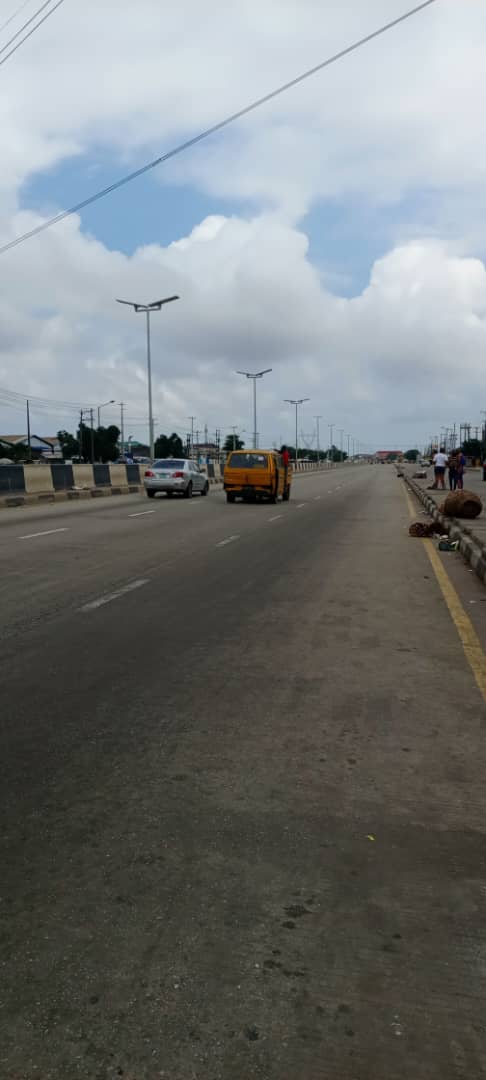
The streets of Lagos, normally bustling with activity, were eerily quiet between 5 a.m. and 10 a.m. indicating the effect of the hunger protest on the usual hustle and bustle the state has been known for.
Shops were closed, their metal shutters pulled down, and commercial vehicles vacated the roads. The only sounds were the occasional barking of dogs or chirping of birds within residential areas. The roads, usually congested with traffic, were empty and still. It was as if the city had been abandoned, leaving behind only the whispers of the wind.
Everyone was indoors, unsure of what would become of the situation. Some peeked through their windows, watching the empty streets with a mix of curiosity and boredom. As the hours ticked by, the silence began to feel oppressive. Some residents of Jakande Estate, Oke-Afa, Ejigbo, Ijegun, Ikotun Ijedodo, Abaranje, and Igando were seen outside their buildings discussing the protest.
In Ago Okota area, there was not a single vehicle on the stretch of the road between Okota Roundabout and Apple Junction, between 7 a.m. and 11 a.m. The area was like a ghost town.
Oyingbo market
The popular Oyingbo market was also deserted as traders did not bother to open their shops. For them, it was better to stay at home and watch as event unfolds.
A woman, identified as Mrs. Aina lamented that the government had done more harm than good in the past one year.
She said :“I am not opening my shop because I do not know what the outcome of the protest would be but I believe that as a mother, it is important to identify with the protesters in the fight against bad governance. Prices of foodstuffs are high. We cannot eat two times in a day and that is why I support this protest. My prayer is that, it would end in peace. I urge the federal government to listen to the yearnings of the people. Nigerians are dying of hunger’, she said.
At Yaba area of Lagos, all the shops were under lock and key. Most traders sat in groups observing what was going on in the area.
But then, at around 2 p.m., a few brave market women started to open their stalls around the areas listed. They carefully displayed some of their wares, eyeing the empty streets with a mixture of hope and trepidation. Despite their efforts, customers were few and far between. The women stood behind their stalls, chatting quietly among themselves as they waited for someone to come and buy their goods.
Some brave tricycles operators that ventured out were forced to reduce their fares due to the lack of passengers in the areas mentioned. They rode slowly, hoping to attract anyone to hop in.
On the contrary , commercials drivers who managed to come out, cashed-in on the opportunity to hike their fares most , leaving the few passengers with no option than to key in.
For instance, from Oyingbo to Mile, passengers were charged N600 as against N300, while commuters who boarded buses from Oyingbo to Agbara were compelled to pay N1500 as against N800.
The Oshodi-Apapa Expressway in Lagos was also a stark contrast to its typical chaos . There was no sight of the regular trucks on the expressway around 2 p.m, except for few commercial buses plying the expressway. It took the commercial drivers longer than normal to fill their buses because of the scanty passengers at the bus stops.
At the Mile- Two end of the expressway, a few commercial motorcyclists who dared to come out despite the ban on their operation on that route sat on their motorbikes, their eyes scanning the empty road with a mix of fear of being arrested by the police and disappointment for not having passengers. They stood there idle, unsure of what to do, and their hopes of making a living for the day dwindling.
Mechanics and bricklayers within the Kirikiri axis and other areas of the state struggled to get food as the protest raged on. They had expected to earn a living for the day, but the empty streets and closed shops dashed their hopes. They wandered around, searching for any open food vendor, but to no avail. The same situation was obtained in major areas of the state, as food vendors, who usually set up their stalls on the streets, had closed their shops in solidarity with the protest. Their usual bustling stalls, filled with the aroma of fried foods and the chatter of customers, were empty, silent, and shut.
Disclaimer
Comments expressed here do not reflect the opinions of Vanguard newspapers or any employee thereof.