By Sola Ogundipe
The human brain, despite its complexity, is susceptible to decline. Distinguishing normal aging from the onset of dementia often proves challenging due to the limited availability of advanced diagnostic tools.
This forces specialists to rely heavily on their expertise and intuition.
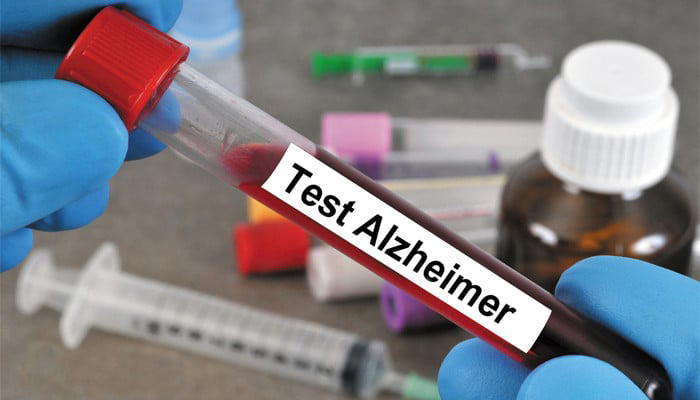
However, a potential breakthrough has emerged. Researchers at Lund University, Sweden, have discovered that a standard blood test can effectively supplement current, often costly diagnostic methods like scans and spinal fluid analysis.
From the research published in JAMA, this test, which analyzes specific protein ratios in the blood, shows remarkable accuracy in detecting Alzheimer’s pathology.
At least 55 million people around the globe live with dementia, mostly in the form of Alzheimer’s disease.
While the processes at work involve a complicated mix of genetic and environmental factors, one thing all individuals with Alzheimer’s have in common is a steady loss of key neurons associated with a marked rise in abnormal proteins.
Those two proteins – beta-amyloid and tau – clump and tangle in ways that either directly damage cells or inflict a degree of assault by other immunological processes.
General practitioners and specialists often use CT scans that reveal this degradation of brain tissue in association with cognitive tests and self-reported symptoms to gauge whether a patient is likely to have Alzheimer’s disease.
Yet even in a best-case scenario with a full range of diagnostic tools at their disposal, both primary and secondary care providers often fail to make the right call.
According to Lund University neurologist, Sebastian Palmqvist, “Primary care doctors’ accuracy in identifying Alzheimer’s disease was 61 per cent, while specialist physicians were correct 73 per cent of the time.
“This underscores the lack of good, cost-effective diagnostic tools, particularly in primary care, and indicates the potential improvement in diagnosis with the adoption of this blood test in healthcare settings.”
Numerous studies conducted in recent years have highlighted the potential role of plasma protein measures in the diagnosis of Alzheimer’s disease, specifically comparative ratios of the ‘normal’ and aberrant forms of beta-amyloid and tau.
While similar tests have been carried out on spinal fluid, a commercially available blood test would be far less invasive, less painful, and quicker to carry out in a regular clinic.
To confirm whether the blood test is as reliable, Palmqvist and his team recruited 1213 patients who were being evaluated for Alzheimer’s by their family doctor or a specialist in Sweden some time between February 2020 and January 2024.
Around two-thirds of the patients had been classified as having either subjective cognitive decline or mild cognitive impairment, while the remaining third had already received a diagnosis of dementia based on a mix of clinical and cognitive tests.
In addition to the blood test, most patients also received a lumbar puncture for spinal fluid. The few who couldn’t underwent a radionuclide-tagged PET scan instead to assess abnormal aggregations of proteins in the brain.
Comparing the results, both forms of assessment fared just as well, predicting Alzheimer’s with a 90 percent accuracy.
The convenience of a blood test means more patients can receive an accurate diagnosis sooner, allowing them to receive the healthcare they require without delay.
Senior researcher Oskar Hansson, a neurologist at Lund University, notes,
“The test is already available in the USA and is likely to become available in many other countries soon. Initially, it will mainly be used in specialist memory clinics, and it may take approximately one to two years to implement guidelines and training in primary care.”
Disclaimer
Comments expressed here do not reflect the opinions of Vanguard newspapers or any employee thereof.