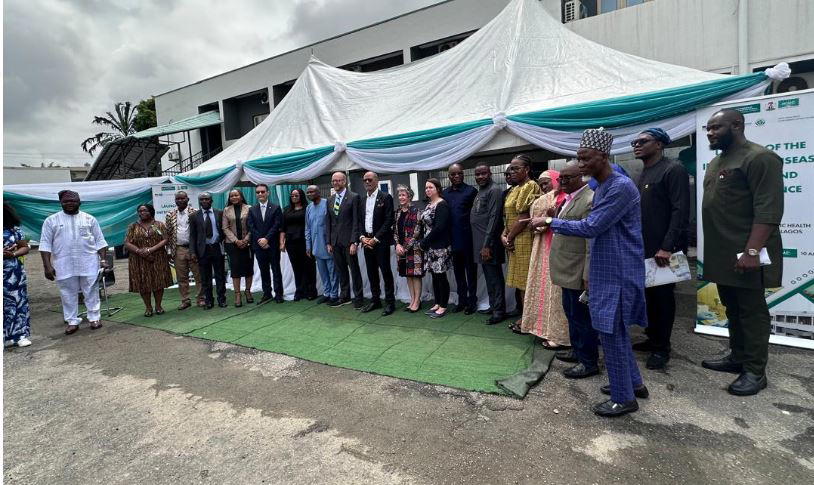
… As CDC, Taiwanese govt fund upgrade of NCDC Labs
By Chioma Obinna
Nigeria’s fight against infectious diseases got a major upgrade weekend as the country’s Central Public Health Laboratory (CPL) received a makeover funded by the Taiwanese government, in collaboration with the U.S. Centres for Disease Control and Prevention (CDC) Foundation and the Federal government.
The exciting project will transform the CPL into a modern facility, equipped with cutting-edge technology and boasting an efficient open floor plan.
Speaking at the launch, the Lagos State Commissioner for Health, Prof Akin Abayomi who noted that diseases like Malaria is one of those classic diseases people tend to make a clinical diagnosis, added that such has significant implications clinically as without making the laboratory diagnosis, patients are exposed to all kinds of mistreatments and misdiagnosis.
Abayomi said the state was trying to drive the culture of testing and treating with positive results, hence, the reference malaria laboratory in Lagos, funded by the partners, was a step in the right direction. He said the project would drive collaboration between the federal and the state public health laboratories.
On the optimal benefits of the project, the Director-General of Nigeria Centre for Diseases Control and Prevention, NCDC, Dr Jide Idris who noted that the upgraded lab will be a game-changer for Nigerians said it will be able to detect a wider range of diseases, including those with the potential to cause devastating outbreaks. This translates to earlier intervention, lower death rates, and a healthier population overall.
He said laboratory investigation of disease outbreaks will be faster and allow for more comprehensive disease testing. “By the time the upgrade of the lab is completed, Nigeria will be in a better position to detect most of the diseases that are prevalent in the country. We can detect early, we can easily mount a response to reduce the negative effect of disease and reduce the number of deaths among others.”
He said the Lagos lab is the second National reference Lab which has one in Abuja and they are all being upgraded to detect more diseases. “This lab here is a way of getting prepared for any eventualities.”
Idris also disclosed that they are partnering with JICA from Japan to establish a DSL3 laboratory and also a training institute to expand detection capabilities to effectively combat disease.
Speaking, the Chief of mission of Taiwan government in Nigeria, Andy Yih-Ping Liu said Nigeria is important for the international society, adding, “We’re going to continue with more collaborative efforts through the partnership that is established by the Nigerian CDC together with the U.S. CDC Foundation and with Taiwan government.”
He said Taiwan is honoured to be able to participate through the connection with the U.S., helping the Nigerian to build more capacity among medical and health experts through the project. “This is the first one ever that Taiwan connected and collaborated with the U.S. and connecting with the Nigerian authority.”
Speaking, the Senior program officer with the CDC Foundation, Cassandra Webster expressed happiness to be part of the partners, adding that, the partnership would help strengthen the public health infrastructure in Sub-Saharan Africa and bolster their ability to prevent, detect, and respond to infectious disease threats.
“Our team at the CDC Foundation looks forward to continuing to work together with you all as this project continues to move forward in vital work to strengthen Nigeria’s public health infrastructure.”
In his welcome address, the Chief Executive Officer, APIN Nigeria, Dr. Prosper Okonkwo, who noted that they are striving to promote ownership and sustainability, identified support and integration as key in the project.
On his part, the Deputy CEO for APN Public Health Initiative, Dr JOC Samuel, said the upgrade project is expected to strengthen the NCDC’s ability to respond to public health emergencies.
He further added that the project was to expand the capacity of the NCDC to manage various public health threats. He said APN was chosen as a partner to implement the project, which involves repurposing existing lab spaces at the NCDC for a more modern and open floor plan.
“We are using the standard of integrated disease testing, instead of focusing on one disease at a time, to be able to cover other areas. The basic project here is to prepare the floor plan and space for this capacity, in terms of the physical infrastructure and ultimately the human resource capacity.
“This will allow for the integration of disease testing and the use of new equipment. The U.S. CDC in Nigeria played a key role in bringing all the parties together, including the Nigerian government and the CDC Foundation.”
Speaking, the Principal Medical Officer, Ministry of Foreign Affairs, Speaking, a representative from the Nigerian Ministry of Foreign Affair, Dr. Oladimeji Omishekun, who described the project as a laudable effort,” said “It will improve Nigeria’s ability to manage diseases based on strong evidence.”
Disclaimer
Comments expressed here do not reflect the opinions of Vanguard newspapers or any employee thereof.