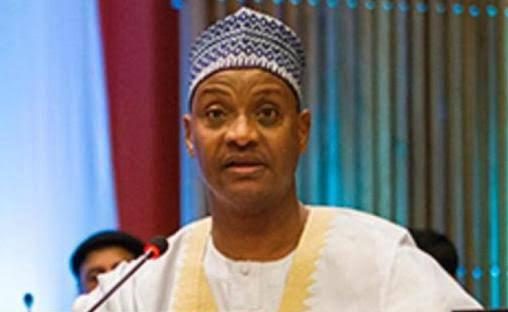
“The changes of the past 30 years represent tectonic shifts in how the world works, in our health systems, political institutions and social norms —“, UNFPA, State of World Population 2024
THE launch of the State of World
Population, SWOP, 2024 in Abuja, on April 24, 2024, calls for introspection about issues related to population and their close connection to sustainable development and entrenchment of democracy in Nigeria. Abuja was honoured by the UNFPA alongside Geneva, to host the global launch of the report on the state of the population of the world, which reached the eight billion mark in 2022, and is said to be increasing everyday by about 290,000 births.
The dynamics of population may seem mundane in terms of having discourses around them, but they are nevertheless important in aggregating opportunities and problems surrounding the different issues on sustainable development and democracy. Among such issues is the fertility rate challenge that seems to defy any scientific determination in terms of leveraging policies towards population control and management. The exponential increase in Nigeria’s population is considered a serious problem and indeed, a threat to the viability of development and democratic governance in the country. This can be appreciated when it is realised that Nigeria’s population more than doubled between 1990 and 2020, despite the high maternal mortality rate in the country, according to UNFPA.
The meeting of expectations of such vast numbers of people in the face of dwindling resources and opportunities, might be considered a serious issue in terms of setting benchmarks for development, as well as entrenchment of equitable system of government around democratic principles. The critical nexus between development and peace is also an intricate subject that is contingent on the effective harnessing and management of population sizes and advancing the dividends of sustainable development. This much was affirmed by the UNFPA Executive Director, Dr. Natalia Kanem, in her address during the launch.
Where the so-called “youth bulge” is so prominent and pronounced, and where opportunities are scarce and far between, it becomes a matter of considerable difficulty to maintain normalcy in any given situation, especially when hopes are fading and expectations are left unmet. It is said that 70 percent of Nigerians are under 30 years of age, and 45 percent of this number is under the age of 15. This means that at the rate our population is growing, we might exceed the 450 million mark that we are projected to reach by 2050, potentially making us the third most populated country in the world, after India and China. Put in stark figures, Nigeria’s population increased by 8.1 million in 2023, meaning that 22,216 life births were recorded each day of the year.
At this rate of fertility and the increasing chances of child survival due to somewhat better nutrition and healthcare, our population will be out of proportion to the amount of resources that we could muster to cater for ourselves in the near future. The dilemma awaiting us is simply that we do not have the resources to meet the needs of such vast numbers, in terms of providing basic necessities like healthcare, housing, food, education, recreational facilities, water and sanitation, critical infrastructure and other necessities that make life wholesome and meaningful.
The unprecedented urbanisation across the country owing to rapid population increase and the dislocation of life in the rural areas, also poses challenges to the government in terms of provision of adequate facilities and amenities. Of even greater concern under the circumstances, is the challenge of planning and policy formulation in the face of runaway population growth. No government can effectively plan for development in the wake of uncontrolled population growth. Central to any planning is the availability of qualitative and disaggregated data on the state of the population of a country.
This is critical in terms of establishing benchmarks and targets to be attained in the course of implementation of policies and programmes. This is even more so when budgetary allocations must be determined according to the size as well as the needs of the country’s population. In the absence of such a prospect, it becomes a really serious issue of policy to reflect on the wider ramifications of population increase and meeting of the needs of such large numbers of people that must be addressed in the course of government’s overall undertakings.
The prioritisation of choices to be made in crafting policies on population must transcend thematic factors like domestic violence, particularly against women, girl-child education, unwanted pregnancy, access to contraceptive materials, ensuring gender equality, preventing maternal and infant mortality as well as a range of other associated issues.
Population policy in Nigeria must conceptualise development as the central and most critical end result of decisions to be taken towards carrying out exercises like national population and housing census and gender and youth projects. These should take cognizance of the dynamics of transformation and mobility in terms of increases in the numbers of people to be factored into development programmes.
“Leaving no one behind” should not be an empty slogan but a signpost towards the attainment of policies like the UN’s Sustainable Development Goals, SDGs, and nationally established development priorities that should be inclusive, sustainable and realistic. This inclusivity is the bedrock of sustainable and resilient democracy that should in turn, usher in peace and general happiness in our societies.
For our democracy to survive and thrive, we must bridge inequality and stem the growing tide of discontent that is appearing to overwhelm our national aspirations to attain accelerated development and contribute to the overall well-being of humanity. This article would congratulate the National Population Commission, NPC, which is ably led by the Nasir Isa Kwarra towards conducting the national population and housing census in Nigeria.
The adequate, effective and timely resourcing of the NPC is a recipe for the success of the census exercise and the overall attainment of the objectives of the Revised National Policy on Population and Sustainable Development, including the aspirations of attaining the qualitative leveraging of demographics towards achieving national development goals.
In this connection, the role of the Population Advisory Group, PAG, consisting of experts drawn from different fields of endeavour in public policy, should be harnessed tightly and frequently, in order to enhance the capacity of the NPC to deliver on its mandates, and guide the Federal Government towards the effective implementation of the revised national policy on population. Broadening the base of collaboration with UNFPA is also a desirable factor in establishing credible frameworks for executing population and human development related activities in Nigeria, especially in the areas of healthcare, gender advancement and social welfare programmes.
Such collaboration encompassing all relevant local, state and Federal Government agencies and establishments, would be an added advantage towards the effective mainstreaming of policies on population management and harnessing of the much talked about demographic dividends in Nigeria. This, in turn, should become the bedrock of sustainable democracy in Nigeria.
Disclaimer
Comments expressed here do not reflect the opinions of Vanguard newspapers or any employee thereof.