By Ishola Balogun
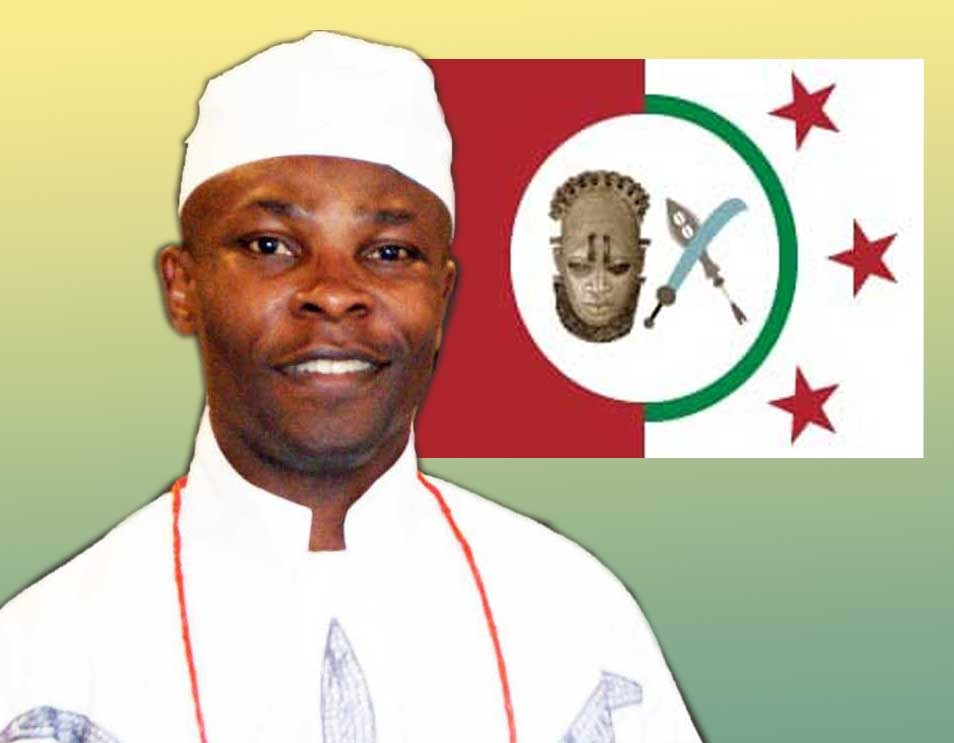
Uwagboe Iyoboevbo Ogieva, Edo state-born dude, is the CEO of OWAG Nigeria Limited and author of a book titled, “Genesis of Great Benin Origin”; He speaks about his passion for Edo nationalism and how he designed a flag for Edo people which was later adopted by the state government.
Ogieva founded the Oseghe Edo Diaspora Association, initiated the Great Benin Origins Organisation and he is also the Coordinator of Edo National Congress and Director of Media, National Youth Council of Nigeria, Europe Chapter. He said the state government was not fair to him after designing the flag for the state. He added that his contribution was however motivated by his passion and his Afrocentric idea to raise the consciousness of his people on cultural development rather than any political motive.
Excerpts:
What is the plight of Nigerians living in Spain?
Spain is one country where many Nigerians enter through the desert or through Morocco. This illegal route is causing the death of many Nigerians who are desperate to leave the country. Passing through the Sahara Desert to Spain is a death trap, difficult and dangerous.
Truly, some Nigerians have gone through that route and succeeded in making it through, but thousands have also lost their lives. Many others are not ignorant of the danger but out of desperation still want to take the route.
Recently, though, cases of human trafficking have reduced which was as a result of positive engagement of both the state and the federal government of Nigeria in collaboration with the Spanish authorities in that respect.
Apart from that, Nigerian youths in Spain are doing well in their various fields of endeavour.
What is your connection with the Edo Flag?
My passion for the Edo nation grew after reading lots of Afrocentric books by great Pan-African scholars and writers like John Henry Clarke, Cheikh Anta Diop, Moleku Asante, Dr Ben Naiwu Osahon, Chinweizu, Dr. Amos, Kwame Nkrumah and many other African American scholars in my early years in Europe.
That, of course, raised my consciousness about my people and I began to think from that perspective. Immediately I finished a course in Graphic design, I designed the flag for Edo people and released it onto the social media space. So, the same flag that I designed is what is in use today by the Edo State government.
What inspired you since you were not contracted to do it?
The motivation came in two ways, which resulted in the creation of the flag. It was at the time when ethnic nationalities were calling for restructuring of Nigeria and regionalism, where ethnic nationalities could have full control of their states or what is called regional autonomy.
Remember, Yoruba Oduduwa nation has a flag, the Igbo has the Biafra flag and even the Ijaws who are not up to Edo people in population, presented a flag of statehood. At that time, the Edo people had no flag representing the whole Edo nation and state.
As a proud Edo man who had led various Pan-African groups, events and movements, I was very keen on designing a flag to represent the most prestigious Edo culture, people and tradition in such a way that would reflect the uniqueness of the Great Benin Kingdom and its diversities. It was meant for all Edo people both at home and in the Diaspora. The coat of arms, anthem and emblem were also created.
How is your own concept of the Edo flag different?
When I checked the internet before I created the Edo national flag, what I saw then was the Midwestern flag, which was typical of Nigerian flag. The Benin palace flag also came up, basically representing the palace of Oba of Benin.
Another flag in existence was the old Benin Kingdom flag in red colour with an image of two people, one cutting the head of another in white colour. That flag looked to me like a military flag. A flag ought to represent a people’s culture and their way of life in a more classic way. I decided to create this Edo flag using a combination of these specifications in a unique design, having components that are presentable and well represented.
The flag has red, white and green colours with the head of queen Idia n’iye Esigie popularly known as Festac head, Ada and Eben.
Three stars were added representing the greatness of the great Benin Kingdom’s past and heroic achievements, the present surviving monarchy, and the promising future of Great Benin descendants’ aspirations and hopes. The red colour signifies the efforts and blood of past Edo heroes who sacrificed for the kingdom. The white colour means a peaceful nation. Despite its diversities, Edo remains the most peaceful nation in Nigeria. The green curve colour in the flag refers to its geography, vegetation, fertile land and rich natural resources.
Ada and Eben depicted royal symbols of the nation in relation to its clans and military might. Prior to 2008, when I designed it, there was none in use. I challenge anyone to produce it if there is any. As an Edo man, I felt Edo needed it, and I did it and shared it on social media. In fact, I was the first person to raise this same flag in Spain under the forum of Edo nationals in the Diaspora, which I formed and manage till today.
When Barrister Ojealaro Friday, a prominent and illustrious son of Edo saw it, he did not only appreciate it, but wrote a brief similar interpretation and recommended it in many Edo political fora. Also, when it was shared on social media, many sons and daughters of Edo commended the work. But the government, having adopted it, never deemed it fit to recognise the effort.
Did you communicate your ideas about the flag to the successive governments?
Yes, I established non-formal communication with the government then when I noticed that it had been adopted and was being used at political fora.
But you know Nigeria with the syndrome of difficult bureaucracy, there was no response. I never bothered though, but apart from the fact that I did it out of passion for my state, at least, it is also not out of place to give recognition to this innovative and creative effort. The same flag is adopted on Edo state government’s website and all its official publications, without recognising the author.
Disclaimer
Comments expressed here do not reflect the opinions of Vanguard newspapers or any employee thereof.