By Egufe Yafugborhi
Worried over the greater threat anthropogenic methane poses to the Nigerian environment than fossil fuel, stakeholders have moved to share roles on collective efforts to check the human-induced emissions.
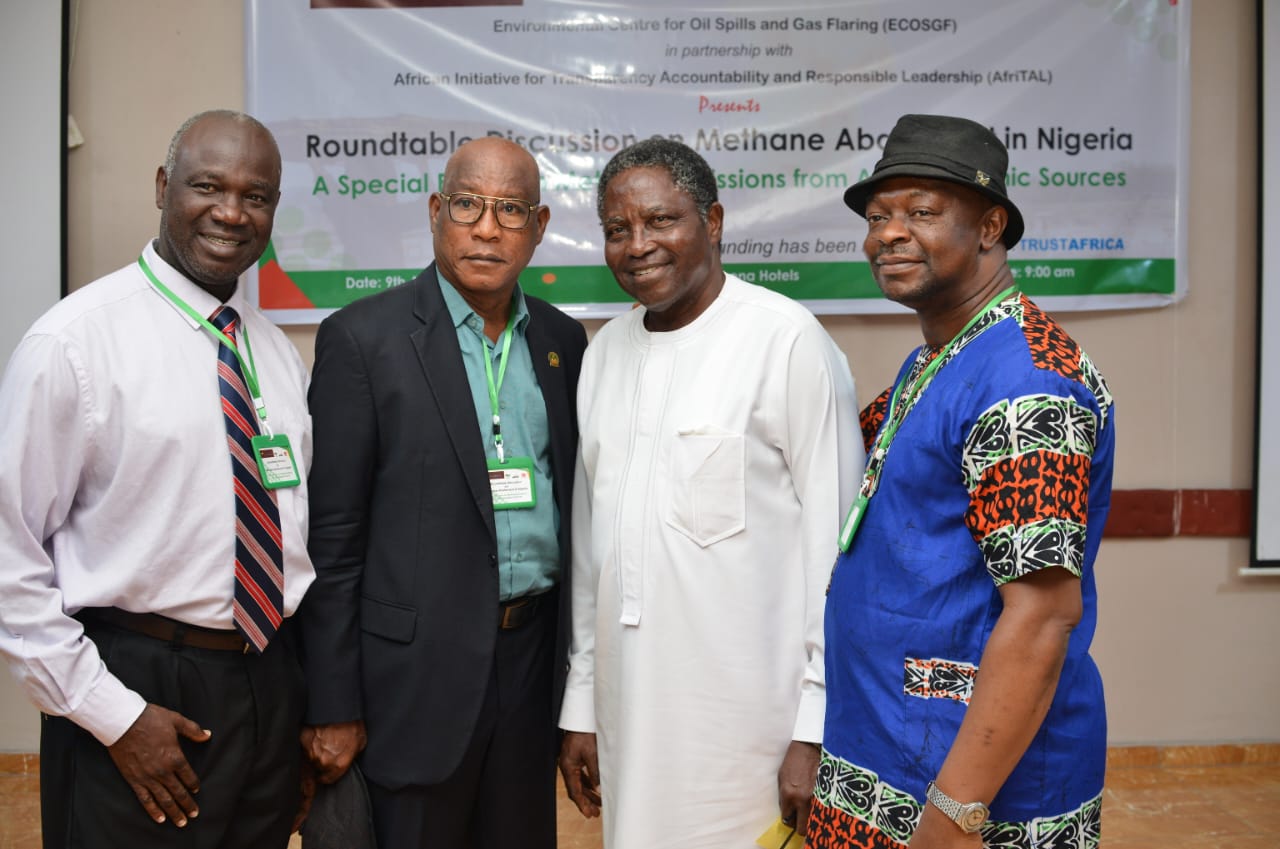
Fifty critical stakeholders covering Cross River, Akwa-Ibom, and host Rivers state, gathered in Port Harcourt, to co-create solutions and synthesize new knowledge to drive down methane emissions from anthropogenic sources, in a second phase of a project gravitating towards practical actions in consequent phases.
Funded by TrustAfrica, the project is being championed by the Environmental Centre for Oil Spills and Gas Flaring (ECOSGF), African Centre for Transparency Accountability and Initiative (AfriTAL) with Stakeholder Democracy Network as technical partner, collaborating with other Civil Society Organisations (CSOs.)
Themed Methane Abatement In Nigeria: Special Focus On Emissions From Anthropogenic Sources, the round table interactions highlighted how anthropogenic sources constitute up to 60% of global emissions, a signal to take seriously its critical impact on temperature rise, climate change, and consequences for humanity.
Highlighting the imperative for urgent action, Dr. Ogbeifun Louis Brown, Executive Director, AfriTAL, noted that, “The destruction of the ecosystem is beginning to catch up with human beings.
“Methane is a major contributor to the current heatwave in the country. It is 80 percent more potent in trapping heat and carbon dioxide. Carbon dioxide, for instance, can stay in the atmosphere for 100 years, but methane stays for about 12 years.
“When methane is released into the atmosphere, first it pollutes the oxygen you and I take, and when you take in such oxygen, it goes through your lungs before it goes to every other part of your body.
“When it traps the heat, getting it released until it disperses, of course, it’s going to increase the wave of temperatures and that is why methane on its own causes about 40 percent of global heat-related issues within the environment.
“One of the major implications of methane is premature deaths. There are also asthma-related diseases that are aggravated and that’s a cause for worry. It is therefore worth advocating for so we can have better life for our people.
“If we all do what we can, government also doing its own bit, in the next 10 years, we might be able to reduce methane levels especially from anthropogenic sources by 45 percent and reduce hospital visitations and infant mortality rate.”
Among practical steps to mitigate methane emissions in Nigeria, Ogbeifun suggested that, “Many of our garbage cans are open, waste dumps exposed within our environment. If we do better by bagging our waste from the house level before putting it in the garbage can, then we cover it, which is within the environment.
“At the larger scale, within the community, local government, all baggage we expose into the landfills, can we begin to ensure that are buried properly? Simple things like that can help our villagers, communities know very well that there are things we do to help abate methane in our environment.”
Nosa Aigbedion, South-South Zonal Director, National Environmental Standards and Regulations Enforcement Agency (NESREA), added that we improve management of, “Agricultural processes like cattle rearing which produce a lot of methane into the atmosphere either through belching or farting, release a lot of methane into the atmosphere.
“We want to avoid indiscriminate burning. This process releases methane which is a very high contributor to greenhouse gasses.
So, methane is a big issue to be looked at when it comes to greenhouse gases.
“Government is trying in its bid to reduce methane release, not just methane, but every gas that has a deleterious effect on human health. The government is working assiduously to ensure it is reduced.”
Key resolutions highlighted in a communique at the end of deliberations also captured the need for robust sensitization of Nigerians to increase citizens’ consciousness for a safe environment and respect for relevant laws with the government tasked to show commitment to gas flares out and effectively enforce Nigeria her laws including international laws and pacts she has signed into to protects the environment.
Also emphasized was the new need to balance the complex interaction between environment, economy, and sustainability, adoption of smart agric that adapts to realities of climate change, technological readiness in modification of the livestock feed to drive methane reduction, every stakeholder carrying out his role with commitment.
Disclaimer
Comments expressed here do not reflect the opinions of Vanguard newspapers or any employee thereof.