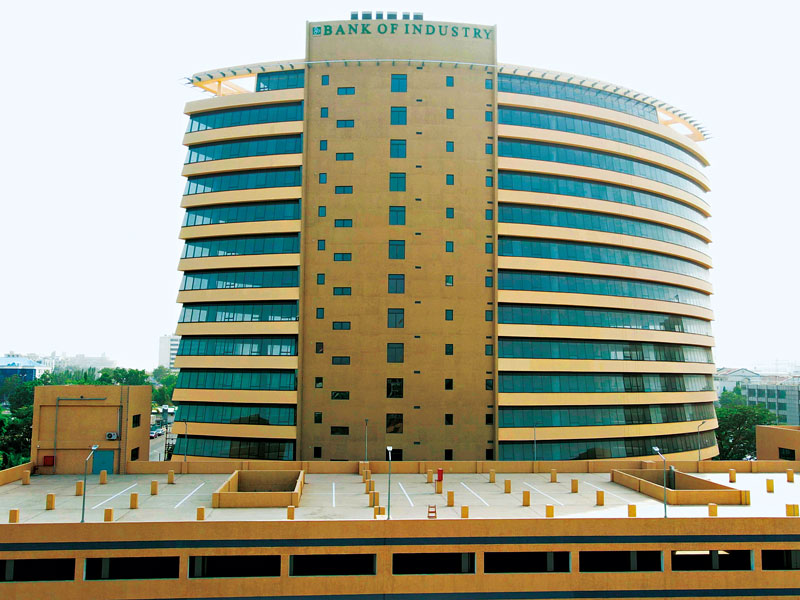
…To automate operations
…approves Independent Transmission Operator from TCN
Emma Ujah, Abuja Bureau Chief
The National Council on Privatisation (NCP) has approved the repositioning of the Bank of Industry (BOA) to make it alive to its mandate of agriculture financing to boost food production in the country.
To this effect, the government is to upgrade the bank’s ICT infrastructure to automate processes and ensure accountability.
The NCP took the decision at it Wednesday meeting at the President Villa, according to a statement by the Head of Communications of the Bureau of Public Enterprises (BPE), Mrs. Amina Othman, in Abuja Friday.
NCP chaired by the Vice President Sen. Kashim Shettima also approved an Independent Transmission Operator from the Transmission Company of Nigeria (TCN).
The repositioning of the BOA is said to be geared towards a more efficient fund disbursement, utilisation and timely payment of credit facilities extended to farmers and other Operators in the agricultural value-chain.
Under the new arrangement, the Federal Government is expected to source professionals to manage the transition of the bank and the restructured organisation.
Presenting the committee’s report, the Minister of Finance and Coordinating Minister of the Economy, Mr. Wale Edun, who is also the Vice-chairman of the NCP, highlighted the decision to reposition BOA for efficiency and effectiveness
The FG had set up an 8-member inter-ministerial team was set up by the NCP in 2023, to review the state of affairs at BOA, given its critical role in agriculture and the administration’s commitment to food security.
The NCP approved collaboration between the Bureau of Public Enterprises and the Federal Ministry of Agriculture and Rural Development, along with the Federal Ministry of Finance, to restructure and recapitalize BOA.
Established in 1972, BOA, formerly known as Nigeria Agricultural Cooperative and Rural Development Bank, is owned by the Federal Government of Nigeria (FGN), with the Ministry of Finance Incorporated (MOFI) holding 60% and the Central Bank of Nigeria (CBN) holding 40%.
READ ALSO: Why we’re partnering Bank of Industry – Gov Eno
The Bank is supervised by the Federal Ministry of Agriculture and Food Security (FMAFS).
BOA’s authorized share capital was increased in 2022 from N50 billion to N500 billion to facilitate its repositioning.
The committee saddled with the mandate to reposition the Bank consisted of the Minister of Finance & Coordinating Minister of the Economy as Chairman, Minister of Agriculture and Food Security, Governor of CBN, Ministry of Finance Incorporated (MOFI), among others, with the Director General of the Bureau of Public Enterprises as Secretary.
On the Independent Transmission Operator, the decision was said to have been taken to address the perennial System Collapse due to the inability of TCN to efficiently manage the wheeling of electricity from power generating plants to distribution companies across the country.
The Transmission Company of Nigeria (TCN) that is composed of the Transmission Service Provider (TSP), System Operator (SO) and Market Operator (MO) has remained fully government owned.
In 2012 Nigerian Electricity Regulatory Commission (NERC) issued two licences to TCN as a step towards the establishment of an Independent System Operator (ISO): a distinct licence for the TSP functions and a combined licence for the functionally related System Operations and Market Operations.
The TSP owns, operates and maintains the high-tension network of 132kV and 330kV; the SO carries out controls, coordinates and monitors the national grid; the MO carries out market settlement and the administration of the Market Rules due to grid electricity trading.
The SO and MO respectively control the flows of electricity and money in the electricity value chain (Generation, Transmission and Distribution) while the TSP owns the hardware for high-tension electricity flows.
Thus, the SO and MO serve the whole value chain in which the TSP is a participant; this implies that SO and MO operating under the same management with the TSP is a basis for conflict of interest.
The separation of the roles of System Operation (SO) and Market Operation (MO) – jointly called Independent System Operator (ISO) – from the distinct function of the Transmission Service Provider (TSP) to engender fair competition through merit order dispatch as well as enable TSP to concentrate on its core responsibility of providing quality electricity transmission services and reducing the frequent system collapses in the country
Disclaimer
Comments expressed here do not reflect the opinions of Vanguard newspapers or any employee thereof.