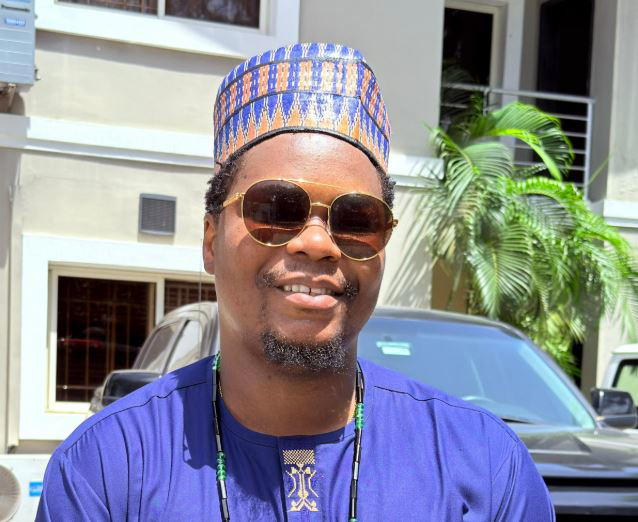
Taslim Oseni
*A conversation with Taslim Oseni on why more Nigerians should contribute to open source
By Kenneth Oboh
Despite Nigeria’s booming developer ecosystem and global tech presence, open source remains an underexplored avenue for many local engineers. While companies prioritize product delivery and developers chase jobs and contracts, the long-term value of contributing to public, collaborative projects is often overlooked.
But that’s beginning to change, thanks to pioneers like Taslim Oseni, a senior software engineer and avid open-source contributor. Over the past eight years, Taslim has contributed to and maintained multiple open-source projects, including the censorship-resistant Ceno Browser, developer tooling like Cowrywise’s Embed Node, and a number of Android libraries. His work has impacted developers globally, all from a desk in Lagos.
We sat down with him to understand why open source matters, how it’s changed his career, and why he believes now is the best time for Nigerian engineers to get involved.
Thank you for joining us today, Taslim. Could you start by explaining why Nigerian engineers should care about open source?
It’s one of the most powerful ways to build credibility, real-world experience, and global visibility, and the cool thing is that you actually don’t need permission from anyone to get started. When you contribute to open source, you’re not just coding; you’re learning how to collaborate at scale, work across cultures, and solve real-world problems. In a market like Nigeria, where access to global networks can feel gated, open source is a borderless playground. It is your passport.
What role has open source played in your own growth as an engineer?
It’s been foundational. My journey started in 2017 with small bug fixes and documentation improvements, but over time, it evolved into more serious contributions. One of the most impactful projects I’ve worked on is Ceno Browser, a decentralized, censorship-resistant browser backed by a non-profit Canadian organization called eQualitie.
I also built and maintain Embed Node, a Node.js wrapper for the Cowrywise Embed API. I have also built my own open source projects that have attracted forks and engagements from other engineers, including a scheduler as well as a chess timer application. Those kinds of contributions don’t just help the ecosystem, they help you grow as a developer and leader.
Some Nigerian developers want to contribute, but feel like they’re not “ready” or “good enough.” What do you say to that?
Yes, I hear this all the time, and it’s simply not true. It isn’t. See, you don’t have to be a genius or a senior engineer to contribute. You can start with small contributions like fixing typos in README files, testing features, reporting bugs, translating documentation and also by creating issues and asking thoughtful questions. Most open-source projects have small issues labelled “good first issue”. Start there. The most important thing is consistency, not perfection.
What projects do you recommend for Nigerian devs who want to get started?
I’d recommend exploring projects from African-led communities. For instance, Open Source Community Africa (OSCA) regularly spotlights accessible projects. You can also just surf the Explore page on GitHub. Don’t wait for someone to invite you. Open source is open, take initiative.
What challenges do Nigerian developers face when it comes to contributing to open source?
A few come to mind:
The first is time. I think many Nigerian engineers are swamped with their fulltime engagement and find it hard to carve out space to contribute. I also think that a lot of devs assume open source is only for experts or very senior engineers; some don’t even know where to begin or what kinds of projects exist.
But these are solvable. Start small. Join communities like OSCA. Ask questions. Your first contribution doesn’t need to be perfect, it just needs to happen.
You mentioned earlier that open source can help build global credibility. How exactly?
When someone checks your GitHub profile and sees that you’ve made meaningful contributions to projects that other people depend on, that tells them you’re collaborative, dependable, and experienced. It may even be better than a CV in some cases.
In fact, many of the opportunities I’ve had, including speaking at global events like DWeb Camp and working with international teams, happened not because I applied formally, but because people discovered my work in open source. Your GitHub can become your global resume.
Can open source also benefit Nigerian startups, beyond individual engineers?
Absolutely. Startups should think of open source not just as a contribution, but as infrastructure. It lowers costs, accelerates development, and improves quality. Also, if Nigerian startups open source some of their own internal tools and small libraries, the will benefit from community feedback, talent attraction, and even brand visibility.
At Cowrywise, even though Embed Node was something I built independently, it ended up helping dozens of third-party developers and strengthened the developer ecosystem around the company.
What’s your advice to a junior engineer in, say, Ibadan or Ilorin who wants to go global through open source?
Start where you are. Use what you have. Learn in public. Build in public.
You don’t need to move abroad or work at a big-name company to make an impact. You can be sitting in Yaba or Osogbo and be part of a project used by millions. That’s the power of open source.
Consistency matters more than credentials. And once you get the hang of it, teach others. Help a friend submit their first pull request. The ripple effect is huge.
Final thoughts for Nigerian engineers and the ecosystem at large?
Open source isn’t just about writing code. It’s about sharing knowledge, building community, and shaping the tools the world uses. Many Nigerian developers have impressive talent, but we need to be visible, collaborative, and consistent. Contributing to open source is one of the most direct ways to do that. Let’s stop waiting for permission. Let’s start showing up. The world needs what we have to offer.
Disclaimer
Comments expressed here do not reflect the opinions of Vanguard newspapers or any employee thereof.