By Osa Mbonu-Amadi, Arts Editor
From ABU to NGA
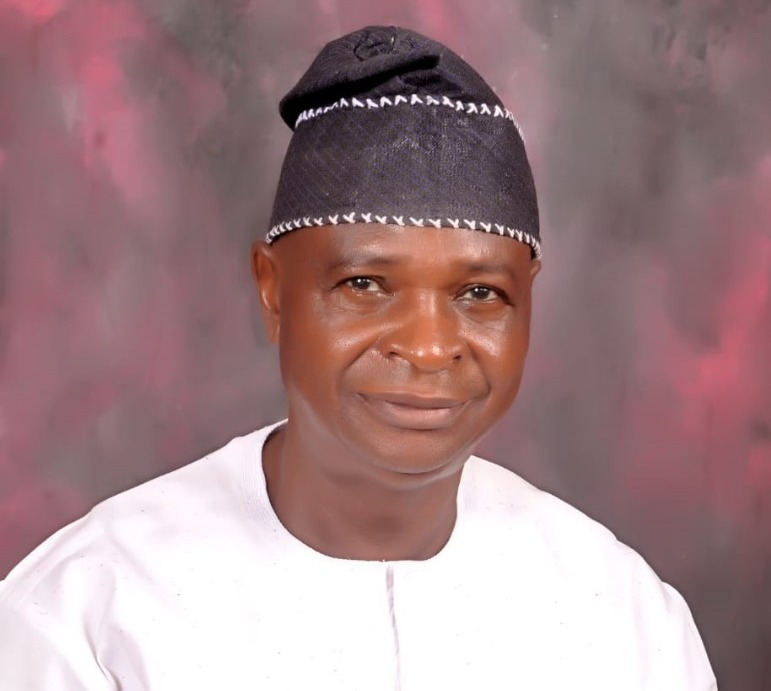
Dr. Simon Odey Ikpakronyi joined the services of the National Gallery of Art, NGA, Nigeria in December, 1993 as Senior Visual Art Officer, having completed his first degree at the Ahmadu Bello University, ABU, Zaria in 1991 and the mandatory National Youth Service Corps, NYSC, programme in 1992.
Through hard work, he rose to the position of Director in 2012. As a director, he headed the Department of Educational Services, ES, from 2012 to 2014; Department of Planning, Research and Documentation, PRD, from 2015 to 2016; Planning and Research, PR, from 2016 to 2019; Acting Director General from March 19, 2019 to September 1, 2020, and then, back to the Department of Planning and Research from September 1, 2020 to January 7, 2021.
Thereafter, he became the Director and Head of Department of Curatorial Services, DCS, from 2021 till his retirement from the services of NGA in October 2023.
November 20, 2023 was his 60th birthday when he was due to formally leave service, but due to the new policy that came up from the Head of the Civil Service of the Federation requiring Federal Government directors who have served up to eight years and above to retire from service, he left honourably.
At the Assistant and Deputy Director Levels (2004 to 2008), Ikpakronyi was at various times assigned to oversee Departments of Research and that of Curatorial Services before he became a director. In February 12, 2007, he was re-deployed to the Department of Curatorial Services to hold forth pending the appointment of a substantive Director. The Department of Educational Services was split in September, 2011 and in January 2012 he was posted to head it while overseeing the affairs of the Department of Planning, Research and Documentation pending the appointment of a substantive Director.
Instead, a substantive Director was appointed, not for PRD, but for ES. Hence, Ikpakronyi actually handed over the affairs of the newly created Department of Educational Services at the time on October 2014 and that of Documentation and Monitoring in late 2016. These are the core professional departments of NGA.
It was while heading the Department of PRD that the department gave birth to two other departments, the Department of Educational Services and Documentation and Monitoring. These were initially divisions in the department of PRD. In response to directive, Ikpakronyi restructured the divisions for the proper take off of the new departments, resulting in what they are today. It is to be noted that some of these departments came up at a point and disappeared due to restructuring exercise at various time in NGA.
Beginning of his research works
It was when he headed the department of Research at various times that Ikpakronyi actually strategized and started to research on various aspects of Nigerian art, especially modern art which Dr. Dike initiated its documentation. The research work enabled Ikpakronyi to author no less than 76 articles, most of which are published in NGA Publications as part of his official assignments. There are about 11 unpublished ones that he is still developing. Being a focused and restless scholar, he keeps researching and developing articles.
His articles are quite informing and educating on developments in Nigerian art, particularly the modern art. All what Ikpakronyi has done are within the space of between 1993 and 2023 (three decades). He is in fact, noted as one of the few civil servants in Nigeria who in spite of their official schedules have written so much in their areas of specialization as if in the academic circles. Ikpakronyi always reads and writes, at home, office, inside the car even on aircraft when on transit; He can always be seen reading and writing with a red pen. In fact, red pen is part of him, as some of his colleagues often used this to make jest of him.
His curatorial works
Similarly, his heading of Curatorial Services Departments at various time also enabled him to curate and co-curate not less than 63 art exhibitions (Solo and Group) within and outside the country. He handled each of the curatorial works professionally. Most of the exhibitions he curated are appropriately complemented with standard exhibition brochures. That is, they are usually well documented. This is because he believes the brochure is the legacy of any art exhibition. That is, any art exhibition he handles or involved, Ikpakronyi always takes time to write copiously and comprehensively for people to read, understand and enjoy the art works.
This is what Nigerians need at this time so as to enable them embrace and appreciate fine art as is the case in other climes. In fact, Ikpakronyi is generally noted for copious writing such that some scholars usually say anything Ikpakronyi researched on, it is difficult for another researcher to do much there as he must have covered almost every relevant aspect or area. Hence, many people refer to him as a thorough art researcher.
Documenting master Nigerian artists
Aside art exhibition, Ikpakronyi has also documented some master Nigerian artists. His articles can be read in publications such as: Aina Onabolu: A symbol of the National Studios of National Gallery of Art in 1999; Life and Works of Theresa Luck-Akinwale, Portraits of Distinguished Personalities by Theresa Luck-Akinwale in 2000; Nku Di NA MBA: Uche Okeke and Modern Nigerian Art in 2003; Master of Masters: Yusuf Grillo, His Life and Works in 2006; Gani Odutokun: A Legend of Nigerian Art in 2007; Bruce Onobrakpeya: Footprints of Master Artist in 2012; Luca Tokan Bentu: The Art ICON of Northern Nigeria in 2016; Timothy Adebanjo Fasuyi: A Renowned Artist and Accomplished Educationist in 2018; Abayomi Barber: An Artist Born and Made in 2021; Olowu and Erimona: A Tale of Two Modern Benin Sculptors in 2023.
Those are among many others in this fold, very rich materials that can significantly aid the understanding and teaching of fine art, especially in art schools within and outside Nigeria.
Ikpakronyi co-edited and edited some of these publications. Many scholars (Art researchers, art teachers and Art students) have immensely benefited and are still benefiting from his detailed research works.
Importantly, the simplicity in his style of writing cannot be over emphasized. He writes for everyone in the society. Many scholars have given testimony to the usefulness of his works. He has contributed immensely to knowledge of fine art in Nigeria. Modern Nigerian art is his focus.
Origin of his interest in Art History
How did Ikpakronyi’s interest in Art History come about? It all started during his first-degree programme at the Ahmadu Bello University, Zaria in late ‘80s. At the time, only few books, especially on modern Nigerian art, were available for use in teaching art history students at that level compared to traditional Nigerian art that books authored by foreigners as well as those published by the National Commission for Museums and Monuments abound and were in use.
On modern Nigerian art, the most popular book he could re-call at the time was 20th Century Art of Africa written by a Ghanian scholar, Kojo Fosu, who taught in ABU between 1960 and early 1980. The book, which was first published in 1986 and revised in 1993, focuses more on modern and contemporary African art.
Though, not detailed enough, the book singled out and discussed in brief some Master African artists. It gives good insight into the development and growth of Modern Art in Africa. It remained a pacesetter in the field of Art History in Nigeria and Africa in general.
Kojo Fosu’s book was more or less a companion to Art History students in Nigeria. Also in use at the time was the Art History Review book published in 1983 by Sylva O. Okereke from the Institute of Management and Technology, IMT, Enugu.
This particular one gives more insight into the art of western world, which to a large extent, aided the teaching of African art. It actually complemented that by Kojo Fosu in the field of art history. These works were among the very few in used at the time. But today, there are pockets of some eight books on modern Nigerian Art authored by indigenes art historians.
Getting his PhD
After leaving ABU, Ikpakronyi continued his studies in Art History. He obtained a Master’s and a PhD degree at the University of Ibadan and University of Nigeria, Nsukka respectively. At the time, only few scholars in Nigeria studied art history at such three levels of education. That is, most scholars only did it either from master degree level to PhD or only at PhD level just to aid their promotion. It was not a popular or viable area to specialize on at the time.
According to Ikpakronyi, books that were available, especially for the teaching of modern African/Nigerian art, were still very scanty with the exception of some exhibition catalogues/brochures in which some artists that participated in such exhibitions were discussed in brief. That is, artists were not discussed in detail as expected.
Noticing this trend right from the first-degree level, Ikpakronyi started gathering materials on modern art that came his way into his archives which later provided rich sources for him when he started his write-ups, particularly from when he found himself in the services of the National Gallery of Art, coupled with Dr. P C Dike’s interest in documenting modern Nigerian artists and their artworks.
Today, the effort of NGA in that direction, as well as that of few Nigerian scholars highlighted above as having written light books, have made significant difference on the Nigerian art scene. A detailed book on the subject is still being expected.
Working under Dr Dike
To begin with, when he started his writings, to a large extent, he was encouraged by the pioneer Director General of NGA, Dr. Paul Chike Dike OON, whom he worked directly with, first, as Personal Assistant and later as Special Assistant all on professional matters. When Ikpakronyi told him that materials, especially on modern Nigerian art were scarce, to complement his interest, Dike encouraged Ikpakronyi to take up the challenge of researching into the various aspects of modern Nigerian Art.
Interestingly, from that time under Dr. Dike, Ikpakronyi trudged on, working assiduously under the Chief Executives of NGA. Incidentally, during Dike’s time, Ikpakronyi was introduced to Professor Uche Okeke of blessed memory who also supported the foundation upon which Ikpakronyi built for his art history writings. And through Uche Okeke, he became familiar with other members of the Zaria Art Society. His good relationship with most of them made it possible for him to tap from their wealth of knowledge because they always welcomed him any time he reached out to them.
They also released relevant materials on Nigerian Art from their archives to him; some of them constantly drew his attention to publications and developments on the art scene which significantly aided his works. The support from them and other members of the artists’ community laid the solid foundation for his take off in writing, and he has been able to achieve all that is recorded against his name as highlighted above.
Dearth of literature on modern Nigerian art
The obvious is at the time Ikpakronyi started writing, some materials on modern Nigerian Art were there, but scanty and scattered. Some in the exhibition catalogues/brochures, magazines, journals, newspapers among others. In fact, Nigeria Magazine published at the time by department of Culture stood out among all of them. There was no single book that talked comprehensively on modern Nigerian art.
Noticing all that, Ikpakronyi took up the gauntlet and started researching and bringing some of the materials together to form good reading materials, which they are today, very lengthy essays or articles. The task of doing that is not quite easy, but he was greatly encouraged, going out to ask questions so as to further develop, enrich and update the materials. He goes on extensive research work to expand some topics that he developed, particularly from the materials already in his possession which today have formed major materials in NGA Publications.
At this juncture, Ikpakronyi beckons to art historians in Nigeria to endeavour to embark on not just research work but extensive ones on Nigerian art. According to him, with the experience he has had in the field, in no distant time most of the artists that will provide authentic information may not be there or will be too weak to do anything meaningfully.
He expressed how difficult it has been for him, getting some of the information. According to him, if the art historians do not work hard in this direction, there might be a huge gap that might be difficult to close in the nearest future. This is because certain events that happened, we were not there and that to capture such vividly one need to talk to those who witness events or know very much about them. He does not fail to acknowledge some of the art historians who have written quite a lot of articles that are published in books, journals, magazines and so on.
Such publications, due to lack of funds are not well circulated to the reach of the target reading public. He mentioned Professor Osa Egonwa among few of who have written light books on Modern Nigerian art. But that many art scholars excelled in writing of articles at the expense of books. He mentioned his Oga, Late Professor Ola Oloidi who wrote many articles but has no book to credit until his demise.
Embraced by fellow intellectuals
No doubt, Ikpakronyi enjoyed the support of members of Nigerian art community; they equally enjoyed what he was and is doing. But members of the academia benefited most from his work. Sometimes his work opens up new research areas for them. Of Course, his writings made him popular not only among his colleagues in the office but the Nigerian Art community generally.
Most exciting is the way and manner Ikpakronyi worked closely and effectively with all the Chief Executives of NGA, started from Dr. P.C. Dike OON, Joe Musa, Abdulahi Sabo Muku and of course the sitting one Ebeten William Ivara. In fact, for believing in what he was doing, Joe Musa, during his tenure in office appointed him one of the Curators who curated his Solo exhibition in 2008. That remains one of Joe Musa’s major solo exhibitions.
Interestingly, Ikpakronyi wrote a very lengthy introduction to the exhibition brochure. The title of the brochure is Joe Musa: Recent Works. Very comprehensive and interesting publication to read about Joe Musa himself, his journey into the world of fine art and his art works. And in line with Ikpakronyi’s interest, NGA has done pretty well in coming out with publications on Modern Nigerian art. In many art fora within and outside the country, one could hear such comments that Nigerian art is one of the most documented, especially when they see NGA’s publications on display. No doubt, Ikpakronyi shared in such credit.
When the present Director General (Chief Ebeten William Ivara) came on board in early September, 2020, Ikpakronyi did not relent; he continued with the way he was working, he handled not less than eleven programmes which were well documented accordingly for posterity.
His tenure as Acting DG of NGA
For one-and-a-half years (March 2019 – August 2020) Ikpakronyi was Acting Director General of NGA. This was historic. To begin with, as earlier highlighted, he served the Pioneer Director General, first as Personal Assistant and later as Special Assistant on professional matters which from the onset positioned him adequately to interact freely with Nigerian artists.
And one must not forget that he worked with Dike from day one as one of the pioneer staff when NGA started till his (Dike’s) last day in the office. As a result, Ikpakronyi gained a lot during the time as well as subsequently with other Director Generals.
And during the period that Ikpakronyi acted as Director General, a lot of programmes and activities were embarked upon as well as the improvement of the welfare of staff. A lot of what he did are documented in publication entitled National Gallery of Art (NGA) 12 months in Review (March 2019 – March 2020). He did his best. And one important thing he wanted to achieve but could not at the time was getting an edifice for NGA.
That is, to have an edifice with standard gallery where the NGA’s numerous collections will be displayed for people to visit, view and appreciate as it is the case in other parts of the world. It is to be noted that since inception, NGA’s major collections have been in the stores which is not too professional and not healthy to the art works themselves. The major essence is to have a place for them. This has actually been the dream of all the previous DGS of NGA who at various points presented memos, wrote to so many authorities without result. Joe Musa came in with a radical approach to it when he came up with a 3D drawing of how the structure would be, and pushed the drawings to the public domain for possible support, but it never came to fruitful.
And having been part of all the approaches that the pervious Directors General took to have an edifice that never materialized, Ikpakronyi on his part chose a different dimension with also a little bit of radicalism to it, first he tried to engage Demas Nwoko’s New Culture Design Development Centre to come up with another standard Architectural 3D drawings with high percentage of African Concept which he intended to launch as well as use to raise fund so as to enable the building of the edifice.
Disclaimer
Comments expressed here do not reflect the opinions of Vanguard newspapers or any employee thereof.