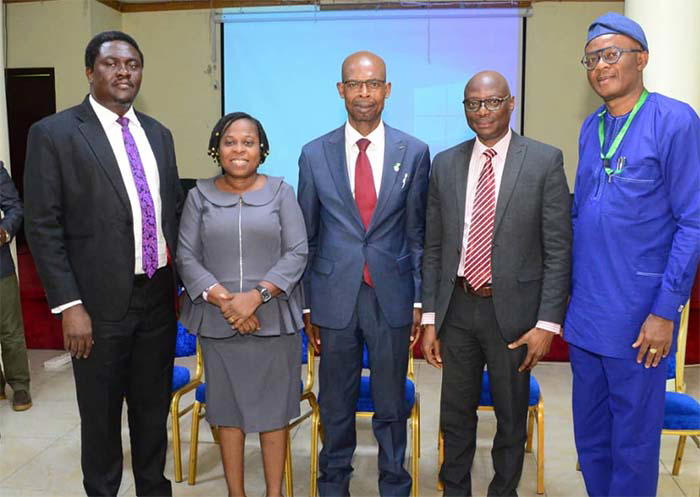
From left: Dr. Lanre Olasunkanmi, FCTI, Registrar/Chief Executive of the Chartered Institute of Taxation of Nigeria (CITN); Mrs. Afolake Oso, FCTI, Deputy Registrar, Technical and Professional Services, CITN; Mr Innocent Ohagwha, FCTI, Vice President, CITN; Mr James Obogwu, FCTI, Vice Chairman 2, Taxation Standards and Practice Monitoring Committee; Mr Akanni Alimi Afolabi, FCTI, Managing Partner, Peak Point Professional Service at the Tax Practitioners’ Workshop with the theme ” A Rounded Tax Practitioner ” held recently in Lagos.
By Elizabeth Osayande & Blessing Lawal
The need to expose tax practitioners to effective and innovative mechanisms, aimed to open opportunities for the government to meet citizens’ needs, formed the one-day workshop organised by the Chartered Institute of Taxation of Nigeria, CITN.
In his opening remarks, the Institute’s President, Mr Samuel Agbeluyi, explained the rationale behind the event themed: “A Rounded Tax Professional.”
His words: “The theme of this workshop tagged “A Rounded Tax Professional” underscores the need for versatility and proficiency in every aspect of the tax practice. In our ever-changing economic landscape, the role of tax practitioners has become increasingly significant. Being well-rounded requires more than just mastering the technicalities of tax policy, laws, and processes. It involves understanding the ethical dimensions of our profession, staying updated with the latest advancements in taxation framework, and embracing a global perspective to navigate the complexities of international taxation
“Today’s workshop is, therefore, designed to explore the various dimensions of tax practice, transforming each of us into well-rounded professionals equipped to face the challenges of our field,” Agbeluyi affirmed.
The workshop put together by the Taxation Standard and Practice Monitoring Committee, Chaired by Dr. (Mrs) Justina Okoror, had several keynote speakers that included: Dr. Mark Abani, who spoke on the above theme; Managing Partner, Peak Point Professional Services, Folabi Akanni-Allimi, who spoke on: Fundamental of Oil and Gas; Taxation of Companies in the Oil and Gas Industry, Upstream Case; Bidemi Olumide on Effective Digitisation Plus Digitalisation of Tax Practice; and Mrs. Olanike James, Partner KPMG, on Understanding the Practice of Financial Services.
Meanwhile, Dr. Abani who expanded on the theme of the workshop noted that: “In Nigeria, tax revenues remain far below levels needed to provide citizens with basic services or fund extra spending to minimize the impact of events such as COVID-19. While trying to strengthen tax collection systems, Nigeria must take a holistic approach to tax reform that includes building citizens’ trust.
“Traditionally-Tax reforms have leaned heavily toward strengthening tax enforcement and facilitating compliance, with sanctions for citizens and corporations that avoid paying those obligations. However, few mechanisms make it as easy as possible for taxpayers to find out what they owe and make payments.
“There have been recent successes, but these have not been sufficient to consistently deliver more effective, equitable, and accountable tax systems In Nigeria. For example, the taxation of the wealthy remains highly ineffective.
“Reasons for this low level of taxation appear rooted in political resistance (lack of political will) to more effective taxation, low trust and compliance, and the difficulties posed by wealth held across the state border and offshore.
“Recent research has shown that a lack of trust in the state’s role as both tax collector and service provider remains an important deterrent for many would-be taxpayers to enter the formal economy or pay their full taxes and undermines broader political support for reform.”
Disclaimer
Comments expressed here do not reflect the opinions of Vanguard newspapers or any employee thereof.