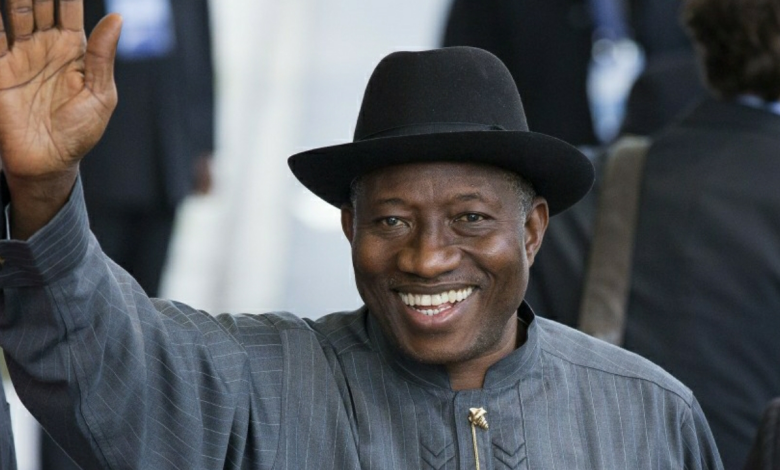
Goodluck Jonathan
By Braeyi Ekiye
The core values of the Goodluck Ebele Jonathan Foundation (GEJF) are transparency and accountability, equity and fairness, respect, integrity, inclusiveness, independence and professionalism.
It is the belief of the foundation that in achieving these laudable goals in nation building, sustained peace and political stability are vital ingredients for social, political and economic transformation. This, no doubt, would strengthen the unity, peace and prosperity of the African continent.
The Executive Director of the Foundation, Ms. Ann Iyonu underscored the point in her introductory note in the just concluded GEJ Foundation Democracy Dialogue, 2023 series with the theme: “Breaking New Grounds in Democracy – Development Nexus in Africa”.
“Over the past eight years”, she said, “the Goodluck Jonathan Foundation (GJF) has implemented a range of initiatives in several African countries aimed at contributing to the building of democratic accountability, strengthening governance, and promotion of a culture of leadership that is both transparent and conducive to the peaceful transfer of power”.
As part of the process of driving home these goals, the Foundation has since 2021 hosted democracy dialogues to sensitize African nations, their political actors and critical stakeholders geared towards the emergence of transparency, equity and justice, credible, free and fair elections in the political landscape of the continent.
The foundation believes that such values as strong institutions, democracy, rule of law, freedom of speech, fairness and enthronement of ethical and moral values, would unleash an avalanche of leaders in the African continent that would effectively drive the process of governance and give her citizenry and the continent a ray of hope for self-assertion, sustainable socio-economic development and infrastructural transformation, which are vital for drastic poverty alleviation and prosperity of the continent.
Perhaps, His Majesty, Ogiame Atuwatse, the Olu of Warri came to the rescue in this regard when in his terse and captivating wise contribution to the dialogue said: “The black man is not respected across the world no matter his social and academic attainment because the world is yet to find a black nation that is excellent”.
He continued: “No matter the symbol of authority on a leader, be it a crown, be it a constitutional seal or whatever, it is way important that the people and the interest of the people to be governed are carried along”.
In fact, our wise and richly endowed traditional ruler set the tone for the Democracy Dialogue. He electrified the hall and put the distinguished guests, the keynote speaker and the panelists on their toes. The Atuwatse touched on the core values of good leadership, the use of it for the effective development of the people and their environment.
Conversely, the abuse of such leadership power portend a disservice to the people and ultimately make the people and the land to revolt against such self-seeking and visionless leaders, and they are many, past and present, serving in the corridors of power in the continent.
His Majesty, Ogiame Atuwatse again: “One thing that I have found especially in the last two years of being in the throne is that this land is alive and the land knows the injustices suffered by the people, it hears the cries and it feels their pains”.
His Majesty therefore, admonished African rulers and the political class to align with God and with righteousness and justice in their leadership of the various states in the continent, adding that, no matter the various pressures, there was a compelling need on their part to stand for what is right.
Prof. Patrick L.O. Lumumba, the keynote speaker, who spoke extempore at the event, cashed in on the Atuwatse’s call for integrity, sound leadership, independent of mind, visionary and pragmatic in its calling.
True Democracy, PLO said, requires and demand the eternal vigilance of the people and emphasized the place of strong institutions in advancing democracy in the African continent.
He declared: “Institutions are as strong as men and women who occupy them. If you have wrong men and women in office, no matter how strong, institutions will not perform because of history of nature; it is garbage in, garbage out”.
Prof. Lumumba therefore advocated for a self-asserting, confident African leadership which gives no place to inferiority complex, and whose goal is tailored toward the protection of the people’s rights and privileges. A leadership that stands out to defend the independence of the African continent and not dancing to the dictates of their colonial masters for the sustenance of the African continent and her people.
The situation where Africans rush to Chatham House in London and Paris for acceptance of the colonialists in every election, he said, leaves much to be desired.
“Development will never come unless we have good governance. African institutions must not receive instructions from outside the continent. The time is now for us as Africans to exercise the most of our rights.”
Africans, PLO said, must not think that they are only good when they receive ‘a senior approval’ from the heads of state of other countries, notably America, Britain and France.
“I look forward to an Africa where things are done in the African continent. This continent of Africa has tried and there is no shortage of individuals who have tried to link democracy with development.”
He paid glowing tribute to former Nigerian President Goodluck Jonathan, whom he said served well and was a good dancer, and one who knew when to dance out gracefully.
He however, regretted that there are too many dancers in the African political leadership landscape who think they are the only dancers in town. Such leaders, he opined, often lose touch with reality and are forced out of office with ignominy. “And that is how I explain the coup d’états that are prevalent in Africa.”
Barrister Lumumba said that as desirable as military coups are, in such circumstance, they should be stop gaps, as they are meant only for a short period to disrupt the misdemeanor of such civilian governments, and sincerely midwife new dispensation and hand over to a democratically elected government.
The import of Lumumba’s statement can better be seen from the light of the faltering steps of African leaders over the years in the administration of their various states. Unless, like the Ostrich, we want to be in self-denial over the evident poor governance in the continent, except a few states which have seen the desirability of ‘carrying their people along’ in their holistic development drives. Most administrations in African countries, it should be noted, are unfortunately enmeshed in corruption, implementation of unfair and unjust policies and deceptive governance. The effects of these are poor governance, failed states, stunted economic growth, an increased corruption rate and biting poverty.
This, no doubt, has led to previous coup d’états and the recent spate of violent change in governments in the West African sub-region, for which ECOWAS and lovers of freedom and democracy have condemned in unmistaken terms. But then, have we stopped to interrogate the reasons why military coups seem to thrive in the sub-region as earlier advanced by Prof. Lumumba? We need not go far for an answer. In fact, the GJF has given us ready answers and solutions to this question in both their vision and mission statements as well as I elucidated in the introductory notes of this article.
Let ECOWAS, AU and the United Nations, nay the EU, the G5 and other such advocacy bodies for the enthronement of democratic ethos, rise to the occasion in breaking new grounds in the democracy-development nexus in Africa. Let us walk, and work the talk and hold African leaders accountable for their misrule, their penchant for corrupt practices which Professor Lumumba for the umpteenth time have detested in his public speaking assignments across the world. In fact, I have heard the revered Professor and erudite lawyer call some African leaders as thieves.
He has referred to some African leaders as kleptocrats, that is, the use of political power to expropriate the wealth of the people and land they govern, typically by embezzling or misappropriating government resources.
No wonder, His Majesty Ogiame Atuwatse, the Olu of Warri warned in his speech at the GJF Democracy Dialogue, that the African land is alive and that it knows the injustices suffered by the people, and that it hears the cries and feels their pains.
In fact the revolt of the African land over poor governance has brought the African continent to her knees, feverishly looking for answers to right the wrongs done to the continent and her people by her own rulers even after attaining independence and semblance of political and economic freedom.
The distinguished panelists, Dr. Ernest Bai Koroma, former President, Sierra Leone, Fatuomata Tambajang, former Vice President, The Gambia, Ibaba S. Ibaba, Professor of Development Studies, Niger Delta University (NDU), Amb. Joe Keshi, distinguished career diplomat, Dr. Adhiambo Odaga, former Director, Ford Foundation, Dr. Matthew Ayibakuro of the Foreign, Commonwealth and Development Office, British High Commission, with vibrant moderator, Professor Adedayo Olukoshi, who is a member of the GJF Board of Trustees did justice to the theme of the democracy dialogue.
There was, indeed, a consensus that Africa was in dire need of visionary, selfless leaders with impeccable character and strong will to drive the process of holistic development in the continent in the interest of her people. And that, citizens should shake off their docility and hold leaders accountable for new grounds to be broken in the democracy-development nexus in Africa.
The Democracy Dialogue 2023 series held at the prestigious Nigerian Content Development Monitoring Board (NCDMB) Tower, Yenagoa, Bayelsa State lived to its bidding. The program was, indeed, a good success. Emphasis was placed on strengthening democracy, institutions, and interrogation of the ‘judiciary and the political class’ as willing tools to subvert democratic rule. Another vital area is that actionable and sustained democracy requires and demands eternal vigilance of the people of the African continent.
Added to these are; the current spate of environmental crises across the continent, fake news, fake leaders, all of which are contributory to an unstable continent.
The democracy dialogue also bemoaned the quality of elections, its process and outcome in the continent, making civil societies self-supportive as opposed to their current states of dependency. And above all, the need for real separation of powers, instilling citizens’ confidence in the democratic process and focused work in enthroning good governance in breaking new grounds in democracy-development nexus in Africa.
What is left to be seen is the practical application of the well-meaning resolutions at the dialogue arising from well informed contributions on the subject matter both from the Key-note speaker, GJF Chairman, good will messages, panel discussions and active and rich reactions from the distinguished audience.
Is Goodluck Jonathan Foundation democracy dialogue series the pathfinder to good governance in the African Continent?
Braeyi Ekiye, Publisher, EnvironmentWatch writes from Yenagoa, Bayelsa State.
Disclaimer
Comments expressed here do not reflect the opinions of Vanguard newspapers or any employee thereof.