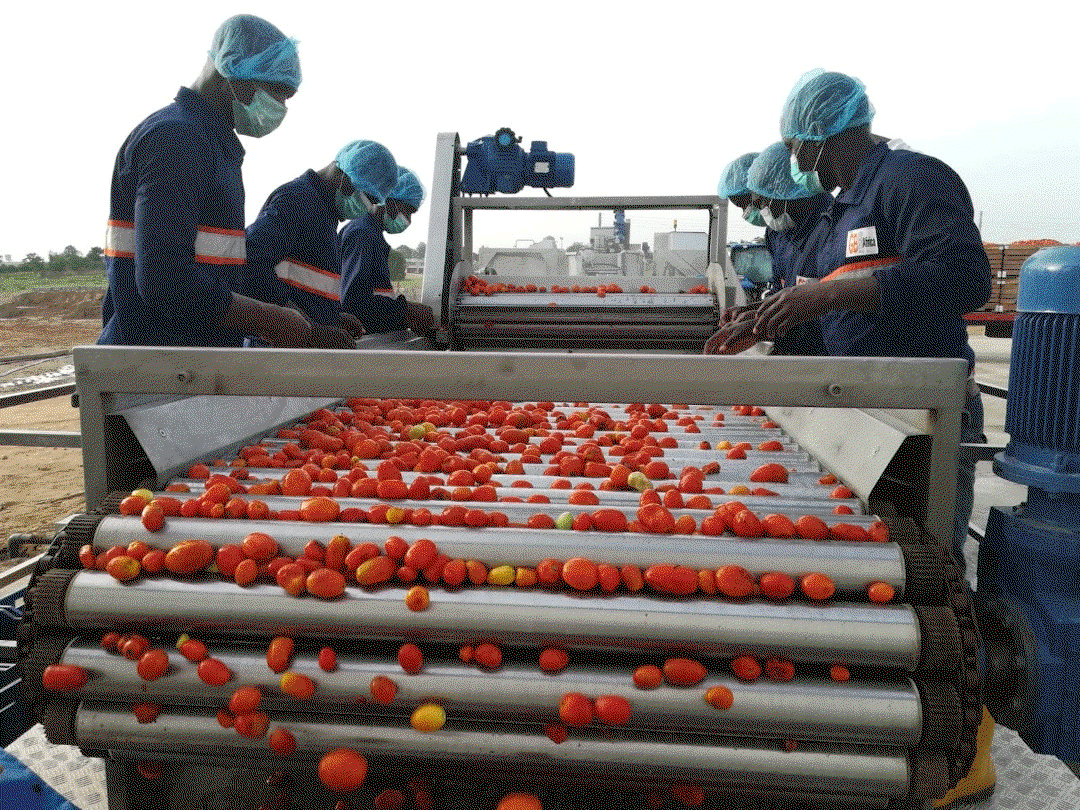
Processing tomatoes at the factory.
….Records least contribution to GDP in 2022
By Juliet Umeh
The Association of Employers, under the aegis of Chemical and Non-Metallic Products Employer’s Federation, CANMPEF, yesterday, appealed to the Federal Government to ensure survival of the sector.
It regretted that the sector’s contribution to Gross Domestic Product, GDP, in 2022, was the least at 2.4 per cent, compared to other sectors.
The body also noted that the figure was even a sharp decline from 3.3 per cent it recorded in 2021.
CANMPEF raised the alarm at it’s 44th Annual General Meeting, AGM, held in Lagos.
Presenting the secretariat’s activities and highlights for the year 2022, Executive Secretary of the group, Mr. Femi Oke, said: “According to GDP report for 2022 by the National Bureau of Statistics, NBS, the economy grew by 3.1 per cent, a figure that fell behind that of 2021 at 3.4 per cent.
The non-oil sector accounted for 94.33 percent of the aggregate GDP while the oil sector represented 5.64 per cent. In aggregate terms, the real GDP stood at N74.64 trillion in 2022 against N72.39 trillion recorded in 2021 notwithstanding inflationary pressure and hash monetary policies.
“Rather impressively, some sectors of the economy through resilience emerged top on growth rate ranking and contribution to GDP in 2022.
“First place was the financial and insurance sector with a growth rate of 16.4 percent in 2022 compared to 10.1 percent recorded in the previous year.
“The transportation and storage sector was next with a growth rate of 15.2 per cent; water and waste management sector stood at 14.6 per cent; information and communication at 9.76 per cent; trade sector stood at 5.13 per cent showing a decline from 8.62 percent in 2021.
“Construction sector recorded a growth rate of 4.5 per cent ; art, entertainment and recreation at 4.4 percent. And further down the list was the manufacturing sector with a growth rate of 2.4 per cent, a sharp decline from 3.3 per cent recorded in 2021.
“While Nigeria’s industrial sector performed poorly for obvious reasons highlighted in this report continue to grapple with rising inflation, skyrocketing energy and food prices, weak consumer purchasing power, incessant exchange rate depreciation of the naira, insurgency and insecurity among others, it is commendable that Nigeria’s apex tax body hit a milestone.
“The Federal Inland Revenue, FIRS, generated over N10 trillion as tax revenue in 2022 as against N6.4 trillion in 2021. The figure been the highest tax collection ever recorded in its history achieving over 96 percent of it’s collection target.
“As breakdown, non-oil contributed 59 per cent with oil taxes came to about 41 percent of the total collection. Companies’ income tax contributed -N125.67 billion and earmarked taxes -N353.69 billion.”
“As significant contributors to tax revenue in the country, CANMPEF applauds the FIRS and urge the government to utilize the success as opportunities to support local businesses that will boost employment generation and stimulate economic growth through fiscal policy balance, massive investment in infrastructure and promotion of micro, small and medium scale enterprises.”
Speaking on the future outlook of the industrial sector, President of CANMPEF, Dakuma Edwin, said: “Government should devote attention to the sector without prejudice to pre-or post election programmes.”
He noted that a turnaround of the economy would require increased investment in infrastructure, including roads, ports, railways, energy, healthcare and education, to enhance productivity, attract investment and stimulate economic growth.
Disclaimer
Comments expressed here do not reflect the opinions of Vanguard newspapers or any employee thereof.