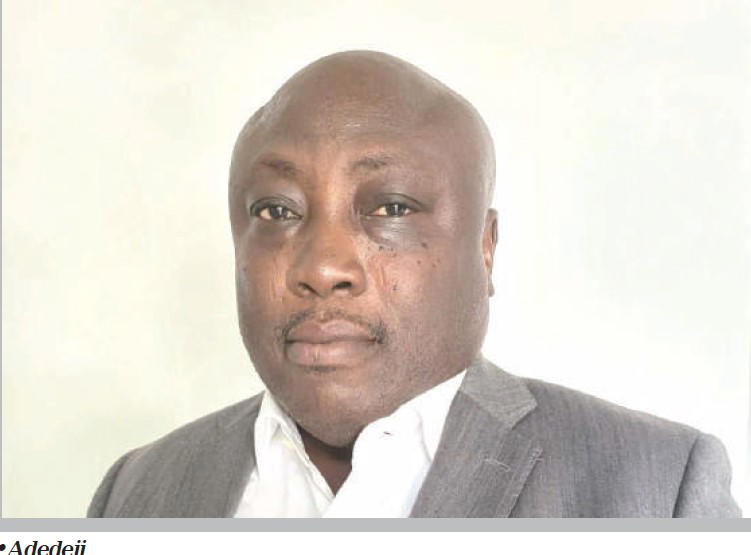
Since the privatisation in 2013, operators have not been able to deliver adequate and stable power to consumers. In this interview with the Energy Editor, Udeme Akpan, the Managing Director/CEO of Geotechnics Services Limited, Dr. Adesina Adedeji, who holds PhD in Geographic Information Systems with specialisation in Energy Poverty from the University of Leicester, United Kingdom and has played leading roles in the implementation of projects and programmes, spoke on a wide range of issues, including problems and options available for the new Minister of Power and President Bola Tinubu. Excerpts:
What are the areas of your firm’s specialisation?
Our company, Geotechnics Services Limited, (GSL) is an indigenous Information and Communication Technology (ICT) company of seasoned professionals. We specialize in spatial and environmental consulting using the contemporary technology of Global Positioning System (GPS), Satellite Remote Sensing (SRS) and Geographic Information Systems (GIS) to provide state-of-the-art geo-information mapping and analytical processing to Nigeria and the West/Central African sub-region.
We have competence in software development as well as system automation and integration. GSL is highly experienced in the integration of high-end space technology and geoinformation mapping and environmental management. GSL is not only experienced in the application of space-based and airborne digital image data processing and analysis, but also in compiling maps and databases for planning and decision-making. GSL is able to provide leading-edge remote sensing mapping and GIS technology.
Kindly comment on your major clients, projects and programmes as well as technical partner?
We have consulted for many states and the Federal Government Ministries, Departments and Agencies (MDAs), including the Nigeria Ports Authority (NPA) by setting up the GIS infrastructure and providing training for the Survey and Hydrographic Department Staff, We did the conversion of Admiralty Charts from Analogue to Digital.
We have consulted for Multinationals and International Organizations, including the United Nations Centre for Human Settlement (by setting up the equipment for the Sustainable Ibadan Project, conversion of analogue maps to digital and training of staff). We consulted for the German Development Cooperation (GTZ) as the GIS expert on the Regional Master Plan for the Niger Delta.
We handled the World Bank/UBEC co-funded project – School Mapping and Database Development – for all the Primary Schools in South West Nigeria. We handled theTele Atlas for Google Earth where we provided 35 Digital Road networks of major cities in Nigeria (I’m the first Nigerian to provide the Road/Street Network on Google Earth in 2009).
We are involved as Supervising Consultant for NEPA/PHCN on the Deployment of GIS, Ibadan, Enugu, Ikeja Electricity Distribution Companies from 2004 to date. We introduced Geospatial technology to the Electricity Distribution Companies, DisCos and help in its deployment. We single-handedly carried out Asset Mapping, Customer Enumeration and Technical Audit (ACE) project for Ibadan Disco covering the whole of Oyo, Ogun, Osun and Kwara States and part of Kogi, Niger and Ekiti States. Our technical partner is Data World of South Africa.
Do you think the privatization of the GenCos and DisCos by the Federal Government was a good decision?
It was a good decision on one hand, but it was not carried out properly. The reform and privatization of the power sector was seen as a solution to the inadequacy and unreliability of electricity provision with the confidence that the privatised market will reposition the sector and deliver a better solution by providing the pathway of addressing the increasing challenges militating against improved electricity supply efficiency and reducing losses.
The deregulation of the monopolistic hold of the state-owned vertically integrated utilities is expected to be to the advantage of the economy and the welfare of the citizens. The expectation of the citizenry is to witness a tremendous improvement in the electricity supply chain with improved electricity service. The general belief is that privatising the power sector will signal a new dawn and bring a new lease of life even if it means paying more.
The privatization is expected to boost the economy through massive job creation opportunities, industrialization and development of small and medium scale enterprises (SMEs).
However, the privatization of the power sector still creates private monopolies because privatization without competition will always result in private monopoly. In any case, the government did not necessarily need to privatize. It could have carried out structural reforms to achieve good results.
Empirical studies have shown that what makes privatization works is regulation and what makes reform work is regulation. Privatization is only useful and good only when responsible authority regulates it.
What are the main benefits or disadvantages of privatization?
The benefits outweigh the disadvantages for a reason. The fact is that if properly carried out, electricity is one of the key indexes of measuring human development and is meant to lift people out of poverty. But it has not yet been able to lift people out of poverty in Nigeria.
The inadequacy and unreliability of electricity provision has created an energy services gap that is met by alternative costly backup off grid-solution of self-generation of electricity. The use of generators is now the mainstay of electricity provision and has become the electricity provider, while the electricity provider is now standby.
Therefore, many organisations and factories are shutting down and households are climbing down the energy ladder because electricity that is at the top of the ladder is not always available. A lot of artisans are leaving their trades. For instance, many welders, barbers etc and others who depend on adequate electricity provision have gone into riding commercial motorcycles and tricycles (Okada, Keke Marwa) to make ends meet.
In what ways can renewables impact the power sector?
Globally, many households, organisations and governments are currently focusing attention on renewables because of the clean energy it provides. It is also targeted at achieving and sustaining a cleaner environment. Take Germany for example, it produced about 26,000 Megawatts from Solar as of 2006 whereas Nigeria cannot say exactly what it produces.
Everything is lip service. Until the Federal Government comes up with a guided programme of funding and implementing mixed energy, it will be a tall dream to achieve the required megawatts, whereas it is not rocket science. The government only needs to put in place people with adequate knowledge and expertise like the saying, ‘putting a square peg in a square hole’.
Therefore, ensuring universal access to affordable electricity by 2030 means investing in clean energy sources such as solar, wind and thermal. Renewables have the capacity to accelerate growth without negative impact on the environment. It also has the capacity to impact and improve the nation’s power sector and economy through expansion of the infrastructure.
How are inflation and forex exchange affecting operations in the power sector?
There are many problems affecting Nigeria’s power sector, including foreign exchange and inflation. For instance, the cost of executing any Engineering, Procurement and Construction (EPC) project has skyrocketed because all equipment has to be sourced and procured with foreign currency.
Likewise, projects depending on off-the-shelf applications (software), procurement of prepaid meters, and distribution transformers (DT’s) etc. For example, a 100KVA distribution transformer that used to cost about N1.8m in 2020 is now N3.3 million. Even the costs of Low Tension (LT) and High Tension (HT) poles that are produced locally have gone up.
What other problems still stare Nigeria’s power sector in the face?
The problems are too numerous to mention. We are still scratching the surface. It is my opinion that the Nigerian Electricity Regulatory Commission, the industry watchdog, saddled with the regulatory responsibility is not living up to expectations.
The Commission should go and learn from the United Kingdom energy regulator (Ofgem). Also, until we are able to bring down to the lowest minimum the Aggregate Technical Commercial, and Collection Losses (ATC&C), the power sector will not meet the peoples’ expectations and the business will not be sustainable.
How do you think these challenges can be tackled?
The challenges are not insurmountable. First and foremost, government should put the right policy in place with the right people in the right place. Secondly, the government must have the will power to tackle issues arising headlong and provide pathway towards improving the network and closing the huge energy and infrastructural gap.
The massive expansion, rehabilitation and turn around maintenance (TAM) and overhauling of the entire national grid is urgently required and should be a continuous process. The development of mini-grids and micro level systems at the household/community level and new power stations on a state and regional level basis are urgently required to move the power sector forward.
Concerted efforts, followed by a guided programme, must be put in place towards reducing Aggregate Technical, Commercial and Collection (ATC&C) by all the Discos.
What advice do you have for the new Minister of Power and President Tinubu?
The solution to the Power sector is already outlined in some white papers, including the World Bank Energy Sector Management Assistance Programme, ESMAP report.
The new minister is not yet well-grounded in the sector. He needs to appoint experts such as Special Adviser, (SA) Generation, SA Transmission and SA Distribution.
These people must form a synergy and work together so that the power problems will be addressed holistically in order to achieve desirable results. The Discos must be completely broken down into two (Distribution and Commercial) with each functioning independently.
He must also leverage on technology, particularly Geospatial Technology, to achieve good results. Leveraging on Geospatial Technology will bring about a radical shift from the conventional organisation to a knowledge-based organisation, using systems and processes to achieve organisational goals.
The president needs to audit, review and revisit the process of privatization and modify, and adjust where necessary. The issues of thermal stations and gas provision must be tackled headlong. The hydro stations also need to be adequately dammed and issues of water dropping below certain levels addressed.
The government should draw up a plan of building a proactive and pre-emptive strategy towards an efficient and resilient grid system. This is to forestall future occurrence of frequent black outs, reduce load shedding and prevent system collapse. The Federal Government must close the huge energy and infrastructural gap for an efficient energy service delivery system.
Disclaimer
Comments expressed here do not reflect the opinions of Vanguard newspapers or any employee thereof.