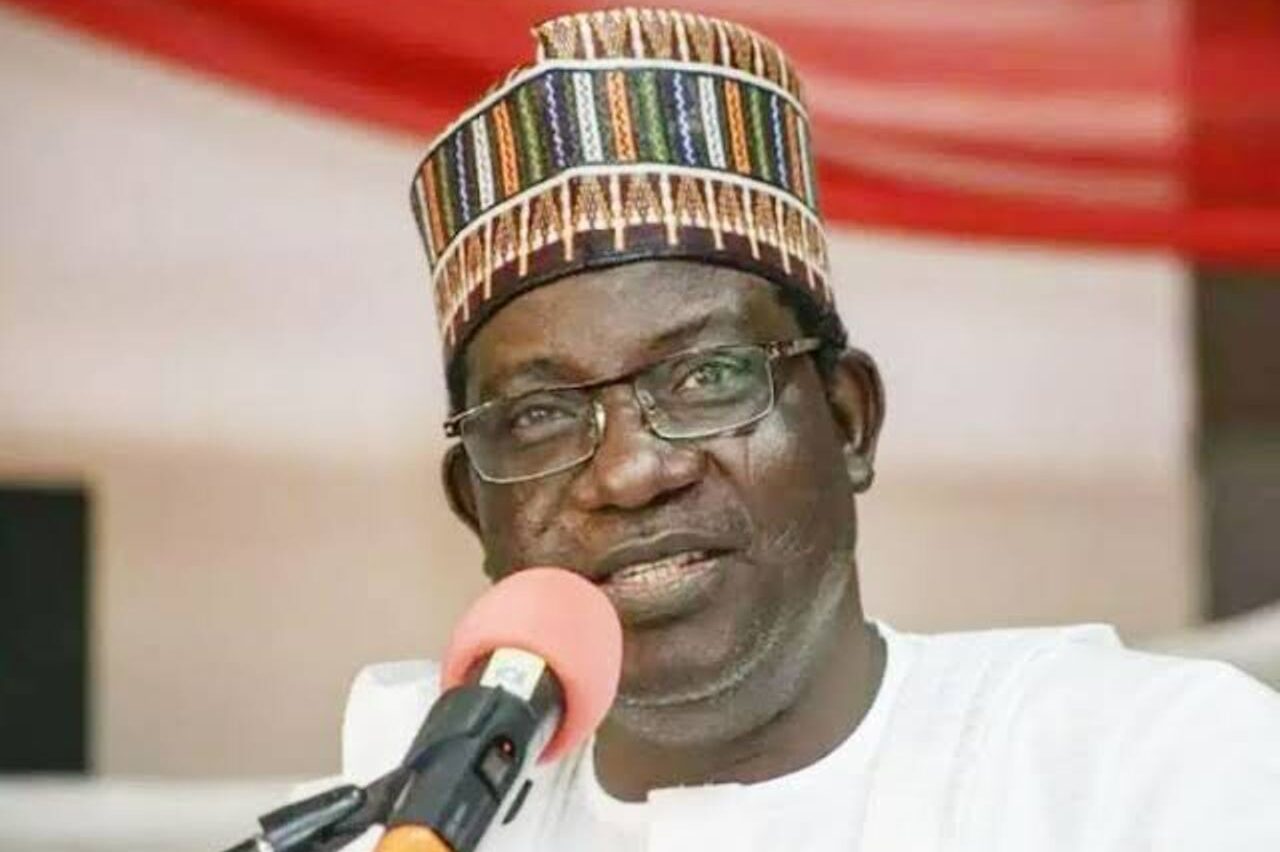
Lalong
By Marie-Therese Nanlong, Jos
Plateau State Governor, Simon Lalong has called on the Federal Government to upgrade the National Root Crops Research Institute, Kuru outstation to a full-fledged Potato Research Institute effectively. address the ongoing threat facing the crop and its value chain.
The Governor pointed out the increased incidences of the devastation of potato farms by Potato blight disease which has almost wiped out the existing low yielding and degenerated seeds and requested that the Federal Government comes to the aid of the farmers by paying some compensation for the huge losses which ran into billions of Naira.
Lalong who spoke in Jos on Thursday, at the 45th regular meeting of the National Council on Agriculture and Rural Development with the theme “Strengthening Agricultural Value Chains Development Processes for Food Security and Economic Development” said he was excited not only because the topic addresses a very important aspect of the Nigerian economy, but it would also address the challenge of turning agricultural products into real economic derivatives.
His words, “… There is no better time than now for stakeholders to convene a meeting to brainstorm on best strategies and policies to tackle hunger which is threatening the general well-being of Nigerians. Let me use this opportunity to draw the attention of the Hon. Minister to the increased incidences of the devastation of Potato farms by Potato blight disease which has almost wiped out the existing low yielding and degenerated seeds.
“We request that the Federal Government comes to our aid by paying some compensation for the huge losses running into billions. We also ask for the upgrade of the National Root Crops Research Institute, Kuru outstation here in the State to a full-fledged Potato Research Institute. This will enable the breaking of new frontiers in varieties research, seed production, the introduction of blight tolerant and disease resistant varieties, farmer education, and linkages with other local and international institutions among others.”
He added, “We have conducted research which indicates that potato which was produced within the Central and Northern Senatorial District can now be grown in the 17 Local Government Areas of the State. The State as of today produces about 90 per cent of the potato consumed in the country. Under our partnership with the African Development Bank, potato farming has been escalated from a subsistence activity to a large-scale activity that is aimed at supplying the domestic market and exporting.
“We have completed a Tissue Culture Laboratory in Mangu as well as built processing centres and warehouses in various local governments. Similarly, we have built market stalls in various centres to make the marketing of the product very easy and cost-effective…”
Earlier, the Minister of Agriculture and Rural Development, Mohammad Mahmood in his keynote address stated that agriculture is a key sector as it not only feeding millions of people but also contributes to the overall development of the economy hence efforts are being intensified to improve performance and strengthen the linkage between research, agriculture and industry by intensifying the commodity value chain development process.
According to him, “Nigeria is endowed with a total of 79million Hectares of agricultural land with only 44% being cultivated. The nation also has 267 billion cubic meters of fresh surface water and 58 billion cubic meters of underground water, with 37 billion cubic meters only stored in dams. Annual rainfall in the country is within 300mm to 4,000mm. Conversely, the potential irrigable area is about a 3.14million Hectares with less than 7% utilized presently.
“Recent reports from the National Bureau of Statistics indicate that the agricultural sector topped the chart in a survey of seven sectors identified to have contributed to the Nigeria economy in the second quarter of 2022. It outperformed six other sectors comprising Trade, Telecommunications, Manufacturing, Oil & Gas, Real Estate as well as Finance & Insurance.
“The chart revealed that Agriculture alone contributed 23.3% to GDP (Half Year 2022), which supports the positive trend of the previous year’s performance of 25.88% (2021). 26.21 (2020), 25.16% (2019), 25.13% (2018), 25.08% (2017), 24.45% (2016) and 23.11% (2015). The data also reflects the impact of the implementation of programmes and projects in the agricultural sector despite the security challenges in the country.
“To improve on performance, we are strengthening the linkage between research, agriculture and industry by intensifying our commodity value chain development process. This is being guided by the new framework of the National Agricultural Technology and Innovation Policy (NATIP), 2022-2027, launched in August 2022, which seeks to modernize the agricultural sector in line with changing global food systems and supply chains…”
Also, the Minister of State for Agriculture, Mustapha Shehuri reiterated that “the intensification of effort on commodity value chain development process as reflected in the theme for this year’s Council Meeting is out of our desire to grow agriculture, diversify the economy, ensure food security and empower the citizenry through public-private-partnership.”
Goodwill messages were received from the representative of the All Farmers Association of Nigeria, AFAN, the Gbong Gwom Jos, Da Jacob Buba, among others asked that agriculture must not be allowed to play a second fiddle, insecurity is tackled to enable farmers to go to farm and stakeholders stop paying lips services to issues of agriculture.
Disclaimer
Comments expressed here do not reflect the opinions of Vanguard newspapers or any employee thereof.