..says evidence shows over 80% clients acceptance
By Chinedu Adonu
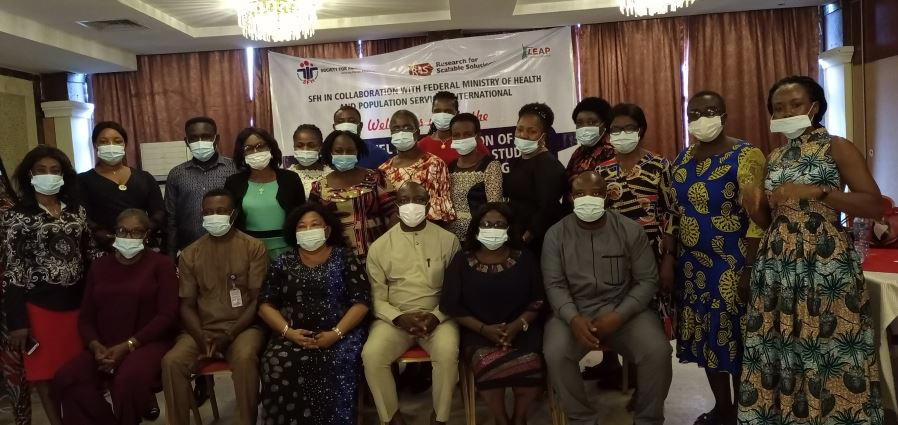
Society for Family Health on weekend held a dissemination meeting for a study to evaluate the digital hybrid training of Family Planning, FP, providers which includes, Doctors, Nurses and Midwives on hormonal Intra-Uterine Device, IUD in Enugu.
Vanguard learnt that the objectives of the meeting was to present the result of the study carried out by the Research for Scalable Solutions & Learning About Expanded Access and Potential of LNG-IUS(R4S/LEAP) Project. Also to discuss continued access to hormonal IUD digital training and to strategize on way forward/next step.
SFH disclosed that they used three states as a pilot state, adding that 30 providers were selected per state for the study titled “Evaluating Knowledge, Competency, Feasibility and Acceptability of a Digital Training Course on Hormonal IUD for Private and Public Sector Family Planning Providers in Nigeria: A Mixed Methods Study
Speaking to journalists, the Practice Area Lead Reproductive Health /Family Planning Practice Area, SFH Dr Anthony Nwala disclosed that the idea of the project was to generate actionable evidence on a new product for contraception called Hormonal IUD.
He disclosed that all the evidence generated shows more than 80% acceptance of digital training as an alternative to the traditional in-person training of Family Planning providers in Nigeria.
He however said that a previous study showed more than 80% acceptance of the Hormonal IUD by the clients, following the quality of the product, affordability and method of usage.
Speaking on the important of family planning, Nwala said the objective of family planning was to achieve spacing in between child birth and other health benefits for the mother, children, family and Community in large.
“The idea of the project was to generate actionable evidence on a new product for contraception called Hormonal IUD. So, we wanted to generate evidence of it will be acceptable by Nigerian women, to the providers, we wanted to generate if it’s a good method and then most important, we are at the mid of covid era, so, we wanted to use that opportunity to also create evidence on effectiveness of a digital training platform.
“So, we developed digital curriculum and put it on a digital platform known as Kaya and work with both the federal and state ministry of health to train Providers on hybrid training where providers will go at the comfort of their home, log into the platform and take the course. Then, come back to do evaluation training to evaluate their knowledge.
“During the digital training, they did training evaluation, interviews, focus discussion and all put together allowed them to generate evidence which the evidence shows over 80% acceptance. They did integrated knowledge access, even practical accessment. The provider were actually trained using these method.
“All our client so far were satisfied with the quality of the product and method of usage which is insertion into the uterus.
“SFH has succeeded in introducing the IUD into the general method mix and went further as an organization to bring in the quality of the product which has been launched in Nigeria. The product is affordable.
“The objective of the family planning was to achieve spacing in between childbirth and it has health benefits for the mother, children, family and Community in large.
“The hormonal IUD works locally and the wonderful thing about the device is that it works locally and does not enter the blood system. It is only inserted into the uterus and works there. It is supposed to last for three years but can be removed if you want to conceive. It’s easy to remove once you need a baby. You will become pregnant the moment you remove you”, he said.
While calling on the federal and state government and other health partners to key into hybrid digital training for health workers said it would reduce cost of training and makes it comfortable for the participants to learn on their comfort home.
“Hybrid digital training approaches are cost saving compared to a previous hormonal IUD training in Nigeria which cost $426 per provider trained, while hybrid approach cost $316 per provider trained,” he said
Disclaimer
Comments expressed here do not reflect the opinions of Vanguard newspapers or any employee thereof.