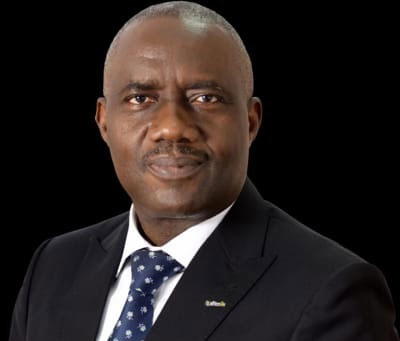
Mr. Ken Aghoghovbia is the Chairman of Africa Re DIFC, (Dubai International Financial Center). In this interview with Rosemary Onuoha, he highlights ways that Africa Re supports its markets all across Africa as well as the impacts the corporation intends to create with the recent expansion into the DIFC. Excerpts
What is the main reason behind Africa Re’s decision to expand into the DIFC?
Africa Re, through its Cairo Regional Office has been operating in the Middle East since the 1990s and actually witnessed the dramatic developments that occurred in the re/insurance industry within the last decade which resulted in a diminished capacity and restricted reinsurance activities in the market leading to the application of very harsh terms on most re/insurance contracts.
Read Also: Doctor mistakenly removes patient’s wrong eye during operation
Many of its clients that were adversely affected by the situation reached out to the Corporation for support. To demonstrate its customer centricity, Africa Re yielded to the call by not only filling the gap in capacity but also agreeing to make available the broader support that can only be provided by a local presence.
With the DIFC being unarguably the most strategic international business hub in the region, it was therefore not difficult to decide where to locate the office. Our operations in DIFC are now up and running in close proximity to its clients.
Will Africa Re DIFC offer the full scope of covers provided by the Africa Re Group?
Africa Re DIFC is an underwriting agency authorized by the Africa Re Group to write business in the Middle East in line with the license it has received from the regulators. This broadly includes conventional and Retakaful business.
Takaful, i.e. Islamic Insurance is an important component of Africa Re’s business. Since it was first introduced in Africa, specifically in Sudan in 1979, Takaful has seen much of its growth in countries with high Muslim populations such as Saudi Arabia, Malaysia, Egypt, Bangladesh, Pakistan and Indonesia.
The growth of the Takaful Industry across the globe and the necessity to have highly rated Retakaful operators fill the gap in the Retakaful capacity and decrease the reliance on conventional non-sharia compliant capacities inspired us, in 2010, to establish its wholly owned subsidiary company named Africa Retakaful Limited, which has turned out to be the largest Retakaful company in Africa.
The Middle East market should therefore be assured that Africa Re DIFC is adequately equipped to serve it.
Apart from the solid reinsurance capacity, how else does Africa Re DIFC plan to support its markets?
In addition to reinsurance capacity, we usually provide technical support in all the markets where it operates. For the Middle East market, this was being done through the Regional Office in Cairo but now it will be enhanced through Africa Re DIFC.
In some of its markets, the Corporation has provided support in capacity building in such areas as technical pricing of various reinsurance products using different rating approaches that seek to achieve adequate risk pricing.
In line with its capacity building initiatives, the firm has through the Young Insurance Professional Program (YIPP) trained 2,250 young professionals from 46 countries in the last three years. Africa Re is always at hand to support its markets that suffer from substantial natural disasters or pandemics.
A recent case in point was where the Corporation through the Africa Re Foundation, approved a donation of US$ 3.32m to various African governments and private institutions at the forefront of the fight against COVID–19. This was directed towards awareness campaigns, preventative measures, acquisition of medical equipment and personal protective equipment.
In addition, the Corporation readily partners with regulators and other key stakeholders on initiatives targeted at deepening insurance penetration and product development. Africa Re’s website is full of articles and reports on these. The specific plans/activities for the Middle East market will be revealed in due course.
Disclaimer
Comments expressed here do not reflect the opinions of Vanguard newspapers or any employee thereof.