.
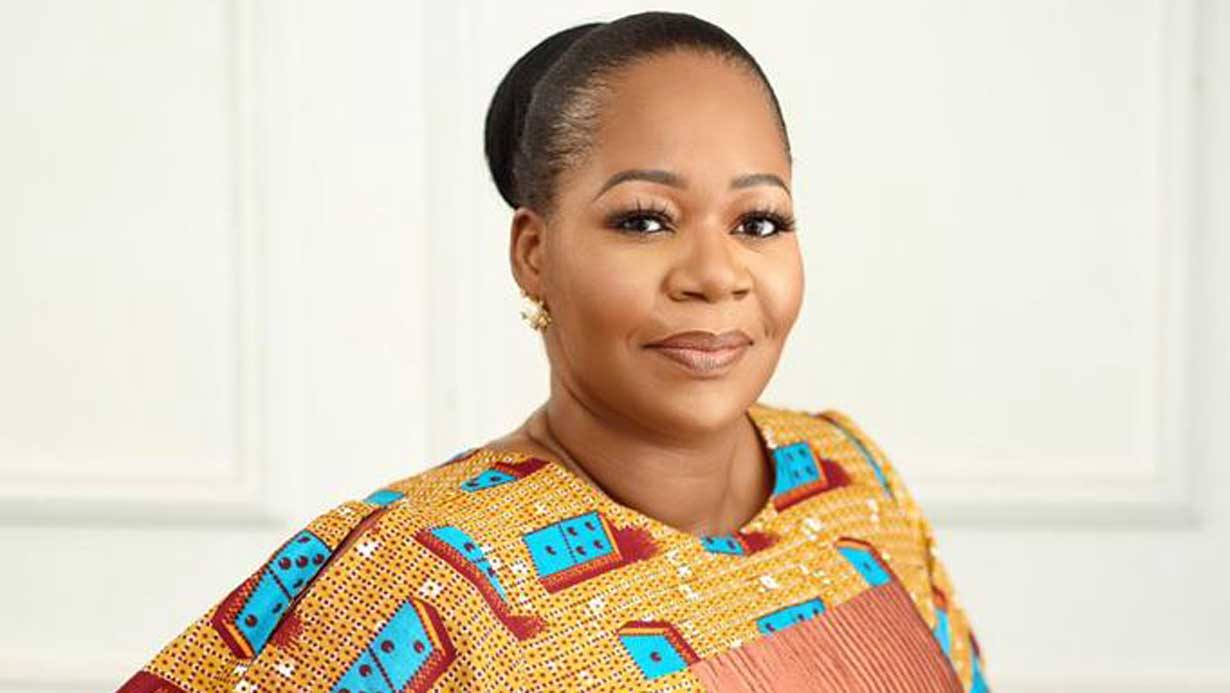
A Management Consultant and Strategist, Ifeoma Monye helps businesses build efficient systems and processes by providing them with the necessary tools to build sustainable, profitable legacies and institutions.
Known in her professional circles as ‘Mrs Money’, her clientele spans various sectors including media, real estate, financial services, hospitality and agriculture.
A Political Economist by training, she specialises in how politics and public policies affect businesses and the economy and has worked on the youth strategy for a presidential campaign in Nigeria.
Her passion for social development has informed her deep involvement in prominent women’s organisations such as WIMBIZ and the International Women’s Society, where she is currently president- of the body’s 65th.
How have you been able to achieve all these certifications, seeing as you are also a wife and a mother?
I did not do all these at once. I look back 20 years since I moved back to Nigeria. There was a TV show I liked called Westwind. Before I started watching the show, I thought I was going to work with the United Nations, come up with policies that affect businesses, women, children and make an impact but after watching the show, I took interest in helping the government and politicians come up with policies that will benefit the society, but then, I realised that our political setting is quite different.
I do have a program and company called Pretty Balancing Act, it helps you balance your career as a wife and mother although, in trying to balance career and family, it cannot be a 50:50 ratio as one has to tower above the other. Through this act, I hope I will look at women and tell them choosing the right partner is very important and a lot of people do not realise how that can make or break you. Again, the person I am now is different from who I was years ago, so it is important we take cognizance of that and know who we are and what we stand for.
You spoke about Pretty Balancing Act, do they give financial support?
No, we do not give financial support but we help women to be what they want to be, achieve all they want to achieve. Our society in Nigeria is one that tells us who we should be without ensuring that is truly what we want based on our skillset and passions. As a strategist, you need to have a process and help people create theirs in order to have a clear definition of their life goals and have a system that works for them and as I always say, you need to have a support system as no man is an island.
Specifically, Pretty Balancing Act is for the professional woman, women out there trying to be at the top of their careers.
Most people are of the opinion that WIMBIZ is a class group for elitist women, what can you say about that?
I slightly disagree with that and you also know that it cannot be for everyone, so it is important that people realise that. WIMBIZ is catering to career women, women who are into business and the public sector as well and it is not for the elites but if you are in business or some sort of professional sector, then that is the place to the network so you can meet women who are in the same industry that can support you and you can learn from them. If you want women to help you out then that is the place for you.
What impact do you think WIMBIZ has had on women in the country and their development?
WIMBIZ has done a lot over the years; I joined this group in 2008 and in terms of mentoring, there are lots of women who come into the industry and need mentors to show them how to go about things. Perhaps one is having issues with the boss, what are the different pieces of training you can get, how to empower yourself, how do you ensure you are running your skills set properly and bringing value to yourself as well, how do you make tough calls and decisions? If you think of changing jobs, how best can you go about that, learn new things from the annual conferences, these are a few of the many things WIMBIZ has done. Also in the public sector, WIMBIZ has trained and partnered with different organisations that train women who wish to go into public offices either elective or appointive positions. They are a support system.
Women under the aegis of a group called Womanifesto laid siege on the National Assembly to force members to pass bills that permit the inclusion of women. Can you highlight the details of this for the benefit of those who think that women are overbearing?
It is important women are heard and it should be a conversation, it should not be men versus women. We need men to be able to pass these bills, it is not women fighting the men. One of the gender bills we are looking at is that the foreign husband of a Nigerian woman will be able to get citizenship because currently, the foreign wife of a Nigerian man is able to acquire and get citizenship so that should be applied to the men as well.
Another is the percentage of women in elective positions and political offices, which was rejected; another is a woman being able to claim her husband’s state as hers when they have been married for a while so these are some of the bills that were rejected. I ask myself, why the foreign husband of a Nigerian woman can’t become a citizen when if the case was reversed, the woman will be given that right so it should not be a gender-based issue provided the individual meets the necessary criteria. Some ministers in Nigeria are chosen by their husband’s state of origin.
Do you not think that the National Assembly is not receptive to this bill?
I honestly think it is all about approach and understanding, I think more work needs to be done, not as a fight but some sort of roundtable where women come and express their views again.
It could be also tied to economic prosperity. If you look at any country where there has been increased participation of women, the country does better so women do have the value and a lot to bring to the table. I think it is important that men are brought into the conversation so they do understand women’s point of view and see it as a win-win situation. If the approach is right, men will cease to feel that if the bill is passed, women will begin to speak with disrespect to the men.
Some people are of the opinion that this bill is actually going to make women feel they are being shunted into leadership positions. What do you think about that?
You do not give any type of woman leadership positions. Again, without the bill, women are occupying positions because they earned them, they have the competence for it which is very important.
You recently became the 65th President of the International Women’s Society. Can you tell us what this society is about?
The International Women Society was founded in 1957 and it was created by a woman to help the less privileged in the society we currently have six main projects we have been doing over the years. We have a daycare nursery in Yaba started in 1959 for the children of the market women in Yaba so they have a solid foundation in education before moving on to primary school and it is still running in Yaba; we have a skills acquisition centre in Lekki Expressway where we help women equip them with the right skills set which includes catering and events, adult education training, fashion designing, beauty hub, among others.
They are awarded certificates, pass exams and come out certified, go out and make money, gain employment, and are able to start up their own businesses. We also have a scholarship program where we give girls who are doing really well but do not have the opportunity to attain any level of education, we also have a widow’s trust fund where we help recently widowed women and ensure they have the right skills.
We also have what we call the Luth Library which was started in the 60s where we have a collection of books, Bibles, Qurans, and we go sit with patients, liven up their day and talk to them also once in a while. We raise money to pay their bills or fund equipment in the hospital. We have a home for abandoned children in Ijebu-Ode where we currently have five kids we are trying to get adopted.
I decided that we need to ensure that the girls and women we have in our program are able to compete anywhere in the world so we are doing coding, and robotics, and we also have chess, a game of the mind.
Have you ever felt like you do not want to belong to society anymore, owing to difficulties encountered on the job?
Surely, I have many a time, it can be overwhelming, there are so many issues and you lose track of how to begin sorting them but then after a while, you look around and realize one person’s life has been changed and I try not to dwell too long on issues lest they overwhelm me. At least we are making a difference, so focus on the little we can do and when people come together, we can do a lot more.
How would you encourage women out there, to break the bias in society?
It always starts with oneself; what skill set do they have, what comes to them naturally, and how can you use that to serve your country and society?
I think at times we put so much pressure on ourselves when we see someone on a higher scale than us. Instead of looking at themselves and determining what they possess that the other person lacks and work on it. Everyone has value and has a part to play so whatever you do in society, be the best at whatever you do and own your space.
Disclaimer
Comments expressed here do not reflect the opinions of Vanguard newspapers or any employee thereof.