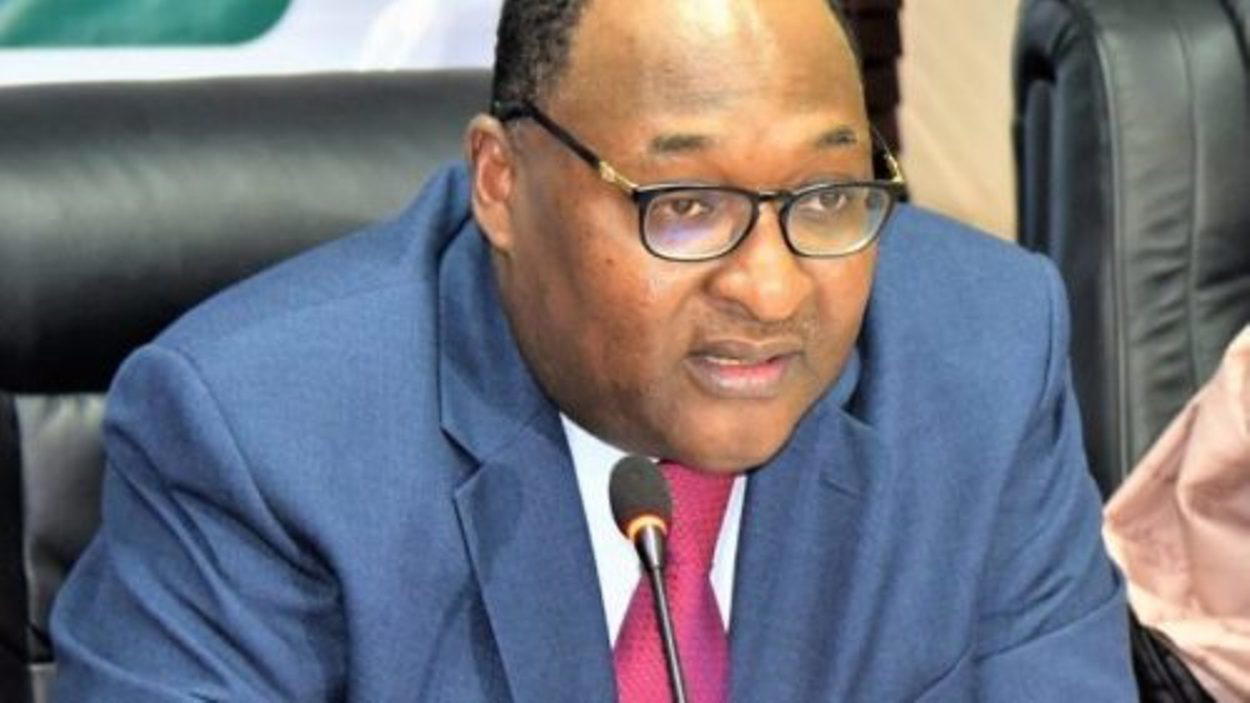
Hassan Bello
In this interview with our Correspondent, Godfrey Bivwere, the immediate past
Executive Secretary/ CEO of the Nigerian Shippers Council, NSC, Hassan Bello,
gives insight into the challenges of Nigeria’s port industry, and proffers some solutions. Excerpts:
What are your projections for the maritime industry in 2022
It is difficult to predict honestly. Many projections for 2020 2021 were wrong both in the international and domestic front.
The disruption in the supply chain by the pandemic (COVID-19) has turned some of the projections wrong. It is the national economies that will determine how much or how quickly nations are able to come out of the pandemic; How do we restore production globally knowing that 80% of the volume of international trade in goods are carried by sea.
READ ALSO:AKSG Technical Committee speaks on Ibom Deepsea Port, Ibom Industrial City
There was shipping supply chain crisis at a time; there was increase in shipping demand and increase in cost, about 1.5% increase in the cost of transportation, especially in container trade which means there was global increase in freight. More so, the developing countries suffered more in trade than at any other time and this resulted in the decline in our containers transportation globally. There were congestion at the ports not only in Nigeria but including the United States of America, USA.
It will amount to a voodoo economics to say this is what is going to happen but there’s a lesson that we have to learn; and someone has suggested that the best way to predict the future is to create it.
Nigeria must, as a matter of necessity, invest in three things; we must invest in infrastructure as this is imperative; we must have data and information available to us; we must invest in trade facilitation. Moreover, we have to be digital in our operations; we have to have infrastructure and we have to have trade facilitation, otherwise these things will seriously hamper our recovery everywhere as well as our progress and we will not benefit from shipping.
We don’t have digital ports, we don’t have modern ports; We have ancient ports, we don’t have competitive ports, we have clogged ports, inefficient ports; there is no competition and inter-ports competition is absent and that means there are lots of problems, not only for shipping companies but for terminal operators and to other logistics providers like truckers, freight forwarders, shippers etc, are all victims of inefficiency.
So what you need is a conscious, concerted and deliberate government intervention in ensuring that we reap the benefit of that change in the maritime economy.
In which specific ways?
The government should have, apart from the Ministry of Transportation, other parts or arms of government like the Central Bank of Nigeria, CBN, the Economic Adviser to the president, the minister of finance, all making deliberate interventions to ensure that there is efficiency.
The sector needs a deliberate and multifaceted intervention, deliberately cutting the sector and putting it under the microscope and given targets; like the supply-side of shipping that have made tremendous progress despite the pandemic that started 2020 until now. They have been lopsidedness while the shipping companies and terminal operators and the carriers have made tremendous profits. What we are facing is that the shippers having to pay more, there are congestions in the ports. This has been attributed to the shipping or logistics problem that led to them leaving their cargo at the port, using the ports for storage which should not be.
But where there is such a thing, what I call an usual or unconventional benefits accrued to the shipping companies and the terminal operators from collection of domurrage, container deposit etc and these are not what they should be using to calculate their profits, but we provided that for them because of our inefficiency, we provided that because the ports are not digitally operated, but one or two terminal operators are operating digitally.
However, there should be integration, integration with the banking system, with the shippers and with the freight forwarders so that we can have a National Single Window, NSW. Lack of National Single Window, lack of digitalization of the ports, lack of competition and the relevant infrastructure have robbed us of what should have normally accrued to the National economy. This could have also created jobs, created infrastructures and make confirm delivery of goods and turn over to the economy. We have to be very careful and intervene; these are microeconomic issues which should interest the CBN; there is presently capital flight that we should not allow.
When you say capital flight, how?
I’m talking about profits made from these sources I told you about earlier. These funds are repatriated. The Nigerian Shippers Council has always been fighting against congestion charges which was dropped reluctantly because we made an international resistance but they are still coming with handling charges and this should be resisted because these charges are done without the knowledge and negotiation with shippers. They unilaterally and arbitrarily fix them and that goes against international trade; that goes against the creed of economic venture. If you want to increase charges, you call the customers and discuss with them.
It is important we get our port economy back but we also need to get our acts together. There should be equilibrium. I think that that sector of the economy, to a large extent, has been taken for granted.
Recently, the Federal Maritime Commission of the United States of America instituted a kind of policy to look at what is happening in the shipping sector, and that is why I said that government should put the maritime industry under the microscope. The Federal Government should set up a committee to look at what is happening in the sector. Why is the cargo dwell time 21 days when we could have 7 days? Why are ports clogged? People should be punished, if it is the cargo owner, if is a freight forwarder, if it is the terminal operators or the shipping lines.
What is your take on the Lekki Deep Sea port project
I am pleased with the Lekki Deep Seaport and I’m very very proud of that.
I am proud of the Nigerian Ports Authority, NPA, I am proud of the investors and proud of Lagos State government, the federal ministry of transportation for creating that Lekki Deep Seaport. It is the right thing to do, the Lekki port means that we will abandon all that has happened in Apapa and Tin-can and this will create economy of scale. There’s also export processing zone and the people in the export processing zone in Lekki are doing very well, so let us start with Lekki and give shipping a new boost and leave the relics of Apapa and Tin-can. I’m not saying that we should totally abandoned them but we should make Lekki a model, it is a very good thing that the Federal Government has done. It is good that China and co are investing and Lagos State government as well as the ministry of transportation. The minister of transportation who recently visited the place and have recommended the development which will define us as a nation in shipping and transportation.
Lekki port will redefine Nigeria’s port system. So from now onwards, there will not be any port that is wrongly designed.
So we will do away with the rot of Apapa and Tin-can, we can leave it there. People should not be seen at Lekki Deep Seaport, people going to the port in droves; that port must be digitally managed that port must be linked with multimodal transportation and they should not be examination by Custom outside the port.
All the ills of Apapa and Tin-can should not be visited on this new port. So I call on all stakeholders, freight forwarders, master mariners, and others to go and visit the port so that they will be aware of the modern way of running a port. Otherwise, we will keep repeating the same mistake but I know that will not happen.
The shippers and terminals what should they be doing differently this year?
They should work more on the digitalization which the Nigerian Shippers Council, NSC, is already working on and they have achieved some tremendous breakthrough because they are some terminals that are 100 per cent digitally managed which is commendable but we should go for the ultimate.
The NSC and shippers should demand for trade facilitation, they should demand for National Single Window, they should work at simplification of standards and they should have a dedicated area for export. Lekki Deep Seaport should have provision for export which terminals in Apapa and Tin-can don’t have. Also access to that port is very important, especially for export cargo.
The Central Bank of Nigeria should work as it has been doing for exporters, the shipping companies, the terminals to ensure that there is logistics for export.
Disclaimer
Comments expressed here do not reflect the opinions of Vanguard newspapers or any employee thereof.