There are indications that the Nigerian ports industry is being re-engineered for better efficiency going by some green shoots from the regulatory authorities. But there are challenges in the way.
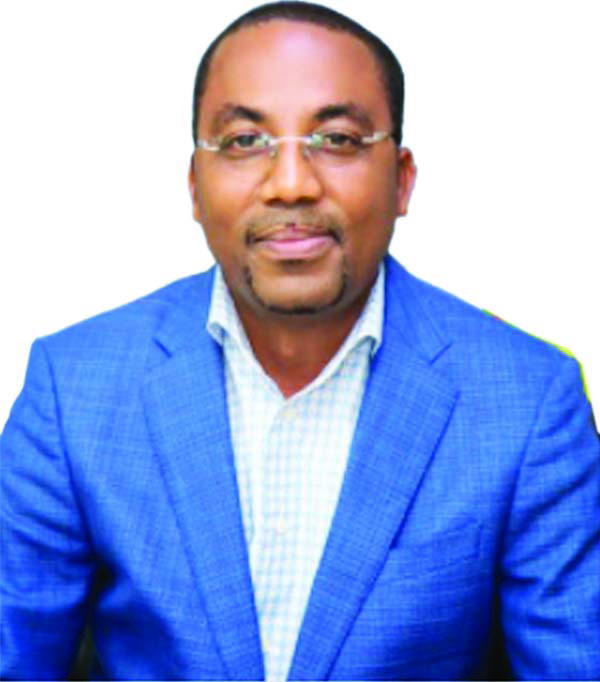
The Acting Managing Director of the Nigerian Ports Authority, NPA, Mr. Mohammed Bello-Koko, spoke on the issues involved while playing host to a team of journalists from Vanguard made up of the Business Editor, Emeka Anaeto, and Maritime Correspondents, Godfrey Oritse and Godwin Bivwere.
Excerpts
May we have a general overview of what has been happening at the Nigerian Ports Authority since the commencement of your leadership a few months ago, especially in the area of ports operations?
We are engaging the terminal operators, especially the ones here in Lagos to see how the ports can be reconstructed.
It is either the Terminal Operators reconstruct the berth and other physical structures and the contract sum is amortized overtime or we explore the option of accessing funds from multilateral financial institutions. We have had discussions with the French Development Bank (AFD), African Development Bank, European Investment Bank (EIB), and Sanlam Infraworks (a CBN approved fund manager for Infracorp) amongst others.
Tincan for instance has been overtaken by population explosion and needs to be reconstructed same thing goes for Rivers port, which is about 100 years old and has actually reached the end of its productive lifecycle.
It is pertinent to mention that the channels cannot be dredged below their current draft because of restriction imposed by the initial engineering design of the berths.
We are also grappling with cases of vandalization, for instancein Rivers port, where suspected vandals resident in the host community deploy welding equipment to cut the beams supporting the quay aprons. The marine police have been doing a good job by trying to put a stop to these nefarious activities usually perpetrated at odd hours.
On assumption of duty, one of the first things I did was to pay attention to the issue of gridlock in Tincan/Apapa axis. The Authority had in partnership with Truck Transit Park Ltd deployed an electronic software code named eto, which has not yet been optimized because TTP has not completed deployment of the critical operational infrastructure such as security barriersand others facilities as at the time I visited, and I issued stern instructionsfor expedited deployment which has been complied with.
Arising from feedback from the public, we realized that there was need to tweak the application. For instance, we are working with TTP to ensure that the trucks that go into the port to drop containers are also able to bring out cargo from the port. That way trucks that go in to drop cargo do not return empty thus reducing the number of trucks traversing the ports access roads.
We also enforce the minimum safety standard of trucks to ensure the quality of trucks that go into the port, because broken down trucks on that axis cause most of the congestions.
So, things are improving, we have been publishing the number of trucks that go into those port locations on a weekly basis and you can find this information on all our social media platforms. This data gives you an idea of the number and types of trucks.
In addition, in a bid to encourage export, which for me is very important for the economy because it improves the Gross Domestic Product (GDP) and foreign exchange inflow, we have approved the setting up of an export terminal at Lilypond, the essence here is to ease the access to the port by the exporters. We have also published for people to express interest in setting up of export processing terminals. We would be setting up about 10 of them within Lagos and the neighboring states.
The essence here is to encourage exporters to, first, take their goods in, which are mostly agricultural, to these locations. We hope that whoever gets those (export processing terminals) will look at the value chain and take advantage of it because those terminals should eventually be able to provide processing, packaging and allied services. These export terminals, which will have relevant agencies present will serve as a one-stop shop for all export related documentation, thus eliminating delays.
In keeping with our resolve to maximize the benefits of multi-modalism, we have encouraged the use of berges; this is also to reduce congestion and pressure on our roads. You can see there are many berge activities ongoingand it has really assisted in reducing the evacuation of containers by road.
What we have now realized is that many of the berges do not meet up with the safety standard that we require, so we have held a meeting with the Berge Operators and there is a Standard Operating Procedure (SOP), which contains irreducible minimum safety standards, that the berge operators must meet.
To curtail the incidence of berge accidents along the channels, berge licenses that do not meet up with our safety standards will be withdrawn.
It is now mandatory for berges to have communication equipment. The incidences of berges moving at night or double banking must also stop becauseof safety issues. We will also be introducing tariffs on barge operations in order to increase accruable revenue to Government.
We have also not relented in efforts aimed at fixing the ports access roads and we have been liaising with the Federal Ministry of Works to ensure that those roads are fixed and they have been very cooperative. We have been in touch with Hi-tech Infrastructure Company.
At the Tincan axis, reconstruction has started but we have pleaded that contractor pays more attention to the Sunrise axis down to Mr. Biggs, if we can have palliative works there, we believe that it will improve flow of traffic significantly.
Also, in the past, like a month and a half, we did what we termed 360 degrees clean up. One of our mandates is to ensure the security and safety of the port corridors. The International Ships and Ports Facility Security, ISPS, code requires that we do that and we have realized that Tincan actually was housing so many illegal trailer parks, businesses, shops, brothels and so on. Therefore, working with Lagos State Government, we assembled a team that went round to clear all the shanties, to bring them down and secure those areas. In the process many weapons and illicit drugs were discovered.We have resolved to regularly go round these areas to make sure these miscreants do not return.
There is a plan to provide a security access control gates at both Tincan and Apapa ports, meanwhile, we are going to erect concrete perimeter fence at Tincan because we have realized that the see-through fence currently in place is now being circumvented. Tincan will now be fenced with proper high concrete fence which ISPS code also allows. That way, we would be able to restrict the number of persons that access the port. If you do not have a business in the port, you do not go in.
We are doing a lot to encourage patronage of the Eastern ports, but let me clarify that the protocols governing the international business that maritime is, the choice of port to use is solely that of the consignee. Therefore, even though we granted tariff rebates and other incentives, we cannot legislate or compel consignees, we can only keep encouraging them.
Those ports have some limitations. The first thing is that they have geographical disadvantages. For instance, Calabar port has one of the longest channels in Nigeria. From the ocean or the fairway to the port is really long. Siltation is very high in the area, too many tributaries along the channel. Then the berth itself have its limitations; it is a very old berth. The engineering designs of the berth have restricted our ability to dredge deeper, so that means the bigger modern vessels cannot come there. In the meantime, however, we are encouraging the use of flat bottom vessels that do not easily run aground in shallow waters.
READ ALSO: NPA set to execute the Bonny Deep Seaport project
Therefore, the combination of security challenges, the extremely high cost of dredging, the characteristically long channel, legacy litigation issues amongst other factors beyond our control limit the patronage of the Eastern ports. The presence of an active NNPC pipeline in the Escravos/Warri channel has also made it impossible to dredge below 7 meters. The breakwaters that protect the Escravos channel which collapsed over 10 years ago has been the reason for high siltation of the channel. Geotechnical and bathymetric surveys are being conducted by Royal Haskoning to determine how to reconstruct the 8.5km breakwater.
However, the situation is improving, for instance sometimes this year,7000 metric tons of cocoa shipment departed to the United States of America from Calabar port.
We have tried to look at other areas to increase revenue, one of which is to increase monitoring of jetties. It is one of the areas ofincome leakages, which are now plugged, and we have been seeing good increase in revenues.In addition, we are introducing tariffs for berge operations. We started it on a test run, but I believe its time they start paying revenue to government. We are also looking at other sources of revenue to ensure that there is proper monitoring and collections.
Finally, automation is something we are taking very seriously. The Port Community System, when it comes on board it will improve our monitoring activities and revenue collection. We have secured a few approvals (because it is in stages) that will enable us to fully automate our systems in terms of both Harbor activities and financial reporting.
Can you also update us on the issues around the disagreements over the consequential increase in pension?
Sometime ago, the Nigerian Port Authority, based on agitations by both serving and retired staff, undertook a review of the options provided in the policy. We recently received a circular clarifying to us what increases that we should apply, and as a result of thatthe Executive Management Committee of the Authority has already discussed and adopted it, of course, it will go to the Board of Directors for final ratification, and then would make budgetary provisions.We have also work retiree benefits that is their gratuity.
So, we will comply with government policies. Let’s assume that, in an existing financial year, if there is no budget made available it will become difficult. Therefore, we will make budgetary allocations to ensure that is addressed.
What are the issues and challenges around overtime cargo at the ports
what is the volume of overtime cargo at the nation’s seaports presently?
The terminal operators usually declare a cargo as overtime if it has not been cleared after 90 days.
We currently have over 6,000 containers across the ports, including Ikorodu and then I believe we have over 1800 vehicles in Ikorodu and other locations, and some of them have been there for 10 years, a few have been there for probably 15 years, and it is not just one location; Onne is beginning to have that problem. All of a sudden Onne port now has a large number of overtime containers also, but the ports here in Lagos have most of them.
The problem has been there before the current Comptroller General of Customs came in. In fact, I was made to understand that there were some containers that were seized since 1977 FESTAC and as at last year, those containers were there. I do not know if they have been cleared now.
We have written to the Nigerian Customs Service to speed up the process of auctioning these containers. Imagine 6000 containers; they are really occupying large space. Ikorodu terminal was designated as a location for evacuation of overtime Cargo but the terminal is now filled up. So, there is actually no space to move in more containers and we have written to the Customs about this situation. I believe they must have started the process of auctioning some of these containers.
It will also reduce congestion and free up space for other containers come in there. The terminal operators are also complaining about these overtime cargoes.
What can be done to bridge the infrastructure gap in Tincan port?
Early this year, there were contracts for remedial works in TinCan; anything remedial is temporary until you do permanent work. The Minister for Transportation and NPA have held meetings with the terminal operators in order to come up with a development plan to reconstruct the port.
Do not forget that there is a limitation to the quay apron, which is the berthing area because of the engineering design. We cannot dredge lower than 14, 14 .5 meters. The terminal operators are proposing to be allowed to build the walls that would allow dredging up to 16, 16.5 percent.
By the time you do that, it means you need to work on the common user areas and other stacking areas. Do not forget that there are different terminal operators. If you have terminal operator A to C, terminal operator B is ready to begin reconstruction works, but if he does not work together with A and C, the integrity of A and C next to him would be compromised and can collapse. So we need them to work together. Secondly, terminal operator B may have a quick and easy source of funding, why the person in terminals B and C may not have the funding, that is why we are trying to bring them together to know what they intend to do.
That way, activities at the port are not stopped and we need to ensure that, that is the right thing to do. The city has caught up with the port, the landmass available for stacking containers is not going to increase at the port; what we are saying is that it is not just to do the reconstruction but to improve the equipment whether it is the crane, forklift, processing and IT system.
So that it is not just the engineering infrastructure that you are upgrading and improving but you are also improving along with it other equipment so that when a new berth is constructed, it would have Ship-to-Shore, STS, crane, because currently, there is no terminal that has STS crane, that reduces the processing time of offloading vessels and processing of containers. We have tried to look for a multilateral financial agency that can provide this funding at a moratorium that would be repaid either by the government or by the terminal operators and then we amortize. We are taking palliative measures.
Some of the concession agreements would run out by next year, and these terminal operators are supposed to be audited before their concession agreements are renewed. Where are we in terms of that?
At the time of concession in 2006, there was a development plan put in place, which was part of the concession agreement. We have a monitoring and compliance department then which is now called monitoring and regulatory services. They look at the performance of these terminals on a monthly basis and come up with reports quarterly. So even before or near the expiry of the concession, observed lapses are communicated to the terminal operators.
As of 2006, what was in the agreement as part of the development plan, they have met it. Whether it is the number of cranes, equipment or increase in the stacking area, etc, they have met all that. As for the renewal of the agreement, do not forget it is a process, they need to express interest and after that NPA would set up an in-house committee that involves both Public, Private Partnership, PPP, Engineering Division, Monitoring and Regulatory Services, among others.
They need to do their business case and the financial model. We are working with ICRC. The ministry has set up an inter-ministerial committee to review submissions that has been made. A transaction adviser has been appointed and the Outline Business Case (OBC) has beensent to ICRC and we are waiting for certification and approval from ICRC. I believe shortly the necessary approvals would be given. The ministry had given approval initially to go ahead and continue with the process of renewal. There were two options; it is either you advertise and ask new interested parties to bid for it or give the existing concessionaires the right to first-refusal, but you give them certain conditions also. The second option was adopted and that is what we are working on now.
Are you not worried that the maritime industry is not captured in the NBS’ GDP report on the economy?
Some of our activities have been fragmented and sent into other sectors. For some of our activities, I do not want to use the word informal but our contributions are there but not properly recorded. That is what I believe because it has been pulled out and attributed to other sectors.
So what we have done as agencies in the maritime industry is to start working together. The CEOs of the various maritime agencies are working together to ensure that our contribution is really recognized. I am sure we are good contributors to the GDP of this country. Our value chain in terms of business is wide ranging. If you look at it, you can say forget the terminal operators and those working there but there are the barge operators, the dockworkers are there, and even the truckers, all they do is marine business actually. We have the jetties and so on and so forth but we will try and get this in.
There is a meeting we are having between the Managing Directors of the various maritime agencies; we also have a Memorandum of Understanding, MOU, with the Statistician General of the Federation to ensure that this is addressed. We will follow up to ensure that it is taken care of going forward.
Disclaimer
Comments expressed here do not reflect the opinions of Vanguard newspapers or any employee thereof.