By Kenneth Oboh
While innovation and digital transformation are shaping Nigeria’s economy from Victoria Island to Abuja’s Central Business District, a quieter and more urgent conversation is unfolding in the country’s underserved communities: how can students pass computer-based exams without ever using a computer?
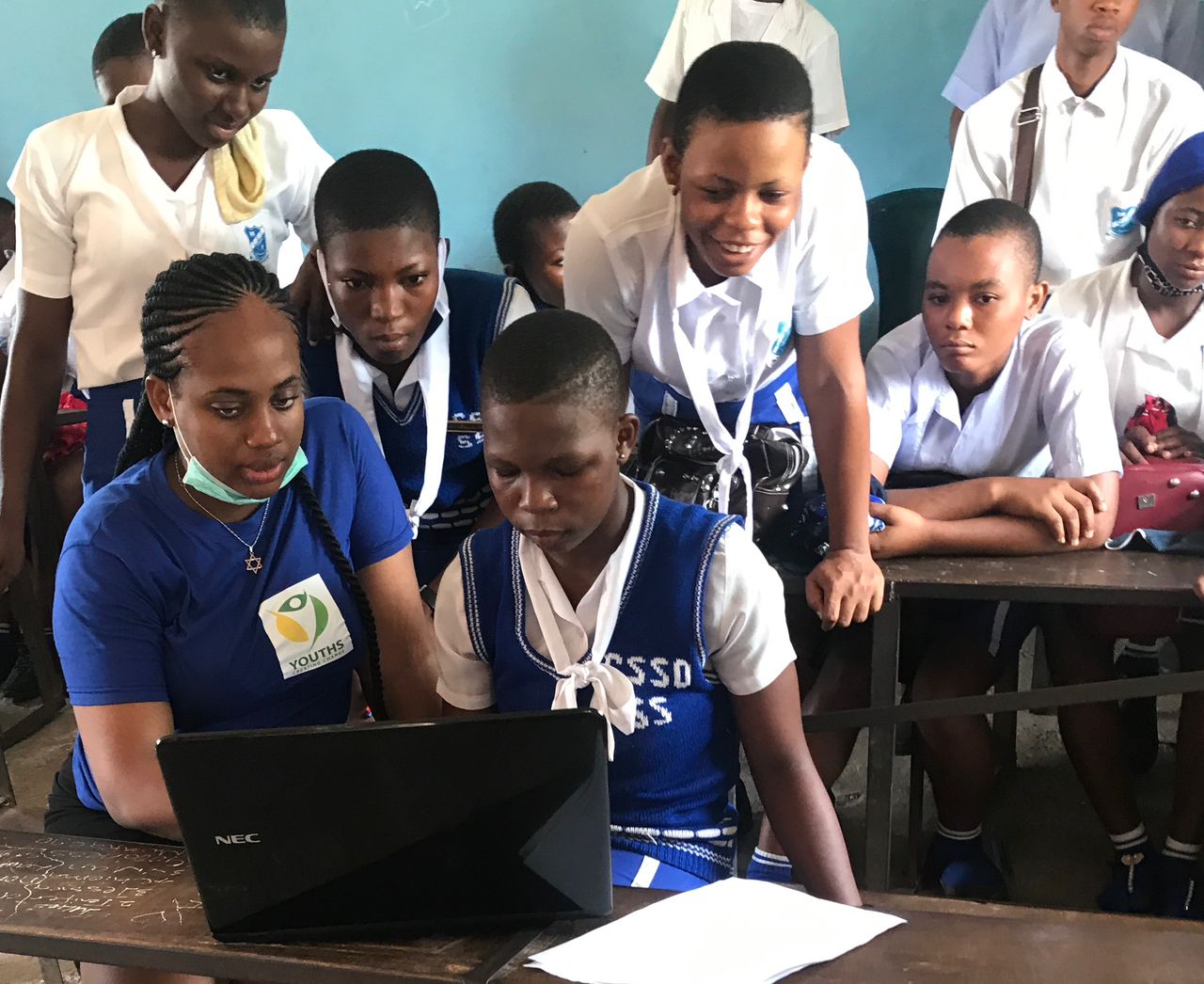
That’s the question Youths Creating Change, a volunteer-led education group founded by Uchechi Unamma, set out to answer in January 2021 during a digital literacy project across three rural communities in Imo State.
The outreach targeted students aged 14 to 17, most of whom were months away from their Joint Admissions and Matriculation Board (JAMB) exams. The irony? The exams are now completely digital. But when Unamma’s team asked the students, “Who here has ever used a computer?” — not a single hand was raised. “That moment stayed with me,” Unamma recalls. “We’re preparing them for a digital world, but we’re not giving them the tools.”
Nigeria’s literacy rate hovers just above 62%, and while mobile phone penetration has grown rapidly, digital literacy remains alarmingly low, particularly among youth in rural areas. According to the National Bureau of Statistics, fewer than half of Nigerian young people possess basic word-processing skills. This disconnect presents a serious risk for national development.
As automation, artificial intelligence, and e-commerce redefine global economies, countries that fail to equip their youth with tech skills risk falling further behind.
“If we don’t address this gap,” said an ICT teachers at Community Secondary School, Orogwe who partnered with the team, “we’ll have graduates who can’t function in a digital workplace.”
Youths Creating Change is tackling this challenge from the ground up. With support from local educators and youth volunteers, Unamma’s team delivered hands-on computer training sessions using donated laptops, offline learning modules, and solar-powered equipment. Their goal was not to lecture about coding, but to introduce digital tools in a way that felt achievable. Students practiced typing, navigated digital forms, and learned how to take mock JAMB exams using simulated CBT platforms.
In schools where chalkboards are still the norm, even simple exposure to a laptop can open up a new world. “We saw their confidence change in two days,” said Christogonus Ekenwaneze, one of the project coordinators. “They started asking about building websites and opening email accounts. That’s the spark we were hoping for.”
Despite Nigeria’s booming FinTech sector, EdTech remains severely underfunded. Most government schools lack computer labs, reliable electricity, or trained digital instructors. This leaves a huge segment of the population behind — especially girls, who are less likely to be enrolled in tech programs.
“If you fund EdTech the way we’ve funded payment systems,” Unamma argues, “you’ll change the country in one generation.”
She believes the government must move beyond slogans and prioritize digital infrastructure in education. That includes investing in broadband access for schools, subsidizing EdTech solutions for public classrooms, and supporting teacher training across all six geopolitical zones.
Collaboration is key. The solution doesn’t lie with the government alone. Uchechi Unamma advocates for a multi-stakeholder approach that brings together the private sector, international donors, and local communities. She believes private companies should invest in scalable EdTech platforms that can reach remote areas and be adapted to various learning levels. Meanwhile, local communities must also take ownership by organizing peer-learning initiatives that can sustain momentum beyond one-off interventions.
Nigeria can learn from countries like Kenya and India, where low-cost EdTech tools have already transformed rural education. But time is of the essence. As the global workforce becomes more digital, Nigeria’s future depends on how well it prepares its youth today.
In classrooms like the ones in Imo State, the gap is clear. But so is the opportunity. With consistent support, smart investment, and voices like Uchechi Unamma leading the charge, the path to digital inclusion is not only possible — it’s already beginning.
Disclaimer
Comments expressed here do not reflect the opinions of Vanguard newspapers or any employee thereof.