By Gambo Dori
ALMAJIRI – I doubt it if there is any vexed issue that has remained with us, particularly in the North – most states of the country, for as long as anyone can remember.
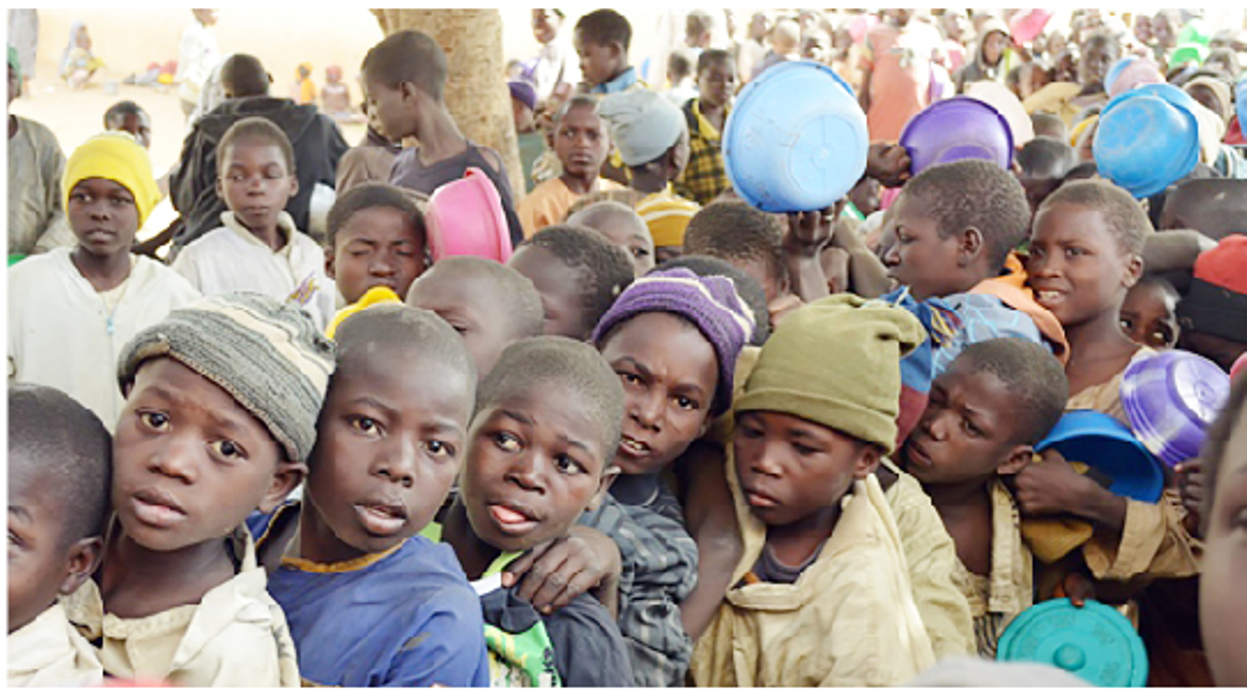
What to do with the street urchin popularly referred to as Almajiri has taxed the minds of our rulers from colonial times through the first generation of our politicians to the present day.
And to put it as mildly as possible, the issue has defied solution. So, I couldn’t let go an invitation to attend the lecture, titled, “Before the ban of the Almajiri system of education in Nigeria” to be delivered by Professor Ahmed Modibbo Mohammed in Arewa House Kaduna, last Saturday.
For many reasons, I had to attend. For one, Modibbo belongs to our set of 1973-76 in ABU Zaria and is one of the shining stars the set uploaded to the nation. He read History at a time when ABU had some of the best History teachers among the Nigerian universities offering the subject. To mention a few really world-class scholars: Prof. Abdullahi Smith, Prof. Garvin, Dr Yusuf Bala Usman, all now of blessed memory. At graduation, Modibbo was retained in the History Department where he spent most of his working life reaching to the top as Head of Department and Dean of the Faculty. So I guessed that the presentation would be erudite.
ALSO READ: Almajiri: Ganduje constitutes committee to reform system of education
For another reason, I know Modibbo had the privilege of serving as the Director-General, National Teachers Institute, NTI, Kaduna as well as the Executive Secretary, Universal Basic Education Commission, UBEC, places where he was very much in the arena involved in confronting the Almajiri issue. He was already the Executive Secretary at UBEC when the Federal Government enacted the 2004 UBE Act which had wide-ranging benefits if implemented properly. So I supposed that the lecture would not only be rich in erudition but also in details of what governments had done to confront the issue in the recent past.
The Arewa House lecture hall was packed with Northern elders led by the venerable Adamu Fika, the former Head of Service of the Federation. There were representatives of some governors but I was disappointed not to see any serving one in the crowd. There were his peers, a number of professors from ABU and other institutions. Then you have many of us who were his colleagues and who harbour a deep interest in the paper.
And Professor Modibbo did not disappoint. The 39-page paper took us on a grand tour of efforts by various governments, both at the centre and the regions and later states as the federating units came to be called. Modibbo had harsh words for the colonial masters whom he felt had every opportunity to merge the Qur’anic education system with the basic education schools they brought and were championing as ‘the torch of learning and knowledge to all parts of the emirates’ as Sir Hugh Clifford Governor of Northern Nigeria intoned at the formal opening of the Katsina Teachers College on 5/3/1922. The basic education schools grew in leaps and bounds with the continued support of the colonial government while the Islamic education system floundered with inadequate facilities and really no support despite higher enrolment.
At independence, the Northern regional government made the first intervention to rejuvenate the Islamic system of education. Knowledgeable scholars from across all the 13 provinces of northern Nigeria were sent to see what obtained in Egypt, Sudan and Libya. These were countries that successfully integrated their Islamic with the modern education system. When they submitted their report the ministerial committee chaired by Isa Kaita, the Minister of Education immediately endorsed the full implementation of their recommendations. A pilot scheme was due to start in 1964 to implement the recommendations of the committee and as Modibbo said, ‘true to type the Sardauna made sure this was achieved’.
In Borno Native Authority, Idrissa Khadi then the Chief Education Officer made a spirited attempt to implement the recommendations. In 1964, I was a student in the tsangaya run by the very famous Malam Sule Mai Bakin Karfe in Bazamfareri, off Babban Layi Maiduguri and I recall the Native Authority built a zaure for him. I cannot now confirm if they were giving him some stipend but is not unlikely given the mood of the time. Nevertheless, the whole arrangements were sadly affected by the coups of 1966, the civil war that followed along with the entrenchment of the military in our political lives. They all contributed to the failure and finally abandonment of the scheme.
Meanwhile, our population kept on multiplying and since our borders were porous the inflow from the neighbouring countries increased further stretching our facilities, invariably increasing the number of children yearning for some form of Islamic education no matter how imperfect. Unfortunately, we missed the opportunity in those years of the 1970s when there was the money to do so, to integrate Quranic education with basic education. The system would have provided not only manpower but scholars of high standing comparable to those countries, Malaysia, Egypt, Indonesia where the system worked well. Our efforts as Modibbo said, ‘were subverted, truncated, left to rot, decay and bastardized’. Instead of producing scholars it was only producing more of street urchins.
As the lecture progressed it became obvious that Modibbo would not be sparing the Northern governors as being complicit in the ignoble role of not taking the Quranic education system to the next level. The northern governors failed to take advantage of interventions by the federal government. The Federal Government was encouraged by UNESCO to launch the Universal Basic Education program in 1999. The UBE programme was launched with all the fanfare, setting itself the target of enrolling all school-age children into basic education including all the street urchins in the Qur’anic system of education.
It was lofty ambition that was even bolstered by the Office of the Vice-President that organised a series of seminars in Arewa House between 2000 and 2003. The series of workshops were capped with one where the Northern governors attended along with the Vice-President. At that particular workshop, a blueprint of Northern states educational project was launched where the governors and the Vice-President all agreed to implement the decisions taken. Unfortunately, this laudable project never saw the light of day. It has remained a project only on paper till date.
Worst was to follow. In 2009 another major attempt was made at integrating Quranic education with basic education with the setting up of a ministerial committee on Madrassa education by the Federal Government. A study by UBEC had established that there were close to 10 million almajirai across Nigeria with over 75 per cent concentrated in the north-west and north-eastern states. More money was sunk into this project but sadly all these efforts came to nought as governors bickered on who was to give the contracts to build the schools. Over 100 of the schools were built but sadly they have remained empty, unoccupied, abandoned and vandalized.
Thus, before the ban on the almajiri, Professor Modibbo made a series of recommendations in the paper, to get things done properly with particular emphasis on implementing the UBE Act to the letter. As Modibbo rounded up his paper there was little time for comments but Mukhtar Ramalan Yero a former Governor of Kaduna state stood up to explain the lack of action by states. What caught my attention in his remarks was that this issue of almajiranci is bigger than what we all think. To get ourselves around it we need everyone on board – the traditional rulers, the mallams, plus all the tiers of government.
Disclaimer
Comments expressed here do not reflect the opinions of Vanguard newspapers or any employee thereof.