By Dr. Ugoji Egbujo
Lamido Sanusi came to national lime light in 2009. He had been a banker. President Yaradua appointed him Central Bank Governor. He met a banking industry seized by sleaze and drowning in systemic arbitrariness. He found dubious book keeping everywhere. He took implicated bank executives by the scruff of the neck and dragged them and their filth out of their banks into the streets and into the arms of the law.
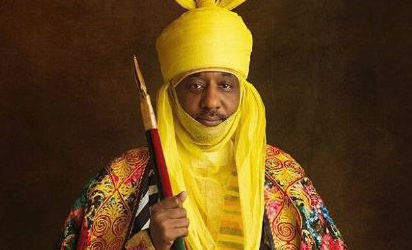
Sanusi Lamido Sanusi, the Emir of Kano
EFCC denies arrest of Okorocha, says he has no invitation from agency(Opens in a new browser tab)
Many said he saved the banking system from perdition by picking out the cankerworms and dressing the sores that could have become gangrenous. Others said he was an overzealous petty vindictive regulator who used a sledge hammer to smash when he could have used a scalpel to tease.
His tenure as CBN governor is still being judged.
He instituted reforms to banish arbitrariness in corporate governance. But some said he was a garrulous hypocrite. They said he went about dislodging the specks in the eyes of others while the logs in his own eyes multiplied. They said he cleaned the commercial banks with ruthlessness but littered the CBN with telling mismanagement.
He was outspokenly critical of the Jonathan government and its profligacy. But towards the end of his time as CBN governor, it was the same Jonathan government, through the Financial Reporting Council, that leveled serious allegations of financial improprieties against the reformer, Lamido Sanusi. Sanusi denied the charges. And called them desperate acts of witch-hunt.
When he ascended the Kano Emirate throne, many were hopeful. They said the traditional institution had looked away while the society became filled with millions of out- of-school children, poverty and disease. The North was particularly afflicted. A revolutionary king, they thought, could instigate a cultural revolution from within. But others said that a hounded Lamido Sanusi only took refuge in the palace to avoid being prosecuted.
Controversies, it appears, followed him into the palace.
From the throne, he spoke against retrogressive cultural practices that had blighted the North and the country. He highlighted the ill treatment of girl child in the north. He warmed against child marriages. He spoke vociferously against the reckless population explosion in the north and wanted birth rate controlled. He wondered what the politicians were doing with public resources while jobless youths roamed the streets. He was bound to ruffle feathers. His opponents said he was desecrating the hallowed throne by dabbling into radical politics. But it was, again, the charges of hypocrisy that were the most pointed blows he received.
Many wondered why a social crusader for the girl child would marry a 19-year old girl as a third wife. It was well within his legal, religious and cultural rights so to do, but it didn’t enhance his credibility as a revolutionary against the retrogressive institutional practices against the girl child he wanted dismantled. It is probably, this perception of lack of commitment to lead by personal examples that has left room for his opponents to take rampant shots at him. So when he is not explaining frolicking with a teenage girl, he is explaining moving around in the symbol of sybaritism—the Rolls Royce.
The Emir should have known. An Emir who chooses to disrupt the system fundamentally must brace for impact. The least he could have done was to gird his loins and rid himself of all flabbiness. Because the fight he had chosen could not be won if he came to it heavy with even mere suspicions of moral or financial improprieties.
The Emir had barely started when a certain Hawk, the Kano Anti Corruption Commission, came out from nowhere and started circling over the palace. The allegations then was that certain sums of money had been misappropriated or wastefully spent by the emirate. The Emir had seemed rattled. The figures peddled seemed outrageous. His opponents chuckled. A few persons ran around and pleaded for mercy. The hawk glided, retreated, flew away.
The Emir denied all wrong doings in public. But his opponents pointed out that his denials were tepid, lacked the fervency of his customary righteous posturing. They said it was true the Kano Anti Corruption Commission could be acting the script of an angry governor, the way the FRC was acting the script of an angry president. But they explained that in both cases vindictiveness was only secondary, secondary to the existence of reasonable suspicions of financial malfeasance where immaculate purity should have existed.
Before the 2019 elections a scandal broke in Kano. The Kano governor was seen on tape collecting bribe money and stuffing his ‘babanriga.’ The nation was stupefied. The governor denied the allegations and dismissed the video recordings as doctored. The Kano House of Assembly moved in to investigate. A court injunction emerged and stopped the legislature that had seemed bent on initiating an impeachment process. The Emir was not heard. But he must have felt thoroughly embarrassed. Some said the Emir mourned in private. The governor must have noticed. That set the stage for another round of turbulence.
The 2019 elections came. Kano was hotly contested. The governor survived by a hair’s breath after a supplementary election that was widely dismissed as unfree. After the elections, rumours sprouted and spread: the governor was unhappy with the Emir whom he suspected had supported his opponents, his ouster.
And once the Kano governor got angry with the Kano emir we knew that hawk—the Kano Anti Corruption Commission—would return again. But the governor didn’t wait for the hawk. He took his sword and balkanized the Kano emirates.
The Emir of Kano was left with 20% of his weight. Four new kings and kingdoms were created from his kingdom. Many said the governor was playing dangerous politics of bitterness. And that whatever his grouse with the emir he shouldn’t destroy an important historical institution with his tantrums. Others said that the heedless head that picked a wasp should be stung by it. They said the Emir had allowed his ego and political recklessness bring division and misfortune rather than unity to his emirate. The battle has shifted to the courts. But the hawk that appears only when the governor is angry with the Emir has started circling again.
The Emir has declared his innocence like a mother hen threatened by shadows above. This time some of those who seem him as a beacon of light in a benighted society have urged him to abdicate the whittled throne and seek higher effectual political grounds. His opponents are singing: ‘we told you so.’ They say that the Emir has the right sermons. But sermons are not enough. Because as it was in the CBN with the FRC so it is now with the Kano Anti corruption Commission. They want to see the Emir live what he preaches. They want to see him submit himself to all investigations and not take refuge in court injunctions. They want to see him live, not a life of opulence but, the a life of a man stricken by the disease and poverty and illiteracy swirling around him.
The Emir is on the ropes. I pray he ‘rope-a-dope’s his way to a higher political calling. Perhaps, then, he would circumcise his heart and help redeem the nation.
Disclaimer
Comments expressed here do not reflect the opinions of Vanguard newspapers or any employee thereof.