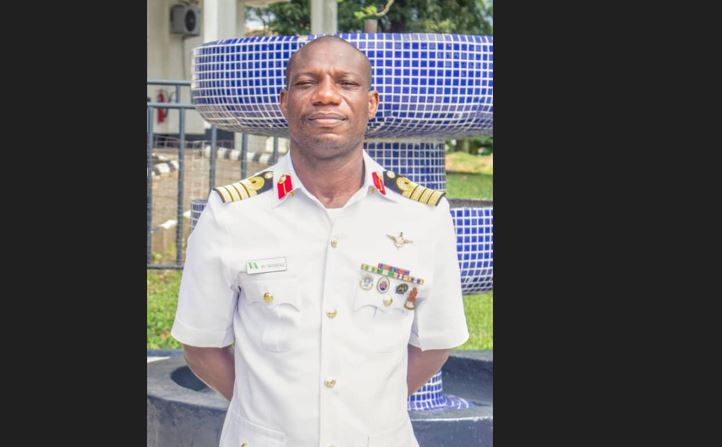
By Gbenga Oke
Nigerian Armed Forces training programmes are adapting to face threats that transcend physical borders. At the forefront of this digital transformation is Commander Moses Omopariola whose work at the Armed Forces Command and Staff College (AFCSC), Jaji, is reshaping how military personnel are trained to identify the nation’s cyberspace.
What inspired you to focus on cybersecurity within the Nigerian Armed Forces training programmes?
My inspiration stemmed from firsthand observations of the growing vulnerabilities faced by military infrastructure in the digital age. As cyber warfare emerged as a new domain of conflict, it became clear that traditional defense mechanisms were no longer sufficient to protect against it. The Nigerian Armed Forces needed to be proactive, not reactive, in preparing personnel for these evolving threats. My exposure to global best practices, particularly during my training at King’s College London, underscored the urgent need to integrate cybersecurity into core military training. I saw an opportunity to pioneer this shift within the Armed Forces Command and Staff College by integrating cyber defense as an operational imperative. The idea of building a generation of cyber-aware officers who could secure national defense infrastructure and anticipate threats—not just respond—has been my driving force. This mission combines my passion for national service with the conviction that digital security is as vital as conventional warfare.
How did your academic background, including your studies at King’s College London and your technical expertise, shape your approach to military training?
My educational journey, particularly my master’s program in Defence Studies at King’s College London, provided a strong theoretical and strategic framework that underpins my approach to military training. I combined this with a robust foundation in cybersecurity, analytics, and information systems to create interdisciplinary training models that go beyond drills and simulations. I learned to think critically about how modern conflict zones operate, both in digital spaces and in physical ones. I translated that learning into customized modules that blend cyber threat intelligence with conventional warfare training. At the College, I leveraged case studies, cyber simulations, and emerging threat models to ensure that training curricula were not just academically sound but operationally relevant. My background also equipped me to identify systemic gaps—such as the absence of cyber risk mitigation in combat planning and correct them by integrating security protocols, risk management, and cyber ethics into officer education.
Can you describe your role as Directing Staff at the Armed Forces Command & Staff College?
As a Directing Staff member, I serve in dual capacities, acting both as an educator and a strategic advisor. I am responsible for developing curriculum, mentoring officers, and shaping doctrinal thinking across operational planning, with a specialized focus on information security. My role involves delivering advanced instruction to mid-career officers from the Army, Navy, and Air Force, often guiding them through complex simulations that replicate real-world cyber threats. Beyond instruction, I contribute to the design of institutional policy and capability development in cybersecurity. I also facilitate knowledge transfer between Nigerian defense institutions and international partners. As a bridge between traditional military pedagogy and emerging cyber disciplines, I ensure our training frameworks anticipate the next generation of threats. It’s a position that demands a unique balance of academic rigor, technological fluency, and operational credibility. Ultimately, my role is about enabling others to lead effectively in an increasingly complex and digital battlespace.
How did you identify the need to reform cybersecurity training for military officers? During my early tenure, I noticed a dissonance between our strategic ambitions and actual preparedness in cyberspace. Officers were competent in kinetic operations but lacked the digital literacy needed for modern security environments. Feedback from field deployments also indicated incidents of cyber intrusions and compromised mission data. These gaps became more apparent as cyber threats escalated globally, targeting both military and civilian assets. I conducted informal audits and engaged with frontline commanders to gain an understanding of their operational cyber challenges. What I found was a systemic underinvestment in cyber awareness and resilience. I documented these insights, benchmarked them against global military cyber education models, and advocated for reform within the institution. This concept wasn’t just about updating content; it required a mindset shift to view cybersecurity as an integral part of national defense. That identification phase laid the groundwork for the reforms I championed and implemented at the College.
What key changes or innovations did you introduce to the cybersecurity curriculum at the College?
I led the introduction of Nigeria’s first military cyber warfare simulation modules explicitly tailored for our operational context. These modules incorporated real-time threat modeling, malware sandboxing, and defensive coding techniques. I also developed an integrated risk assessment framework aligned with military planning processes, bridging cybersecurity and kinetic mission execution. Another innovation was the inclusion of emerging technologies, such as AI and blockchain, in threat analysis, preparing officers for next-generation threats. I introduced case-based learning using examples from NATO cyber strategy, China’s cyber doctrine, and Russia’s hybrid warfare models to broaden officers’ strategic perspectives. Furthermore, I collaborated with local cybersecurity firms to provide practical labs and hands-on exposure to incident response protocols. These changes redefined the curriculum from static, theoretical instruction to a dynamic, operations-aligned model. Feedback has shown that our officers are now more confident in identifying, mitigating, and responding to cyber threats, both during peacetime and in conflict scenarios.
How did you tailor the training to meet the unique needs and challenges of the Nigerian military environment?
Understanding the Nigerian security landscape was crucial to localising our cyber curriculum. I considered regional insurgencies, porous digital infrastructure, and socio-political dynamics that influence threat vectors. I localised threat models using actual breaches reported by Nigerian military institutions and civil sectors. I also contextualised cyber hygiene practices for environments with limited connectivity or infrastructure. Recognising that many officers operate in resource-constrained conditions, I designed low-bandwidth cyber labs and offline simulation exercises. I adapted training to be bilingual where necessary and introduced visual storytelling to communicate complex cyber concepts more effectively. Additionally, I integrated operational doctrine, such as counter-insurgency tactics, with information security practices, creating a hybrid framework that reflects real-world deployment conditions. Tailoring also extended to ranking officers by creating stratified modules from strategic cyber defence planning for senior officers to hands-on network security training for junior personnel. This action ensured relevance, scalability, and deep learning.
Could you share examples of new teaching methods or technologies you integrated into the programme?
I introduced several modern pedagogical techniques to transform the traditional lecture-based model into a dynamic learning environment. One of the significant shifts was the deployment of gamified cybersecurity simulations, where officers participate in red team–blue team exercises to simulate real-time attack-and-defense scenarios. I also incorporated cyber range platforms that allow participants to practice penetration testing and threat detection in a controlled, virtual environment. To facilitate a more profound understanding, I embedded data visualization tools that map the anatomy of cyberattacks, making complex threats more tangible and comprehensible. Another innovation was the use of flipped classroom techniques, where officers engage with theory outside of class and spend training sessions solving practical problems. These methods foster critical thinking and adaptive learning. I supplemented this with collaborative projects and peer reviews to encourage interdisciplinary perspectives. The result has been a noticeable increase in analytical capability and situational awareness across trainee cohorts.
How have you worked to improve cybersecurity awareness and skills among military personnel at different levels?
Recognising that cybersecurity is not the responsibility of a select few but a shared imperative, I implemented a tiered awareness strategy targeting personnel at all command levels. For senior officers, I facilitated executive briefings that linked cybersecurity risks to operational readiness and national security. These sessions emphasized the strategic implications of cyber hygiene, policy frameworks, and leadership accountability. For mid-level officers, I developed specialized modules on threat intelligence, secure communications, and protection of critical infrastructure. I also led “cyber field awareness” drills to simulate breaches under field conditions, enhancing contextual learning. For junior ranks and administrative Staff, I ran regular cyber hygiene workshops, using relatable case studies to drive home the risks of phishing, data leakage, and poor password protocols. I also introduced cybersecurity bulletins and quick-reference guides to reinforce learning after the training. Through this multi-pronged approach, I’ve created a pervasive culture of cyber awareness that strengthens our collective defence posture.
What has been the impact of these training programmes on the operational readiness of the Nigerian Armed Forces?
The effect has been both measurable and strategic. Units trained under the revised curriculum report a 60% reduction in cyber-related operational disruptions. In live deployments, officers have successfully identified and neutralized cyber threats that would have previously gone undetected. Cybersecurity is now a formal consideration during mission planning, and there is improved inter-service coordination for information security. Officers have become proactive in applying risk assessment protocols, especially when handling classified information or deploying communication systems in volatile regions. Operational briefings now routinely include cyber risk evaluations, reflecting a fundamental shift in our command culture. The programs have also enhanced our international interoperability; NATO and ECOWAS partners have commended our enhanced digital readiness during joint exercises. Perhaps most importantly, morale has improved, and officers feel better equipped to navigate 21st-century threats. This transformation highlights how strategic training can enhance not only readiness but also resilience.
How do you ensure the training stays up-to-date with the rapidly evolving cyber threat landscape?
To maintain relevance, I established a Cyber Threat Monitoring Cell within the College that tracks global threat trends, vulnerabilities, and emerging technologies. This cell generates quarterly briefs that inform curriculum updates and training modules. I’ve also institutionalised annual curriculum reviews that incorporate new threat intelligence, doctrine revisions, and technology innovations. I engage in continuous learning through international conferences, cyber war games, and fellowships, ensuring I remain at the cutting edge of the field. Furthermore, I’ve forged academic partnerships with institutions such as the University of Johannesburg and established technical collaborations with cybersecurity firms to access real-time threat data. Our program also benefits from insights gathered during post-training debriefs and after-action reviews from field units. These mechanisms create a feedback loop that refines the training framework, ensuring it evolves in step with the threat landscape. The result is a curriculum that is agile, anticipatory, and globally benchmarked.
What challenges did you face in implementing these changes, particularly in terms of institutional culture or resource constraints?
One of the foremost challenges was cultural resistance. Traditional military training emphasizes physical warfare, and there was skepticism about prioritizing intangible, digital threats. Convincing leadership that cybersecurity was not a luxury but a necessity required persistent advocacy and data-driven presentations. I also encountered resource limitations; initially, the infrastructure for cyber labs, simulation software, and skilled instructors was lacking. To overcome this, I repurposed existing IT assets, sourced open-source tools, and designed low-cost training kits. I also trained a core team of officers who became cyber champions within their units. Institutional inertia was another hurdle; curriculum updates require multiple approvals and can be a slow-moving process. I navigated this by building alliances with reform-minded leaders and leveraging operational risk reports to highlight the urgency of change. Through persistence, adaptability, and strategic engagement, I gradually shifted the narrative and secured the buy-in necessary to integrate cybersecurity into mainstream military training.
How did you overcome skepticism or resistance towards prioritising cybersecurity in military training?
I approached skepticism through strategic persuasion and tactical demonstration. First, I curated high-profile case studies showing how cyber breaches had compromised global military operations from the U.S. Office of Personnel Management hack to ransomware attacks on European defense ministries. I tailored these examples to mirror potential threats to Nigerian military infrastructure. Second, I conducted pilot programs that delivered tangible results; officers who participated demonstrated superior situational awareness, faster threat response times, and reduced data exposure during field missions. These outcomes became my proof points. I also facilitated cross-functional workshops, inviting logistics, operations, and intelligence units to discuss how cybersecurity intersects with their roles. This broke down silos and created internal champions across departments. Furthermore, I aligned cyber priorities with national security strategy, framing it not as a tech issue but as a sovereignty concern. Over time, attitudes shifted from resistance to endorsement because the evidence was irrefutable and the benefits clear.
Have you engaged with international military institutions or cybersecurity experts to enrich the training programmes?
Yes, international engagement has been a cornerstone of my approach. I’ve collaborated with counterparts from the United States Naval War College, the UK Defence Cyber School, and the South African National Defence Force to exchange best practices. These engagements provided valuable insights into the structure of the curriculum, the intensity of training, and the use of technology in cyber military education. I’ve also participated in NATO’s Partnership for Peace cyber defense workshops, where I presented Nigeria’s cybersecurity training framework and received critical peer feedback. Additionally, I collaborated with cybersecurity experts from private sector leaders, including Cisco, Fortinet, and Check Point, integrating their tools into our simulations and adapting their threat detection protocols to military-relevant scenarios. These partnerships not only enriched our curriculum but also positioned Nigeria as a regional thought leader in military cyber education. My goal has always been to ensure our training reflects global standards while remaining locally contextualised.
What are your goals for the future development of cybersecurity training at the Armed Forces Command & Staff College?
My future vision is to establish the Centre for Cyber Defence Excellence at the College—a specialised hub for advanced research, cyber war-gaming, and training. This center would serve as a think tank, incubator, and policy lab, attracting talent from across Africa and enabling Nigeria to shape regional cybersecurity doctrines. I also aim to integrate cyber-physical convergence into training, combining knowledge of drones, IoT, and AI with traditional cyber defense. A key priority is expanding participation through e-learning platforms, enabling continuous cyber education for deployed personnel and officers in remote locations. I plan to introduce certification tracks in areas such as cyber forensics, secure software design, and threat intelligence analysis. Furthermore, I am working on forging more public-private partnerships to bring industry-grade tools and real-world threat environments into our labs. Ultimately, I aim to institutionalize cybersecurity as a core military competency, rather than an auxiliary specialisation.
Disclaimer
Comments expressed here do not reflect the opinions of Vanguard newspapers or any employee thereof.