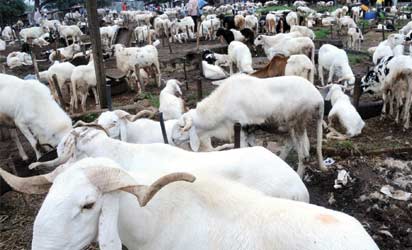
SALLAH: Rams at Zango Market, Tudun Wada, Kaduna, yesterday. NAN PHOTO.
Eid-ul-Adha or the Feast of Sacrifice, is celebrated by Muslims all over the world today. It is a major festival in Islam which enjoys special significance; of absolute faith and submission to Allah, love for the kith and kin, sharing of food and peaceful coexistence. It does not only mark the climax of Hajj or Pilgrimage, the fifth pillar of Islam but it also commemorates Prophet Ibrahim’s readiness and his son, Ismail’s consent to be sacrificed following God’s commandment in a dream.

SALLAH: Rams at Zango Market, Tudun Wada, Kaduna, yesterday. NAN PHOTO.
Yesterday, pilgrims observing the core of the worship of Hajj gathered at the plain of Mount of ‘Arafat, outside Makkah where they spent their time totally in worship and proceeded from Arafah to Muzdalifah to offer prayers and now at Jamarat to cast seven stones at the symbols of Satan and other devotional course.
This event culminated into today’s occasion, as Muslims world over offer rams in sacrifice as ordained by God.
The occasion is not a mere ritualistic performance among Muslims who slaughter rams, goats, sheep and cows annually and mechanically, without understanding the underlying significance.
The feast of sacrifice dates back from the historic event when Prophet Ibraham was commanded by God, in a dream, to sacrifice his son, Ismail. While he was in the act of sacrificing his son, God sent the Arch Angel Gabriel with a huge ram as ransome.
Gabriel informed Ibrahim that his convenant was fulfilled and instructed him to sacrifice the ram as a ransom for his son. The story is mentioned in Chapter 22:37 of the Holy Qur’an.
Essentially, Islam’s attitude towards ritual slaughter is not that of blood atonement, or seeking favour with God through another’s death, rather, the act of thanking God for one’s sustenance and also personal sacrifice of sharing food with other humans. Muslims observe the ritual as a way of acknowledging that only Allah has the absolute right to take a life and that they do so as a humble member of Allah’s creation in need of food. Above all, it shows the spiritual committment to the covenant with Allah and absolute submission to His will at all times, in times of pain and joy. Although, the solemn pronouncement of Allah’s name over the sacrifice is an essential part of the rite, Allah does not take delight in flesh and blood, rather, it is a symbol of thanksgiving to Allah by sharing meat with fellow humans.
Eid-ul-Adha is also a harvest day. All the good work done in the service of Allah are rewarded and all believers reap the fruits of their good deeds as Allah grants His mercy and blessings abundantly without measure.
Again, Eid-ul-Adha transcends all limits of human life. As an individual Muslim, it marks a day of victory for the Muslim as he reflects on the circumstances that culminated into the special day as well as holds a strong command over his desires, exercises a sound self-control and enjoys the test of a disciplinary life.
And once a person acquires these qualities he has achieved his greatest victory, because the person who knows how to control himself and disciplines his passion will not be prone to sin, including vices such as indecency, jealousy, greed among others.
As a result, sharing of food with the poor and neighbours, as well as a reminder of God’s mercy over us, seeking forgiveness from God, forgiving others by releasing any feelings of enmity or ill feeling towards others and ensuring that peace and tranquility reign in the society is the essence of the sacrifice. The feat is all about community, celebration and neighbourliness.
Eid Mubarak!
Disclaimer
Comments expressed here do not reflect the opinions of Vanguard newspapers or any employee thereof.