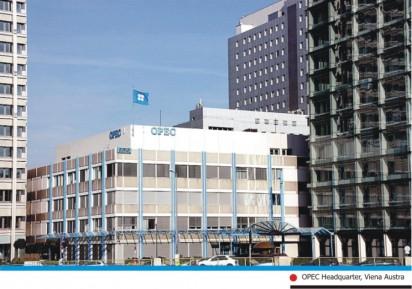
OPEC
By Sonny Atumah
The Organisation of Petroleum Exporting Countries, OPEC on November 29, 2016 lidded members’ production output to bring global oil inventories back to levels that would shore up prices. For the first time since 2008 the coalition of 24 producer nations of OPEC and non-OPEC members agreed to cut output by five percent (approx.1.8 million barrels per day, bpd) for six months starting January 2017.
OPEC Secretary General, Nigeria’s Mohammed Barkindo, supervised the formation of a compliance committee to ensure that allocated output levels were maintained to end a two-year excess that has dipped prices. The oil bloc has so far recorded about 94 percent compliance level in the oil freeze for a better deal of the market. Some members have not fulfilled their commitments which de facto OPEC leader, Saudi Arabia is reluctantly taking the slack. The non OPEC members have complied with about 50 percent of the 558,000 bpd pledge they made.
Since the November OPEC meeting in its Vienna Headquarters, oil freeze has become manifestly expressed as prices have risen modestly higher from US$46.38 and peaking at US$57.10 by January 6, 2017. Despite the level of conformity global oil inventory still appears to be very high. Oil prices have been under intense pressure from high inventory in the major trading hubs. Commentators believe that OPEC may be deliberately cutting supply and abandoning market share which has become beneficial to the cartel’s competitor, the American shale producers.
The perception is that shale oil is taking the shine off the intentions of OPEC and its allies. This has created doubts whether OPEC would extend production cuts beyond May 2017 when it meets to evaluate prices and market share control. The precarious and dicey situation has pitched shale producers against OPEC that the cartel is now on edge.

OPEC
At relatively low cost of production they break even and that has counteracted the supply cut by OPEC. The prices for shale producers to breakeven continue to drop, and may continue until shale becomes the price setter, leaving OPEC out in the cold. Texas Permian Basin producers have improved in technology and efficiency that it takes little time to bring crude online. There are 308 Permian Basin Rigs out of the total American 631 rig count last week. The American output is neutralising the OPEC which is struggling with oil freeze this year.
The high inventory in the major trading hubs is a problem the oil cartel is contending with. The limit to OPEC control is in its members and not to the American producers who have nothing to do with any production cut by OPEC and its allies. Over the years OPEC had resorted to production cut for a targeted price per barrel. The cartel may again control price but the beneficiaries may be outside the fold of OPEC.
Another reason for production cut was to reduce the high level of oil bought and stored when oil was very cheap. Global oil traders had speculated and bought large quantities of crude to profiteer later. Net oil importers including China bought and stockpiled in their strategic petroleum reserves, SPR.
The Oil Industry News reports that
Pioneer Natural Resources Company’s founder and Chairman Scott Sheffield predicted that crude will drop to US$40 per barrel if OPEC and its allies don’t extend their output cuts beyond June. Pioneer is one of the most prolific drillers in the Permian Basin beneath Texas and New Mexico, which has 85 percent of its projected 2017 crude output hedged as of February 2017. Another 10 percent of estimated 2018 production also was protected, according to the Irving, Texas-based company.
The level of confidence in producers outside OPEC and its allies is beyond the ordinary. Barkindo may have discovered that OPEC’s greatest battle is not just with shale but also with hedge funds and global oil traders who actually hold all the aces. Hedging is how oil companies shield themselves from a potential market collapse. Risk management teams buy and sell derivatives such as options contracts that set a floor and ceiling on the price a company will receive for its oil. The banks on the other side of the trade get a fee and may record additional gains if the market moves in their favor. If the price drops, the oil company is protected. Oil producers have continued to increase their hedges.
Expert advice has told Barkindo that dialogue with financial markets would give OPEC the desired revenue and market share. So the interest should be in price, volume produced and sold. Experts’ advice is that OPEC should oversupply the market to send a strong signal to shale producers that they are not having a free ride. Will OPEC abandon its production cut roll over plan in its May meeting? Time will tell!
Disclaimer
Comments expressed here do not reflect the opinions of Vanguard newspapers or any employee thereof.