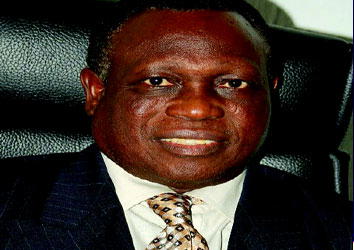
•Professor Dayo Alao
HOW IT FEELS TO BE EMPLOYED BY MY FORMER STUDENT
By Fred Iwenjora
Several things make respected educationist and Professor of Mass Communications and media studies Professor Dayo Alao so special. Aside from being President/ Vice Chancellor of Adeleke University, EDE Osun state, Professor Alao is one of the few Vice Chancellors in Nigeria from the field of communications arts and sciences as most Nigerian VCs may have come from the natural and social sciences.
Again, Alao was a former reporter and correspondent for Nigeria’s biggest newspaper of all time, Daily Times and in over 35 years of service, rose from the ranks to edit Times International Magazine , became General Manager and then Chairman CEO of the company and its subsidiaries. He is, therefore, loaded with history for Nigerians and the world at large.
Another special thing about Prof Alao although he prefers not to see this as special is his insatiable craving for knowledge a drive that had seen him taking a double portion at all levels of academia with 2 bachelors, 2 masters, 2 doctoral degrees and an MBA.
In this chat, he reminisces on his past and present pointing on how he ably juggled the very vigorous activities at the newsroom with same extraordinary attention he gave in the classroom. He also discuses with great pain his regrets on the ‘death’ of Daily Times which he considers Nigeria’s biggest paper of all time and most of all how it feels to be employed by his former student among other issues.
You must be one of the few if not the only Vice Chancellor in any Nigerian University from the Mass communication department. Many VCs may have come from the natural or social sciences. Is it correct to say this?

•Professor Dayo Alao
I am not the only one. There is another journalist who has just completed his term as Vice Chancellor. I am talking about Professor Onabanjo who served at Lead City University. I think I am the second. But when you look at it from the angle of long stay in the media and then reaching the very top of it, I think I am the only one because I had served as the Chairman, Chief Executive of the Daily Times before coming into University administration while my colleague just had a stint with the radio before going fully into academics and later rising to become VC.
So you must agree with me that from the field of Mass Communication, leaders have emerged finally? It never was so… I mean that your elevation to the highest level of academic administration is a pointer to this fact?
You know times where when no one bothered about getting a degree in Mass communication thinking it was just a matter of learning a trade. But it has gone beyond just learning the trade to learning a profession. There is a great difference between learning a profession and learning a trade. Learning a trade is like picking up from the streets while a profession goes deeper as you deal with both the academic and professional aspects.
In this sense, any person who plans to impact real knowledge must have passed through the rudiments to an acceptable level of academic discipline by becoming a lecturer, getting a PhD and becoming a Professor while the other angle counts how many years you have spent in the newsroom i.e. the real workshop, the real place where the product is manufactured.
So for me spending 35 years of unbroken service in the media and getting to the very top as Chairman, CEO of a newspaper like The Daily Times is indeed God’s doing and I thank the Almighty for that special grace. Again to come fully into academics and also getting to its top as Vice Chancellor is God’s grace.
Was your venture into mass communication your design or by chance of an accident?
It was not an accident. When I was teaching at Adventist Grammar School Ede in the early 70s, I was the newsman of the school. I would listen to foreign radio stations like the BBC and VOA, condense salient facts of the news and write them out to post them at the notice board for people to read. People converged to read my news. When later I was able to buy an Ollivetti typewriter which I taught myself to use, my news became typed and I became celebrated.
Many mass communication scholars went to the US to study…I mean people like Nigeria’s foremost mass communication scholars, Dr Nnamdi Azikiwe. Did they inspire you in any way to tow that line?
I had wanted to be a soldier but my father who was a pastor and my mother who was a school head teacher would take none of that. When you come from such background, soldiering would be the last thing. I had a brief experience at the Military school. One day I had visited my father at his location in Ikun, Ekiti state. He did not feel comfortable with my soldiering ambition especially when children of his colleagues were in Christian schools like the Adventist Grammar school Ede and other places.
I continued to resist his push towards becoming a pastor as he wished while he stamped his feet that I won’t return to soldiering. In fact, I did not return to the Military School again. I detested being a pastor like my father. I did not like the old jackets and oversized suits and shoes he was wearing. I later went to get a degree in Religion to satisfy him. I attended the Adventist College of West Africa which was an affiliate of Andrews University in US which later transformed many years after to Babcock University Ilisan Remo, in Ogun State.
I completed the course in 1974 and I was posted to teach at Adventist Grammar school Ede. I later decided to go for a PG.d program in Mass Communication at Times Journalism Institute (TJI) and started working as Senior Journalist with Daily Times in July, 1976. It was dissatisfaction that drove me to travel abroad to do a mass communication bachelor’s degree, a master degree and a doctorate with a study leave granted me. In all I had done a bachelor’s degree in Religion and another in mass communication, a masters in international communication an MBA in Leadership and two PhDs, one in mass communication, and another in international relations.
What fond memories do you recall of the Times where you rose from the reporter to Chairman?
Between 1976 and 1982, I covered celebrated cases in Nigeria, reported aviation with my boss Femi Ogunleye who is now an Oba in Ogun state. We covered the airport and I also reported crime before I was transferred to the newly created Ondo State, as Chief Correspondent. I later spent eight years as Editor Times international, one of the nation’s flagship internationally circulated magazines. There after I became member of the Editorial Board with Professor GG Dara and a host of others including Iyorche Ayu, Kayode Soremekun who is also a professor today. It was a time indeed.
That was the time when Dr Yemi Ogunbiyi was in charge. Daily Times was still highly respected even though the government had taken over. We were not biased and reported news as it was. We took critical interest on the nation and carried critical editorials. It was like that until I became General Manger with Peter Enahoro as Chairman, CEO. It was after the expiration of Peter Enahoro’s tenure that I replaced him as Chairman, CEO of the Daily Times.
You spent 35 years at one work place yet you did not get carried away by the lure of the news room and forgetting your pull towards academics…
What I saw in the news room of those years…(heaves a huge sigh). The newsroom philosophy in those days was such that if you imbibed it so much as it seemed, you could get lost in the crowd. In those days at the Times in Kakawa Lagos there was a place directly behind the office called New Can Can, where a good percentage of staff salaries went for drinks and women. After close of work, we descended on that place to eat and drink with friends and visitors including women.
Many people were carried away with this life style….lifestyle of seeking exclusive stories and getting them and unwinding later. As the Chief Correspondent at a time in Akure it was like you are the LORD OF THE MANOR. No press conference was complete without the correspondent from Daily Times. You bluffed and bragged about your importance that even when you refused to take entertainment from events, the organizers still chased you to deliver it at the office.
There was no open corruption and drive for brown envelope in those days. But I was seeing some of our senior colleagues growing in age becoming whirly and weak without anything to show for it. Some could not even afford to pay their rent. I often asked myself whether it would be my lot. I was challenged
Did you meet Dele Giwa and Ray Ekpu often mentioned as catalysts to the turning point in journalism in Nigeria?
Great question and I will tell you it was the employment of Dele Giwa and Ray Ekpu into Daily Times that opened my eyes that journalism could be better and more rewarding if one was better educated. I had heard of their employment and wondered why their salary was higher than mine.
They earned about N7,000 each while I earned about N5,000. I took off from Ondo to Lagos to discuss the issue with the then General Manager, Peter Osugo. While I was at the office, the secretary said I had no appointment so could not see the GM.
I was more infuriated that I raked and made noise which attracted Mr. Osugo who came out to see what was happening in his office. He asked “young man what is the problem?” and I explained that I wished to discuss something very important with him. He took me into his office and asked what.
I told him that I was appalled that my salary was lower than that of the two fellows he just employed. He asked if it was what brought me all the way from Akure to Lagos abandoning my beat and I said yes because it was of great importance to me. I told him that I did not want to go to bed thinking about my plight in life. Mr Osugo in a fatherly manner sat me down, calmed me down and offered me a drink which I refused.
Then he started educating me that Dele and Ray had master’s degrees but I only had a bachelors and a post graduate diploma. He said when you improve yourself; it would be an opportunity to be like Dele and Ray. I had to prostrate and thank him and walked away with my mind fully charged.
I left his office and went straight to the General Post Office Marina, Lagos, where I posted an application to do a master’s degree course in Communications at Andrews University, Berrien Springs, Michigan. However, on getting to the US, I told myself I needed another bachelors in Mass comm. And I did. Education became fascinating. I got the exposure that one could mix education with the newsroom professionalism and it would be better.
Which of your bosses do you recall..any one who made greater impressions in you?
I had the special privilege of working under Prince Tony Momoh, who served as my training manager and later the General Manager under who I served as Editor, Times International. He was my mentor and motivator whom I still consult for ideas and he still answers me. I equally respect Chief Segun Osoba, the former governor of Ogun state, who taught me aggressiveness in reporting.
He taught me that nothing is impossible. He taught me that there is no man no matter how tall or huge or highly placed that one could not elicit news from. I learnt boldness from Osoba. Uncle Sam Amuka was and is still our big brother who looks gentle, unruffled and sometimes silent but what makes him up is very solid. Uncle Sam Amuka is indeed a blessing to journalism in Nigeria and there is no doubt about this. I have great respect for him and I know he does for me.
I remember recommending a young mass communication graduate named Gbenga Adefaye to him many years ago. Gbenga has risen with Vanguard and even went ahead to lead the Nigeria Guild of Editiors. For Otunba Tola Adeniyi, who was my Managing Director, I have a lot of respect and nostalgic memories of him. He appeared to be on the move but those who could catch up his pace gained a lot. He is an expert in prose writing. I won’t forget his contribution to Times International on our report on the death of Awolowo.
I thank all my bosses who taught me well. It was not an era of bribe taking, name casting or mudslinging but that of very pleasant professionalism. The man who taught me about chasing exclusive stories was late Tunji Oseni. As a state correspondent in Akure, he regularly reserved the front page space for my exclusive story. I also loved the Crime desk from where I joined the police in chasing armed bandits at night.
There were exchange of gunshots. I always hide myself at the back of the patrol vehicle as bullets whined around
Do you see yourself as particularly blessed to have set this 35 years service record in an industry famed for high mobility of practitioners?
I feel blessed to have served at the Times. It started from when I was a young man. If my father wanted a newspaper, it was Daily Times that he always instructed me to buy. So when I decided to be a journalist, it was for no other newspaper than Daily Times. I had an opportunity to go to Punch but I decided for Daily Times. But indeed, I just have to thank God for directing my path. There was no one to guide me except God. I got several offers in the 80s which I rejected.
I rejected offers as Public relation manager in some new generation banks but since I was not an arm chair journalist, I did not move. As editor of Times International, I usually reserved a page for reports from the Liberian war which a veteran reporter, Odafe Othihiwa was covering. He interviewed Samuel Doe for my magazine.
I went to interview the Romania’s President, Nicolae Ceausescu in Bucharest. I was the first black journalist to have interviewed him and I even wrote a book about him. I went away after the interview with the notion that what happened in Moscow with perestroika and glasnost was brewing in Romania and it did happen. I also covered the Warsaw pact and the nonaligned movement, ECOWAS etc. As an international relations scholar, it gave me good view into world politics
Your departure was also dramatic…
We did some immediate surgery on the Times when I took over as Chairman/ CEO. We went back to the real logo consisting of red color of Daily Times which was fascinating. We boosted staff morale immediately. We went to the Senate Committee on Information to present our budget. We went to the Senate same time with now Senator Ben Bruce who then served as DG of the Nigeria Television Authority and Taiwo Alimi of VON.
But the budget was not to be implemented before I got a call from the office of the then Vice president Atiku Abubakar directing my deployment to the Radio House, Abuja as a Director of internal publicity in the Federal ministry of information. I was directed to hand over to Onukaba Adinoyi Ojo. But I was not a government information office man so I just told my minister Chief Dapo Sarumi one day at the Radio House that I was leaving, hoping that if he had another assignment for me, he would notify me so I went straight into academics.
Just like that?
You must recall that I had been lecturing at the University of Lagos as part time lecturer for over 14 years. I had sought and received the approval of Daily Times since it was a contribution to the advancement of knowledge. So when it was time to return fully to academics, it was not that tough. I was employed as an associate professor of mass communication and head of department at Babcock University, in Ilishan Remo in Ogun state. Two years later I became Dean of the faculty of education and humanities. After a year or so, I became Deputy Vice Chancellor Administration.
I was there until I was deployed to set up the Consulting arm of the University which later became Babcock Center for executive development. I managed that center for twelve years before I was redeployed as provost of the biggest college in the university i.e. management, business administration and social sciences put together until April 2016.
Regrets about the so called death of Daily Times…
I feel very sad that the Daily Times the way we knew it just went out of circulation like that. Daily Times should be seen as an Icon of the media in Nigeria, an encyclopedia of the media in Africa not only in Nigeria. What the doyen of journalism in Nigeria Babatunde Jose, did was intense. I was privileged to be employed by the time he was leaving in 1976 when the crisis of leadership came up which consumed the newspaper was brewing. It was crisis of interests, personalities and individuals with the regular pull him down syndrome.
This caused the Federal government to move in and take over the control. Ironically, it was at the regime of Chief Olusegun Obasanjo, that Daily Times finally went to the highest bidder. Daily Times was sold to a man who did not even understand the real pedigree of what he bought over. I remember the Daily Times library. It was a big business on its own for researchers worldwide. But the buyers went ahead selling away everything including the properties. As Chairman, I had to put together an inventory of the company’s properties in Kaduna, Zaria and nationwide before my exit.
We had offices across the 774 local governments in Nigeria except for the West African which was jointly published in Britain. Suddenly everything went. Sometime we saw something online which was more or less a miniature or caricature of the original. Even that name couldn’t be associated with what we saw. I am talking about the paper that built Areoye Oyebola, Alade Odunewu, Tony Momoh, Lade Bonuola, Andy Akporugo, Segun Osoba, Tunji Oseni, Tola Adeniyi, Kunle Elegbede, our own dear Uncle Sam Amuka, Professor Idowu Sobowale, myself and a host of others in academic scholarship.
It is regrettable that such a paper should go down and no one is blinking an eye or losing sleep. I know for sure that Babatunde Jose would be crying in his grave for what has become of all his efforts in making the Daily Times readers’ choice. It is a very sad memory that Daily Times which once had a daily circulation of half a million, and 600,000 Sunday Times went down just like that. At some other time, when Dr Yemi Ogunbiyi was in charge, he co-opted professors from the academia to form editorial board and set up high standard again but….
How did you then come into Adeleke University?
It all started with the dream of the proprietor, Dr Deji Adeleke, who wanted to give back to the society by putting together an institution where the less privileged, could be properly educated. After the academic brief was written and other documents were submitted, the charter of the University was granted in 2011 and ever since I had been on the board of the governing council. I was a party to the selection of principal officers of the university from inception, until I was invited by the proprietor to the position of President/Vice Chancellor of the university.
Any challenges so far?
Plenty of challenges but we keep surmounting them. We got engaged August 2016 and the first thing was to mobilize for students with a more aggressive and realistic approach. To God be the glory, we’ve just matriculated 820 students. We have six faculties all with its independence; Arts, basic medical sciences, Science, Law, Engineering and business. All our schools are accredited. We are planning to start medicine, dentistry and pharmacy since nursing, anatomy and physiology are already on. We also have a staff school and a High school while having high hopes for the future.
With so many degrees how do you appreciate education?
I do not believe that one could stop the acquisition of knowledge if it comes naturally. Academics are not just the gathering of certificates but also discovering new arenas. You develop yourself to the extent that as you are concluding one course, you are also itching to commence on another. If my age could be reduced by five years, I will probably put in for law. But let us leave the arena for others. But indeed there is nothing to celebrate because I may not be the first person to have done this. What matters most is what the educated men contribute to the society? One could acquire many degrees and it may turn out useless
You have been a teacher all through your adult life; whom do you consider your best or most special student?
All my students are special to me and I go to kneel down and thank God when I see one succeed. Every student of mine including postgraduate students I have supervised and those I am currently supervising are very special to me. I celebrate their achievements and monitor their achievements in life with thanksgiving.
Now how does it feel to be employed by your former student?
That I am employed by Dr Deji Adeleke, a former student of mine leaves me with a feeling of being forever grateful to God. I want to thank God for his exemplary life. He has been taking care of all his former teachers and their welfare aside his other numerous charities. I know those whom he gratifies yearly by changing their cars, their homes and visits their families and even training their children.
When such a person approaches you requiring your services, you will oblige and I am proud to have had a connection with him quite earlier in his life. His magnanimity and philanthropy through the Springtime Development Foundation is legendary not minding ethnic or religious boundaries.
Could you make a critical assessment of the mass communication industry in Nigeria…Have we fared well or badly. Again do you think that the prints will survive internet social media onslaught?
There is nowhere in the world where the prints will entirely die. It may change. I am not one of the people who subscribe that the prints will die. Every aspect of mass communication has its own merits and demerits. But one basic and permanent merit of the prints is that it keeps the news record permanent. Social media just fades away. Most social media is not authentic as you see news flying around which are later denied. Who wrote the news and who are the operators of such social media?
Most of them are faceless. One of the qualities of a good news story is the reliability of the reporter. But get me right. Social media also has its role of being on the go with immediate information that is either 100% veracity or 90% falsehood. At least there is something to fill the social media space created by the World Wide Web. If there was no social media, there would have been several mad people on the streets because they won’t have anything to cater for their attention. Imagine a world without whatsApp.
But again ask them what do they write? What knowledge do they have to write? Are they schooled in the art and rudiments of writing and making a true meaning with what is written? Children are no longer taught to write as their parents were taught. Even at university level, people want to write love as Lv or Luv or wanting to write good and end up with gd.
It is affecting the language in fact we are in an era of bad English. However I believe the newspaper and magazines would survive because the human being loves to read what is well presented on a paper or book. A lot is going off circulation yet some are still there servicing a market of traditional readers. You cannot go to court and tender social media as evidence. Even your change of name is still authenticated by a physical publication. And it stays permanent. History will not be well written if there is no print. Social media cannot make history.
Disclaimer
Comments expressed here do not reflect the opinions of Vanguard newspapers or any employee thereof.