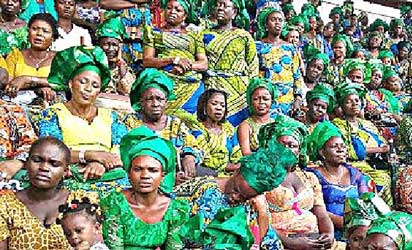
women
By Gabriel Ewepu
ABUJA- THE Economic Commission for Africa, ECA, has called on African Heads of Government to repeal all discriminatory laws against women and girls in their countries based on the global rights of women and girls.
This was contained in the remarks made by the Deputy Executive Secretary, ECA, Giovanie Biha, while welcoming Africa’s gender ministers at the African Ministerial Pre-Consultative Meeting on the 61st Commission on the Status of Women (CSW 61st) with theme, ‘Women’s economic empowerment in the changing world of work,’ held in Addis Ababa, Ethiopia.
Biha said it has become imperative for African governments to move fast to expunge laws that are inimical to women and girls due to the damage those laws have caused and made them vulnerable group of people who does not enjoy the dignity of life as citizens.
She lamented that women have been on the receiving end of discriminatory legislations over the years hence the need to repeal those harsh and inhuman laws made deliberately to gag the women folk and deny them access to the labour market, finance, property, political participation, decision making and other socio-economic well being.
According to her, governments in Africa need sound actions taken to ensure that women’s rights are fully secured and protected as this would enhance their prospects in the changing world of work, and she stressed that the need for African governments to enforce the Convention on the Elimination of All Forms of Discrimination Against Women, CEDAW.
She said: “Investment in women’s secondary, tertiary and higher level education as well as vocational training, with particular attention paid to their access and achievement in Science, Technology, Engineering and Mathematics (STEMs) is important.
“African governments need to respond to women and girls’ burden of unpaid care work by implementing the triple R strategy of Recognition through measurement, Reduction by investing in social infrastructure and services, and Redistribution by encouraging a fairer intra-household allocation.
“Pervasive gender gaps prevent women, especially young women, from acquiring the skills sets required to access medium, high level and technical job opportunities. Consequently, the majority of African women, over 70 per cent are in informal employment, characterised by precariousness, endemic low pay and difficult working conditions.
“This situation exposes women to risks as they lack access to social protection or social security services linked to formal employment leading to double discrimination, related to gender equality and discrimination inherent in the nature of the informal sector.”
Also speaking was the Ethiopia’s Women and Children Affairs Minister, Demitu Hambisa said in Ethiopia, while women were contributing to the country’s economy, they largely remained behind their male counterparts in economic status.
Changing world of work
In a speech read on her behalf, African Union Commission Chairperson, Nkosazana Dlamini-Zuma, said the theme is critical to Africa’s Agenda 2063 and Agenda 2030 for Sustainable Development.
“It is also timely that we are discussing women’s economic empowerment in the changing world of work, given that the African Union’s theme for this year is on the demographic dividend. The two themes are closely interlinked. In the changing world of work, women in Africa are the most affected as they are already disadvantaged,” Dlamini-Zuma said.
According to Executive Director of UN Women, Phumzile Mlambo-Ngcuka, said, “Without united voices from Africa, there’s a danger that women in the rural areas and girls will be left behind.”
African Centre for Gender Director at the ECA, Thokozile Ruzvidzo, said the pre-consultative meeting, which was organized by the ECA, the UN Women and the African Union, AU, remains crucial to ensure an agreed position for the continent ahead of the CSW61 in New York in March.
“Our goal here is to build consensus among African countries around issues pertinent to gender equality in the world of work in Africa with the view to promote an African voice essential to shaping and influencing the global CSW61 agreed conclusions,” Ruzvidzo said.
Disclaimer
Comments expressed here do not reflect the opinions of Vanguard newspapers or any employee thereof.