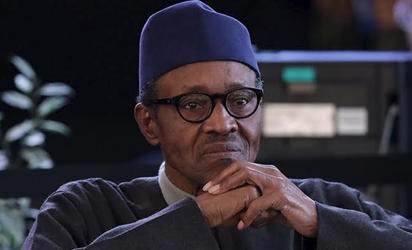
President Buhari
By Rotimi Fasan
IN less than five months from now President Muhammadu Buhari would have spent two years in office. His four-year term would be half gone by then. The full impact of what his government has achieved in the previous 24 months should by then be clear. In most places, the first one hundred days is the benchmark of assessment. If by that time a government hasn’t got its bearing, it can begin to regard itself as a potential failure. But that was far from what anybody can say about the Buhari presidency which at five months was yet to put a cabinet in place.
The excuse then, which many didn’t think they should quarrel with, if only it would help steer us away from the blighted past bequeathed by the previous administration- the excuse was that the president needed to shop around for the best available hands in terms of character and efficiency. Eighteen months down the line not many would say that many of Buhari’s appointees have justified the confidence Nigerians had in them.

Buhari
The five months the president spent putting together his team now looks wasted in the face of the less than sterling performance of many of the appointees. While this can’t be blamed entirely on the president or the men and women working with him- indeed while it is clear that the terrible legacy of the past weighs heavily on this government, there is a sense in which it can be said that Nigerians have a right to expect real change in their situation. This government has had enough time to make positive changes in important aspects of the polity. But the situation on ground is far from that. Nigerians are continually called upon to make sacrifices in a manner that leaves them worried as to when they can begin to get the reward of their sacrifice. The long period of expectation is not only sickening to the heart, it is now the cause of much fatigue. People are tired of waiting to know what Buhari has to offer.
The reason for this is that the administration has been spreading itself too thinly precisely because it does not appear to have a strategy for addressing the myriad of problems it has to grapple with. It is not enough for an administration to make policy pronouncements or engage in rooftop proclamation of its intentions. It must think through the way to achieve its stated objectives. This is where the Buhari government is severely lacking. Its intentions may be good in certain cases but its approach is grievously wrong. And its rather exclusive composition, one that has seen it beholden only to a certain group of so-called insiders (mostly kin and ethnic affiliates that are increasingly found wanting) while shutting out large sections of the Nigerian population can hardly be helpful.
The president would do well to cut down on his goals. This is a point this column has not been shy to emphasise over and again. Buhari should identify one or two core areas on which to concentrate his effort. By a combination of intention and circumstance two of these areas are the fight against corruption and insurgency. Even while the strategy here is not altogether wonderful, the determination is clear. What seems lacking, again, is an effective strategy and, in recent times, a will to follow through with the objective for political gain. This was the case in the administration’s handling of the trials of the leaders of the National Assembly. The government’s effort in some of these cases seems more gestural and symbolic or, even spiteful, than directed at achieving any concrete result.
The other obvious area of focus for this president whether he likes it or not is the economy. This is a security issue properly speaking. Ensuring security is not all about battling insurgents. It is also about ensuring the availability of food, housing, affordable health care and employment among others. This kind of security is only possible in a stable economy. Thus a stable economy is, perhaps, the greatest achievement a Buhari administration should aspire to. This should be the president’s number one priority in the light of the general downturn in the country’s fortune.
President Buhari cannot afford to take the question of revamping the economy as just another aspect of what his administration should address. This would be a grave mistake on his part. So far his administration has been assessed on the basis of his effort or lack of it to effect a turnaround in the economy. Growing the economy is his core mandate. That is what the times dictate and he has no option in the matter. He must and should get down to brass tacks as to how he can make ordinary Nigerians feel the impact of his government in their everyday lives. Nobody is interested in abstract discussions of growth rate or statistical narratives of a rebased economy. What matters now is how people can afford a decent living.
Prices of good and services have either tripled or quadrupled in the last one year. No amount of explanation about past plundering of the treasury will satisfy anybody when it is a fact that a 50kg sack of rice that was about N6,000 in December 2015 now hovers around N19, 000. A loaf of bread that was hitherto sold for N150 is now N300 while the cost of transportation is forcing many Nigerians to go long distances on foot. Jobs are being lost while new graduates can’t find employment. Is the fight against corruption or the fact of a plundered or mismanaged economy by a past administration the explanation this government wants to offer for this dysfunction in the economy in a new year?
The government may choose to ban food importation or place an embargo on the importation of vehicles even when it does not appear to have provided affordable alternatives- anybody could decide that Nigerians should no longer take foreign wine, eat rice imported from Thailand and what-not. Anyone or any government can do this. But what people cannot forget is that in spite of the corruption and evident free-for-all looting of the treasury- what many are forced to remember, tragically with nostalgia, is that there was an immediate past government led by a Goodluck Jonathan under whom many bought a bag of 50kg rice for a third of the amount they now have to pay. This fact poses a question the Buhari government must answer.
The point of all the foregoing, therefore, is that the primary objective of any government is the assurance or provision of security for its citizens. This includes food security made possible by a growing, stable economy. Once this is done any other thing can follow.
Disclaimer
Comments expressed here do not reflect the opinions of Vanguard newspapers or any employee thereof.