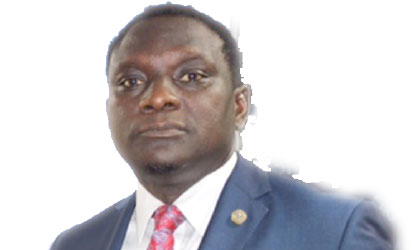
Mr. Oluwaseyi E. Abe, CIS president,
By Peter Egwuatu
The President, Chartered Institute of Stockbrokers, CIS, Mr. Oluwaseyi E. Abe in an interaction with some journalists in Lagos spoke on issues bordering on the Nigerian capital market, the economy, the CIS visit to former Head of State, Chief Olusegun Obasanjo, and other economic issues among others .
Excerpts:
How would you describe the relationship between the Federal Government and the capital market regulators and operators
We in the capital market have always had cordial relationship with the Federal Government. We owe the Federal Government constant engagement in order to articulate policy issues that would move the market forward. The regulators and we the operators are the technical people . But we need the endorsement of the government and its patronage at every stage for the market to move forward. Several meetings, including public hearings had been held to x-ray the capital market and re-position it for global competitiveness. Many committees had been constituted as ad hoc or standing one. These committees usually have government representatives. Engagement with the government is a continuous exercise.

Mr. Oluwaseyi E. Abe, CIS president,
I must put on record that many government functionaries, including governors, ministers and heads of Agencies and Parastatals do visit the Nigerian Stock Exchange, NSE . Recently, the NSE hosted the Speaker of House of Representatives, Honourable Yakubu Dogara who addressed the stockbrokers and closed the market by ringing the closing gong like other important visitors. Also, recall that the Vice President of Nigeria, Professor Yemi Osinbajo had also appeared on the trading floor.
In the past, the Nigerian Stock Exchange had hosted heads of state at various fora. Such visits symbolise cordial relationship and go a long way in boosting investor confidence in the market. In a nutshell, our relationship with the government is symbiotic.
What is your assessment of the Nigerian economy since the beginning of the new administration
In an attempt to assess the current Administration of President Mohammadu Busari, we must not lose the sight of the fact that the current Government of President Buhari came into office on the 29th of May last year on the mantra of “change”, there were challenges and obstacles from inception. Consequently, the first year of the government was largely spent settling down to understand the true state of affairs. I think the government has done well in some areas. However, a lot is expected of the government in other areas. For instance, economic indicators have worsened, and it appears the government is taking too long to have a clear direction on several policy issues.
What is your view on the Nigeria’s investment environment in Nigeria
Nigeria’s natural endowments still makes her a very attractive investment destination. However, this must be strategically supported by well thought-out policies. The truth of the matter is that many foreign investors still regard Nigeria as a good investment destination because of our current political stability. However, they will be further encouraged if we also have some consistency with our foreign exchange policies in line with the global best practices. At the heart of the capital market is the issue of participation of local investors. Expectedly, it is the local investors who ultimately will bring stability to the equity market. The critical issue now is that the Federal Government and other stakeholders must be prepared to address the need to encourage our local investors to return to the market.
How are the stockbrokers coping in this challenging phase of our economy
It is not an exaggeration to say that the biggest challenge facing stockbrokers today is low participation and low liquidity in the market. While the regulators and stockbrokers have been working hard to create new products such as the Exchange Traded Funds (ETF), the buy side of the market remains weak, especially from the local end.
Meanwhile, stockbroking firms have also had to grapple with spiralling costs arising from the recently introduced Minimum Operating Standards. Investors’ confidence is still low as a result of massive losses arising from the 2008 global recession, although this is being addressed. Quoted companies are also going through challenging times with regard to rising costs. This is affecting their dividend paying ability. It is indeed a trying time for the stockbrokers. But the period also called for creativity and resilience for all stakeholders.
We learnt that you led a team of top officials of the Chartered Institute of Stockbrokers (CIS) to the former Head of State, Chief Olusegun Obasanjo in Abeokuta, Ogun State recently. What was your mission
Thank you for this question . We at the Chartered Institute of Stockbrokers have continually engaged all our stakeholders on the benefits of the capital market to the growth and development of Nigeria’s economy, especially in the medium to long time. As a former Head of State, who has always believed in the ability of our market to serve as an engine of economic acceleration, we thought it expedient at this point to visit him to give an insight to what we are doing at the moment, our challenges and the way forward. In a nutshell our mission was more of extended advocacy to an opinion leader whose vast experience and contacts globally can undoubtedly strengthen our efforts.
How would you assess the opinion of Chief Obasanjo
He displayed clinical understanding of the dynamics of the capital market and exhibited a high level of optimism that our capital market has all it takes to finance the economy. Chief Obasanjo pointed out that when Ethiopia’s economy was in doldrum, one of its Prime Ministers deployed the Commodity Exchange to put the economy on the strong footing. According to him, there is no reason why Nigeria’s economy cannot be revived by adopting the Ethiopian model.
In specific term, what is the take away from the historic visit to Chief Obasanjo
Chief Obasanjo’s endorsement of our efforts in capital market development advocacy is a boost to our market. We shall continue to engage with more opinion leaders, institutions and work more closely with the Federal Government and the National Assembly for collective efforts and indeed sound policies that would enable our capital market play its pivotal role in moving our economy to the next level. Investor Education is a continuous exercise and should be continually reviewed to reflect the current realities where investors must not only be exposed to the benefits of the capital market but also the risk aversion measures.
Any prospect stock broking profession in an emerging economy like ours ?
There is a very big prospect. One unique thing about stock broking is that you must be a professional in a particular field before you can write our Final Professional Examination. We introduced Diploma in Securities and Investment to attract young ones who are bright enough to aspire to become investment experts. The programme is also introduced to enable university degree holders in non-finance fields to have a strong foundation in finance.
History has shown that the capital market provides the surest route for developing countries to accelerate the pace of their economic development. So the prospect of stockbroking in a country like Nigeria is bright and the crucial importance of the profession cannot be overemphasized.
The question we should be asking is: “are we making maximum utilisation of our capital market in formulating and implementing development policies?” Government urgently needs to focus more on the capital market and craft policies that will make the market thrive for local and foreign investors. I must be quick to add that as long as the financial system exists, funds must be mobilized from the surplus economic unit to the deficit one. Therefore, stockbrokers shall continue to be relevant in the global financial market.
I am happy to place on the record that we have always had our members in the commanding heights of the various sectors of the economy including politics. The future is bright. Stock broking goes beyond buying and selling of securities. That is why we have expanded our syllabus at the Institute to ensure that those who pass the final professional examinations are globally competitive as investment experts. The world of securities and investment is expanding everyday and only professionals that keep pace with the changing dynamics can fit into the system. Our Compulsory Professional Development (CPD) is designed to provide on-the-job training for practising professionals.
Disclaimer
Comments expressed here do not reflect the opinions of Vanguard newspapers or any employee thereof.