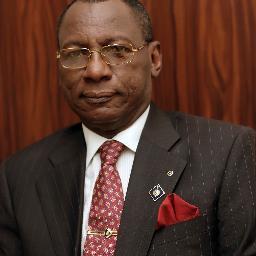
Dr Tunji Funso
By Sola Ogundipe
Since 1985, polio eradication has been Rotary’s flagship project, with members donating time and money to help immunise more than 2.5 billion children in 122 countries. Rotary’s chief role is fundraising, advocacy, raising awareness and mobilizing volunteers. Dr. Tunji Funsho, the Rotary National PolioPlus Chair of Nigeria, wrote the accompanying piece, following the Ministerial Conference on Immunization in Africa hosted in Addis Ababa, Ethiopia.

Dr Tunji Funso
Infectious diseases are a formidable opponent, described this year by the UN as a stark “threat to humanity”. Yet some of those diseases are like a boxer on the ropes, thanks to effective coalitions of governments, NGOs and the private sector, such as the Global Polio Eradication Initiative (GPEI).
And today, the Ministerial Conference on Immunization in Africa issued a declaration which should inspire all those concerned for global public health. The call to prioritise “universal access to immunization” for Africa’s “health and development” marks perhaps the first chapter in the global community’s new strategy for improving health and achieving the new Sustainable Development Goals by the target date of 2030.
We are on the verge of eradicating diseases that have terrorised people for too long.
The fight against one of these diseases, polio, has yielded remarkable results, with a 99.9 percent reduction in global cases from 350,000 children in 125 countries when the Global Polio Eradication Initiative began in 1988, to just 74 in 2015.
No more polio in Africa
In Africa, 18 months have passed without any polio cases, and last year, my own country, Nigeria, was officially removed from the list of polio-endemic countries. This effort involved the strong political and financial support of national governments, and more than 200,000 volunteers, clinicians, immunizers, town criers and crowd managers to administer polio and other vaccinations, and ancillary health services. New Rotary grants will fund 27,750 vaccine carriers to keep the vaccine cool at health camps in high risk areas while going house-to-house to immunize children, despite the constant threat of terrorism posed by Boko Haram, who have resisted the vaccine in northern Nigeria.
The strong political and financial backing of Africa’s national governments underpinned the GPEI’s success. And more than 1 million Rotary members throughout Africa and around the world have demonstrated their local ownership of the Initiative, raising awareness, fundraising, and encouraging governments to support the polio eradication effort.
Africa’s milestone is of course a great source of personal pride, but most importantly, I see it as a stepping stone to still greater achievements.
As Africa’s cities continue to experience rapid population growth, they’ll need a system of health care and response that can bear the burden, one that Rotary and its partners in the GPEI are helping to build. The Initiative has assembled powerful infrastructures of disease prevention and surveillance, including well-trained healthcare professionals, equipped to respond to international outbreaks.
Cold chain capacity
An estimated one-third of the cold chain capacity for storing vaccines in sub-Saharan Africa was created to support polio eradication. And we now have a global network of laboratories, of which 16 are in Africa—developed for polio surveillance—which also tracks measles, rubella, yellow fever, meningitis, and other deadly infectious diseases and will do so long after polio is eradicated.
As representatives of Africa, committed to ensuring access to life-saving vaccines, and in our polio eradication efforts, we have taken an important step in ownership and accountability for the continued development of our health systems. This is a step which the international community can help support by providing the resources needed to reinforce this commitment and empower Africa for success.
Creating sustainable systems
To create truly sustainable systems for public health, whose benefits extend not only to single countries, but across whole regions, and continents, we need to connect the dots in two ways.
Firstly, we need to recognize that every step forward in the fight against infectious diseases today impacts our readiness to face tomorrow’s threats.
Secondly, the international community needs to support a legacy project for the GPEI, to ensure that the decades of investment of time and money in developing these resources will be protected and transferred to serve other health efforts, such as HIV, high maternal and child mortality, and low routine-immunization rates, not just in African cities, but around the world.
But to do this, we have to avoid the kind of reactive thinking that results in hurried responses to endemic health threats only when crises occur, such as Ebola, or the Zika virus.
The Ebola outbreak of 2014, the largest in history, proved both the fragility, of health systems, but also the huge potential of existing health infrastructure if used well. The GPEI infrastructure is resilient, and can be repurposed as a framework for universal health coverage, which requires strong health systems, access to essential medicines, robust financing and well-trained health workers.
When the Ebola virus spread rapidly across Africa in 2014, eventually reaching Lagos, Africa’s most populous city, the country repurposed its polio eradication infrastructure to thwart the virus in just 90 days. The World Health Organization called this response ‘world-class,’ and it is a model for other nations to keep their cities safe and resilient.
Global health gains
Yet despite this resilience, global health gains are fragile if long-term investment and support for health systems is compromised. The people of Kano, in northern Nigeria, have celebrated before in false hope. In 2010 and 2012, the caseload there doubled after initial progress in overcoming polio was set back by new outbreaks.
The threat of regression is real, but with international backing, we can build on our progress, and seize our best opportunity to create a legacy for global health once polio is eradicated.
If we commit to investing in health now, experts see the gap in maternal and child health, and the impact of infectious diseases between middle income and poorer countries reducing significantly. By 2035, we could prevent 10 million deaths. And the economic benefits of these lives saved would exceed the costs of investment by a factor of 20. In addition to immeasurable savings in human suffering, eradicating polio could save up to $50 billion by 2035 in direct and indirect healthcare costs.
The opportunities to make this vision a reality are right around the corner. In August, the Tokyo International Conference on African Development will be hosted by an African country, Kenya, for the first time. This is the ideal forum to build on the commitments to immunization made in Addis Ababa with a reciprocal commitment from international partners, including Japan and the G7. If this can be achieved, a sustainable legacy for the GPEI will enhance our ability to end today’s endemic diseases, and protect people against tomorrow’s threats.
Disclaimer
Comments expressed here do not reflect the opinions of Vanguard newspapers or any employee thereof.