By OWEI LAKEMFA
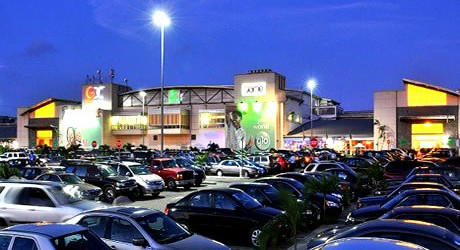
I floated through the stores of a new mall opened in Abuja 12 days ago. It is sprawling; taking one side of the only water/river in Abuja.
This ordinarily should have been some public water front park. But the mall has it. The crowds were thick and various food and beverage companies offered free products. I reflected that while Nigerian traders are chased on the streets and their wares confiscated, the foreign malls are heavily guarded and secured by a motley of security men.
The malls sprouting in various corners of the country are a new colonising force set to dominate and eventually take over retail trade like they have done in Brazil. In such cases, these malls can determine what people eat and the cost.
The traditional small, uncoordinated shops which is the source of income for millions of Nigerians, cannot engage in a price war with these transnational corporations who have huge capital and the economies of scale on their side. With their capital, they can buy goods in large quantities and under sell the small trader.
When they become dominant, the malls can drive down prices, exert pressure on local suppliers to sell at low prices to them, or sell cheap products. That way, they can squeeze struggling local manufacturers such as textile companies, out of the market. Apologists will call this, market forces. But in reality, the mass of our people are being further impoverished.
Another thought as I walked through the food and fruit displays was: where are they sourced from? Some were foreign, and given the fact that the mother country of these malls is South Africa, I wondered whether they are not genetically modified products.
That country since its Genetically Modified Organisms (GMO) Act of 1997, has become the eighth largest producer of such products in the world. Eighty percent of South Africa’s white maize, 55 percent of its yellow maize, 85 percent soya and 98 percent cotton, are GMOs or what they call Bt-crops.
South Africa also produces GMO potatoes, wheat and food additives. So its cereals and baby formulae, for instance, are likely to be from GMO products. Some of its cassava and grape vines are GMOs; it means that South African wines are likely to be GMO products.
Part of the worry about GMOs is that they can cause long term health problems, its seeds can travel, pollination can spread it and their genes can transfer or affect the DNA of bacteria in humans. There are fears that the GM crops can affect animals and insects who feed on them, and penetrate the ecosystem.
In other words, it can penetrate nature. Many American scientists argue that health problems in the country have increased since the introduction of GMOs. Humanity is still uncertain about the effects of genetic engineering, but big companies like the super retailers can influence research, and are promoting GMOs in the public arena.
The struggle against GMOs is getting tougher as the transnational retailers are taking more of the retail trade shares. For instance, TESCO in Britain has 30 percent of the market share, while three others: Morrisons, Sainsbury and Asda/ Wal-mart, control 45 percent.
The American Wal-Mart controls 20 percent of United States retail and 33 percent of the market in Mexico. In Australia, Woolworths and Coles sells one third of the food.
The giant malls in Nigeria are dominated by Shoprite, a South African Transnational Corporation, TNC, operating in at least 16 African and Indian Ocean countries. It started out under Apartheid in 1979 when eight shops in the Cape Town area were merged. It came to Nigeria in 2005 with the opening of its shop at the Palms Shopping Mall Lekki, Lagos.
Its labour policies were so bad that in 2009, the workers went on strike over poor wages which had remained unchanged for four years.
The following year was worse as the Shoprite sacked 250 of its staff that had protested inhuman work conditions, including long work hours, lack of medical services, starvation wages and non- payment of bonuses, annual increments and overtime allowances. At this time when the National Minimum Wage was N18, 000, Shoprite paid its staff N13,000. One of the sacked workers had complained: “We work like elephants and yet eat like ants”.
While in Nigeria, the police protected Shoprite against the workers; and Labour officials were going through the long motions of Labour dispute, the Zambian Government sided with its citizens. When the company which had 30 outlets in Zambia sacked striking staff protesting against poor work conditions, the Labour Minister, Jackson Shamenda gave Shoprite ten days within which to recall all the sacked workers and reach agreement with them or have its trading licence revoked.
Shoprite had no regard for Nigerian laws. The Federal Inland Revenue Service had to threaten it with criminal prosecution for charging customers 10 percent VAT rather than the legal 5 percent.
All human beings protect their homes. Nigeria is our home; we must protect it and our citizens against unfair and harmful competition, especially those that will further impoverish them.
There must be strong pro-people policies on such malls, our farmers, traders and local manufacturers. For instance, we can insist that all fruits to be sold in the malls must be those produced in the country and that at least 70 percent of all goods sold in those shops, must be local. This way, some money will circulate in the country rather than the TNCs carting everything away in the name of profit. We must know the type and standard of food and goods they sell. The Consumer Protection Council, Standard Organisation of Nigeria and the National Agency for Food and Drug Administration, NAFDAC, must ensure this.
Our policies should also encourage our farmers to produce more food, introduce better equipment, assist them get their produce to the market, help with storage and preservation, and subsidise them like Europe and America. We also need to modernise our markets; we cannot continue to operate in open, unsanitary markets. We also need a pro- street trading policy like in Europe. Generally, we need a rethink of our farm, food and trade policies.
Disclaimer
Comments expressed here do not reflect the opinions of Vanguard newspapers or any employee thereof.