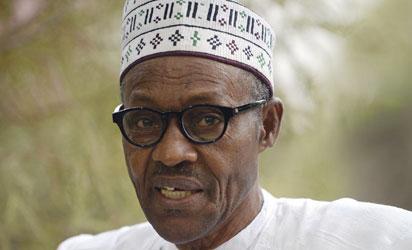
President Muhammadu Buhari
By Ugoji Egbujo
Bishop Kukah is a thick-skinned social crusader. Christians from amongst the northern minority tribes have a reputation of commitment only life at the ‘battle front’ can impart. But if Kukah was just a man of the cloth who had an innate fearlessness, he would not have the stature he currently possesses.

President Muhammadu Buhari
He stands taller than many of his peers and bosses because besides courage and character , he manifests erudition which he has severally deployed to illuminate and enrich socio-political discourse in Nigeria.
An intelligent , fearless and principled peacemaker is an asset to any community.
And perhaps because of his acclaimed forthrightness and perceived clout, he must be one of the very few who could have thought up and assembled a peace committee of that caliber, acceptable across board , when such a committee was such an urgent necessity. All went swimmingly well. So we can ask – “what did the peacemakers do sef”?
Peace makers often have heavy moral burdens imposed on them by the complexity of the endeavour. Because, many times, peace making involves some compromise with justice, fairness and other lofty values. And justice trampled or shortchanged , leaves the conscience a bit sore. But without peace what is anything else really worth? However, can there be true, sustainable, peace without justice?
Social contract theory would support the view that justice serves to preserve and promote societal peace. Justice and peace are therefore not mutually exclusive entities. But social situations sometimes demand that justice in legality be sacrificed to further peace.
The determination of what is just isn’t even always simple. It often requires complex moral judgments. Is it just to allow a few corrupt people go unpunished in exchange for tranquility for millions of Nigeria? Is it justice to grant Boko haram, mass murderers, amnesty and stop the killing of thousands of innocent people, if the government cannot contain boko haram immediately? Justice for the majority is often not narrow minded.
Justice is not necessarily legality but should the rule of law be so easily dispensable? Does the idea that peace can come at the expense of justice mean that some individuals are above the law? Should we accept the sort of peace purchased at such a ransom? If the answers are context dependent, is our situation so precarious that we cannot enforce the rules against thieving politicians and retain social stability and flourish?
What precedent would we set if leaders must retire to peace and comfort with their loots while poor Nigerians die from easily curable and preventable diseases? We are often reminded of Rwanda and Burundi and Ivory coast, many war torn African countries, decimated and reeling from poorly managed succession battles. Are such fears and comparisons well founded? Are they relevant cautionary tales? And do they then create room for incumbents to twist and tie the arms of potential successors?
Those who have seen war would do everything to prevent one but that is not to say that when an incumbent president loses an election and concedes that he has prevented a war. And that his aides must go home with their bounty and our gratitude. Should I be compensated for remaining sane?
The peace committee has been lampooned by millions of Nigeria . The gush of fury and vitriol should be checked. Kukah and the committee spoke to the contestants before the elections in a bid to check pre and post election violence.
While the peace accord they managed to extract may have been a ritual on paper, the presence and weight of that committee must have in some way helped Jonathan with the decision to concede early.
But many have made a meal of that concession. Kukah labeled it a spectacular act. He considers it a favour that must not go unrequited. Many Jonathan’s supporters think it is singularly worthy of a Nobel peace prize.
Many APC supporters however see it as routine and mundane. A roundly defeated incumbent president, they opine, should go home quietly. And they point to many African leaders who have recently acted similarly, effortlessly.

*Bishop Kukah
President Buhari has publicly acknowledged and praised that act ,severally. He says it is commendable statesmanship. But action they say speaks louder than words.
And PDP supporters would want Buhari to act out national gratitude and let Jonathan and his people be. If that means forbearance of probes, they have lacked the boldness to say it emphatically.
But Buhari isn’t particularly that free. A man who ran on ‘anti-corruption’ and won the elections because the people voted for change, cannot in the face of revelations of monumental corruption turn a dove. ‘Business as usual’ will be politically suicidal. His particular circumstance is not helped by the fact that the economy is in a perilous state and that the public support he presently enjoys is perhaps, possibly, potentially ephemeral.
Boko haram is proving more difficult than envisaged, he has no excuses for any leniency with corruption. So while he has not been able to form a government, he has had his megaphone blaring anti corruption tunes. Federal agencies have been jolted out of slumber but their ‘rhythmless’ , attention seeking , ‘jambody’ dance steps have left some worried of the dangers of clumsiness and of overzealousness.
Buhari has a reputation. He says he is a ‘born again’ democrat but some insist he is too fixed to change. When he barks, people fret. The opposition welcomes, at least publicly, the probes. They are worried that federal agencies who are now tumbling over themselves to please Buhari would have no regards for due process. And no one would care to rein them in. If Buhari were not Buhari, they may have been less worried.
So Kukah and his group propelled by rising tensions and anxieties met with different groups , the ex president and the president seeking to preserve the peace. Some say they were prompted by Jonathan to stave off the probes. Regardless of such imputations , the committee acted in good faith.
A peace committee must be a peace committee, and must prioritize peace over legality or any such punitive considerations. Elders and peace makers exist to pull the society towards reconciliation rather than retribution, just deserts and punitiveness. But any one offended by the intervention of the committee is entitled to that contrary feeling too.
In the face of crippling poverty occasioned by mindless looting of the national treasury, revelations of the sort cannot be treated with kid gloves. Those who are offended by the intervention can insist on thorough probes , recoveries and punishment without impugning the character and reputations of the illustrious peace makers. I would expect activists to take to the streets to pressure Buhari to proceed with the probes. That is democracy.
And I say this for a reason. Kukah is a man of letters. And he chooses his words carefully. So when Kukah said “…….this is not a military regime…” he must have known the weight and implications of that statement. The opposition has continued to paint Buhari as a maximum dictator and Buhari seeks to distance himself from that history.
Kukah must feel that the opposition is either being badly maltreated or potentially faces such a risk. And he chose to sing from their hymn sheets of lamentations. Is it therefore unfair or unethical for a peace maker to reach that far if he thinks it would further the cause of peace? I don’t think so.
A peace maker must do all he can to achieve peace even if it means pitching camp with the oppressed, temporarily. The neutrality of a peacemaker is a means to an end and not an end in itself. Peace makers don’t stoke fires, they put them out. Kukah has not erred. But Buhari is not bound to accept his entreaties.
Many have labeled the members of the peace committee as members of the establishment and beneficiaries of Jonathan’s ‘food is ready’ government. An objective evaluation, however, would yield the conclusion that the committee is currently pursuing a moral end. And that is what that matters.
Standing up to Buhari and urging due process and reconciliation is in no way geared towards any narrow selfish or parochial interests. It is in recognition of the necessity and contributions of that committee that president Buhari has allowed it to transmute into a national peace council.
Kukah and the peace council’s admonition must not be discarded without examination. The words of our fathers, they say, are words of wisdom. Kukah urged good governance , which is not synonymous with a preoccupation with anti corruption propaganda and prosecutions.
Kukah didn’t just warn of deviation from due process and risk of rights abuses, he warned of drift in governance occasioned by a preoccupation with ‘anti-corruption’ to the detriment of effective management of the country’s resources and potentials. That may be a bit harsh and in a sense a bit rash but it is cautionary all the same. He warned of the consequences of laying down a culture where succeeding governments would hound their predecessors with probes.
If we want to cure the sit- tight syndrome of African leaders then we must make the relinquishing of power by incumbents not suicidal. Kukah made this point poignantly by reminding us that what Buhari sows , he will reap. That is no scare mongering. A peace maker is entitled to such pacifism and such prognostication.
While no one wants an incumbent president to view a handover to the opposition as synonymous with a hounded life in jail or exile, no one would want those in positions of authority now to come away with the belief that they can loot the treasury and put themselves beyond the reach of the law by a self serving pact with their predecessors , a tradition that will bind their successors. Such an immorality will serve impunity, perpetuate corruption and enslave the masses.
President Buhari needs to get the acts of his anti corruption agencies together. They should be more methodical, more diligent and more subtle in their ways. The anti corruption war will fail if it is selective and vindictive . The war is a marathon and not a sprint , many of the cases will drag to the supreme court.
Proper investigation, diligent and resolute prosecutions will bear fruits. Law enforcement is often difficult in settings where the criminal justice structures are decrepit. But ‘fire brigade’ maneuvers and ‘area boy’ tactics are impotent because they will only yield premature ejaculations.
The culture the nation needs to enthrone is that of accountability and rule of law. Due process and rights of persons must be respected. Elected officials must account for their actions even after leaving office. And if the degree of social cohesion of the constituent parts of the country cannot support an insistence on the rule of law then we must renegotiate our corporate existence.
Disclaimer
Comments expressed here do not reflect the opinions of Vanguard newspapers or any employee thereof.