By Uche Onyebadi
IT is not easy for any country to tell the world that it engages in some form of torture in breach of international conventions against inflicting brutality on other human beings in order to extract information from them for whatever reason. It is even more unlikely that a country would publicly do a mea culpa and tell the world that it regrets torturing its own sworn enemies.
Last week, the U.S. did both when its Senate released the long-awaited report on torture by the Central Intelligence Agency, C.I.A.
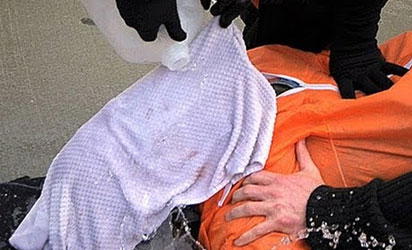
The summary of the 1,600-page report is that in its quest to get what it adjudged to be crucial information to safeguard the security of the U.S. and its citizens in the immediate aftermath of the September 2011 terrorist attack that killed almost 3,000 people, the C.I.A employed inhuman and excessive enhanced interrogation techniques to torture people connected with Al-Qaeda and its various affiliates. The report slammed the C.I.A. for its use of the infamous waterboarding technique, among other instruments of human degradation and bestiality, to extract confessions from the alleged terrorists.
The focus of this column is not on the nature of the torture or an indictment on those who used it, but the moral courage that enabled the authors of the report to compile and consequently publish it. There is something to salute about a country that admits that its actions were a deviance from, and affront on, international human rights and respect for human dignity.
When President Obama was campaigning in 2007, he made it known that he would end such forms of torture upon assumption of office. He subsequently made good on that promise. Last week, the U.S. Senate added its voice to that commitment by openly acknowledging that on that score of respect for human rights, the U.S. got it flat wrong.
What is equally interesting is that someone like Senator John McCain who was once a prisoner of war and Republican, broke ranks with most of his ideological counterparts to denounce what the C.I.A. did to those terrorists in the name of breaking them down and extracting information from them.
Senator McCain told reporters that his reason for denouncing C.I.A.’s abhorrent interrogation techniques was not necessarily about the terrorists, but because such inhuman methods were the antithesis of America’s moral character.
The senator said: “It’s about us: what we were, what we are, and what we should be, and that’s a nation that does not engage in these kinds of violations of the fundamental basic human rights that we guaranteed when we declared our independence.”
But, for every John McCain that condemns the CIA, there are perhaps ten Republicans who see nothing wrong with that form of interrogation. In a rather cavalier and Machiavellian style, they forcefully argue that crucial intelligence was gathered from such methods, and that such intelligence helped keep the U.S. safe from people who wished to kill and main its citizens.
The fact that such broad characterization of the techniques as result-oriented had been debunked in the report, does little to move them from their entrenched position. One such ardent supporter of the C.I.A.’s brutal techniques is former vice president, Dick Cheney. Without exhibiting an iota of remorse over the torture issue, Cheney dismissed the report as “full of crap” and said that given another opportunity, “I would do it again in a minute.”
Al Qaeda terrorists
This is how he philosophically defended his position in an interview: “With respect to trying to define that (what the C.I.A. did) as torture, I come back to the proposition (that) torture was what the al Qaeda terrorists did to 3,000 Americans on 9/11. There’s no comparison between that and what we did with the respect to enhanced interrogation.” In other words, an eye for an eye is solid logic. No one really expected the former vice president to say anything short of what he said, and how he constructed his narrative.
The senate report says as much for it provided details to show how a particular terrorist was providing valuable information, only to start giving bogus “actionable intelligence” when his new interrogators began to water-board him. Let us bring the issue nearer home. How many African governments will have the moral strength to release such a report that acknowledges that they have been engaging in torture?
When will they stand up and pledge that they would abide by international human rights conventions? Can such a report released by the U.S. senate ever be conducted and released in any African nation or indeed any nation in the developing world? Such governments are more adept at denying any human rights abuse, even when the evidence amply contradicts them.
Economic prosperity is not the only indicator of the quality of life in a nation. How a country respects the sanctity of human life is equally of great value.
Disclaimer
Comments expressed here do not reflect the opinions of Vanguard newspapers or any employee thereof.