By Sola Ogundipe
Nigeria is Ebola free! It’s the best news millions of Nigerians have heard in a long, long while. “Today, exactly 42 days (twice the maximum incubation period for Ebola virus disease) after the country’s last infectious contact with a confirmed or probable case occurred, the chains of transmission have been broken. The virus is gone – for now. The outbreak in Nigeria has been defeated.”

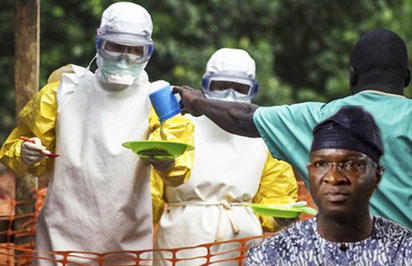
Fashola
Such was the manner of the official declaration of Nigeria as an Ebola-free nation, last Monday by the World Health Organisation, WHO. It was the climax of an odyssey that began exactly 93 days earlier and a comeback from the proverbial journey of no return.
Further, the WHO noted: “This is a spectacular success story that shows that Ebola can be contained. The story of how Nigeria ended what many believed to be potentially the most explosive Ebola outbreak imaginable is worth telling in detail.”
This is a good public health story with an unusual twist at the end. As part of preparedness for an imported case, several advanced countries with good health systems are now studying technologies “made in Nigeria”, with WHO support, to improve their own contact tracing capacities.
Nigeria’s Ebola success story has another very clear message, as noted by Dr Margaret Chan, the WHO Director-General. “If a country like Nigeria, hampered by serious security problems, can do this – that is, make significant progress towards interrupting polio transmission, eradicate guinea-worm disease and contain Ebola, all at the same time – any country in the world experiencing an imported case can hold onward transmission to just a handful of cases.”
It is indeed a story worthy of telling. Like a bad dream, Nigerians woke up one bright July day to the terrifying news that the nation’s health authorities were investigating a suspected and probable case of the dreaded Ebola Virus Disease, EVD, in Lagos.
Reports explained that the condition of the suspected case – a 40-year-old American-Liberian male, who was working for a West African organisation in Monrovia, Liberia, was “stable and in recovery” while the confirmatory test results for Ebola infection were still pending.
It was a bombshell! Granted, the people had been wary, watching by day and expectant at night, to hear that the dreaded Ebola had actually made an incursion into Lagos, the world’s 5th most populous metropolitan settlement, was almost beyond contemplation. Ebola came like a thief in the night and caught everyone completely unawares.
The nation was in shock. Regardless of preparations of sorts on ground, nothing prepared Nigerians and the entire global public health community for the anxiety and paranoia that trailed the entry of one of the world’s deadliest infectious disorders into Africa’s most populous nation.
Happenings within the West African sub-region since the beginning of the year did little to help matters. On the contrary, they made matters worse.
Over the next couple of days following the nerve wracking announcement, residents of the sprawling megacity hurried to work in the dreary early morning hours, and returned home at twilight, habouring expectations of an apocalyptic outbreak, with nightmarish pictures of zombie-like apparitions in their minds. Even in the safety of their homes, panic, mixed with raw, naked fear remained etched on their faces.
Is Ebola indeed in Nigeria – it was more a statement than a question. It didn’t take long for the nation’s worst fears to be confirmed.
On the morning of Friday July 25, 2014, a worried former Minister of Health, Professor Onyebuchi Chukwu, broke the news at a world press conference in Abuja. The message was brief but total. “The suspected case, an American-Liberian, who was subjected to thorough medical tests that confirmed he had the Ebola virus, had died.
Hours later, in Lagos, a sad-looking state Commissioner for Health, accompanied by a bleary-eyed Special Adviser to the Lagos State Governor on Health, Dr Yewande Adeshina further confirmed the news at another media briefing. “The Liberian national, Mr. Patrick Sawyer, believed to have imported the highly contagious Ebola Virus Disease to Nigeria died on Thursday night in a Lagos private hospital,” Idris announced.
It was an unforgettable day in the nation’s history. Sawyer’s death from Ebola spontaneously set off a chain reaction, in addition to further raising fears that the dreaded virus could spread beyond the epicentre of what was already the deadliest ever Ebola outbreak and into Africa’s most populous nation, Nigeria.
Chasing the virus
The Ebola outbreak in West Africa, which drew first blood in southern Guinea in February, spread like a forest fire in the harmattan, hitting Sierra Leone and Liberia with full force. In March, on the heels of the outbreak, the Federal Ministry of Health issued alert urging persons with high fever, headache, severe abdominal pain, diarrhoea and bleeding and especially with a history of travel to Guinea, Sierra Leone or Liberia, to report to the health authorities at once.
All 36 States were put on alert to mobilise against the disease, while the apex health Ministry worked closely with the West African Health Organisation, WAHO, and the World Health Organisation, WHO, to deploy experts to affected countries to strengthen its response capacity.
Everyone knew the danger and risk of an EVD outbreak, but no one, in their wildest dreams, prayed to have an encounter o the first kind.
As at the time the index case landed in Nigeria, no less than 1,093 confirmed, probable and suspected Ebola cases, had been reported in Guinea, Sierra Leone and Liberia since February. Of this number, 667 died, The World Health Organisation confirmed Ebola in 786 of those cases, of whom 442 died.
The Federal government and Lagos state government embarked on frantic efforts to calm frayed nerves of Nigerians. Even before the two press conferences, the government had swung into action, obtaining the manifest of passengers the victim travelled with from Togolese Asky Airlines and mounting a siege at the nation’s borders and entry ports.
Nigeria quickly put all entries into the country on red alert after confirming that Sawyer was carrying the Ebola virus. There is no cause for alarm; Nigerians and the world were told. Necessary steps are in place to prevent further spread of the virus.
It was announced that the President had set up a special information committee for Ebola, chaired by the former Minister of Information, Labaran Maku. Nigerians were called upon to be vigilant and observe basic hygiene principles such as proper hand washing with soap and water and use of hand sanitisers.
The deceased’s body was disposed properly (cremated), while the Lagos State Government dealt with the hospital. Those who had got in contact with Sawyer were also being handled.
The Nigeria Centre for Disease Control, NCDC, stepped in to volunteer. The United Nations Children Fund, UNICEF also stepped in. A contact screening centre was set up. All stake holders were involved to stop further propagation of the disease. Pleas were made to desist from spreading scary messages so as not to spread panic.
Assurances that structures had been put in place to ensure that it does not spread beyond what it is presently, were routinely announced. “If you know anybody who has travelled to Liberia where the viral is established, report to us on time. We have set up treatment centre for probable symptoms.
”We are at risk, but at alert,” Director, National Centre for Disease Control, FMOH, Abuja, Professor Abdulsalam Nasidi, had admitted few days before the Sawyer incident. But Nigerians were highly suspicious and doubtful about the nation’s true readiness and preparedness. They had reason to be concerned.
The NCDC had no website, and had not been previously communicating with the public about its coordination of the EVD outbreak. Even the health professionals were not taken serious.
The Health Ministry did not do much by way of Their answers to questions about preparedness and in terms of health infrastructure and medical as well as scientific awareness and readiness, were taken with a pinch of salt. People had wanted to know what was truly on ground. Should Nigerians be concerned? Who was in charge of the response and who was leading the preparedness? Who was communicating with health professionals and with the public?
What structures were in place? What had been prepared in terms of diagnosis, isolation rooms in health facilities, medication, and other important steps? Where was proper and effective communication?
Many questions, few answers. All these elicited worry. The common notion was one of pessimism, doubt, anxiety and palpable fear. There were concerns about the likelihood of catastrophe likely to occur should the nation fail to get the EVD response exactly right. Indeed, the odds enormous and the signals were bad. To the generality, the nation could be preparing for a battle it might not win.
Consensus was that there was need for Nigeria to be concerned, and the concern ought to be directed into holding government and its health officials accountable. The reason was obvious. Nigeria is a nation with so many problems, and few were questioning the salient questions concerning the challenges confronting the health system. The bottom line was that the incursion of the Ebola crisis was the right time to put the health sector issue on the political agenda.
While it lasted
Months before the Sawyer saga, the entire West African sub-region had been on alert following the outbreak of what has come to be known as the largest Ebola epidemic in history. People in affected countries had adopted a number of fail-safe and often bizarre proactive measures to tackle the rampaging pestilence.
For instance, Senegal and a few other neighbouring West African countries went into lock-down, shutting their borders against the incursion. In several countries, people stopped sharing personal items such as towels, toothbrushes, cups, cutlery and hankies. Then the tendency to indulge in shaking of hands, hugging, kissing or even having sex reduced significantly.
On the argument that the Ebola virus could be spread through bodily fluids including semen and vaginal secretions, Liberian President, Ellen Johnson, advised Liberians to desist from sexual intercourse, whether penetrative or non-penetrative.
Nigeria also had its own share of the bizarre. People stopped shaking hands as a means of greeting; public gatherings involving large crowds such as Church conventions, revivals, etc., were discouraged. The NCDC and Lagos state government visited the Synagogue Church of All Nations and a few other worship centres with large followership to be wary of persons seeking divine healing from the Ebola-affected countries. They were also urged to suspend public activities that would attract large gatherings for the time being.
Healthcare providers became reluctant or altogether stopped attending to patients with symptoms of fever and other suspected Ebola-like signs and symptoms. Some persons were going about permanently wearing hand gloves and face masks and became paranoid about touching anything that could possibly serve as a mode of transmission for the deadly virus. Hand washing with soap and water and the use of hand sanitiser became the rule and everyone went about carrying one. The killing and consumption of suya, bush meat and other suspect delicacies reduced drastically and virtually stopped in some instances. Transportation of corpses across international borders required clearance by the FMOH, while carrying of corpses across state borders was restricted. Burial of corpses anywhere in the country required a mandatory death certificate. Nigeria’s request for the experimental Ebola drug ZMapp was turned down. Another proposed drug Nano Silver, that was sent to the country from the US, was dropped after it was said to be a pesticide. There were several Ebola cure claims ranging from consumption of bitter kola to ewedu and salt water. The format for taking the Holy Communion changed. A nurse at First Consultants Hospital and one of the first contacts of Patrick Sawyer, escaped from isolation and went to Enugu. A Nigerian ECOWAS diplomat, Koye Olu-Ibukun, also jumped observation and escaped to Port Harcourt where a medical practitioner, Dr. Iyke Enemuo, who attended to him later died of Ebola infection . The diplomat survived.
In Lagos, some unscrupulous persons took the opportunity to cash-in by selling fake hand sanitisers, as well as “Ebola Cassettes and Test Kits” to the unsuspecting public.
The date of resumption of schools from the long holidays was shifted twice, while a Nigerian football team was barred from participating in an international competition that took place in China.
Such was the magnitude of the threat of the disorder which in the worst of times kills nine out of 10 victims.
People knew better than to “wish” or “hope” it would all just go away. Beyond hoping Ebola would go away, Nigeria made it go away. According to the WHO, the nation’s response was just right. “Nigeria did all the right things at the right time and for the right purpose.
Series of rumours punctuated the Ebola crisis in Nigeria. There were reports of suspected cases of Ebola in the Federal Capital Territory, FCT, Calabar, Kaduna, Kwara, Delta, Edo and other states, all of which turned out to be false. A story that the body of the late Port Harcourt doctor was transported to Edo or Delta State turned out to be untrue.
What Nigeria did right
A strong leadership and effective coordination of the response was key. The Nigerian response to the Ebola outbreak was greatly aided by the rapid utilisation of the NCDC and the prompt establishment of an Emergency Operations Centre, supported by the Disease Prevention and Control Cluster within the WHO country office. Another key asset was the country’s first-rate virology laboratory affiliated with the Lagos University Teaching Hospital. That laboratory was staffed and equipped to quickly and reliably diagnose a case of Ebola virus disease, which ensured that containment measures could begin with the shortest possible delay. In addition, high-quality contact tracing by experienced epidemiologists expedited the early detection of cases and their rapid movement to an isolation ward, thereby greatly diminishing opportunities for further transmission.
With assistance from WHO, the US Centers for Disease Control and Prevention, CDC, and others, government health officials reached 100 percent of known contacts in Lagos and 99.8 percent at the second outbreak site, in Port Harcourt, Nigeria’s oil hub. Federal and State governments provided ample financial and material resources, as well as well-trained and experienced national staff. Isolation wards were immediately constructed, as were designated Ebola treatment facilities, though more slowly.
Vehicles and mobile phones, with specially adapted programmes, were made available to aid real-time reporting as the investigations moved forward. Unlike the situation in Guinea, Liberia and Sierra Leone, all identified contacts were physically monitored on a daily basis for 21 days.
The few contacts who attempted to escape the monitoring system were all diligently tracked, using special intervention teams, and returned to medical observation to complete the requisite monitoring period of 21 days.
One important lesson for countries facing their first imported Ebola case or preparing for one, is the need to carefully document a large number of “best practices” for containing an Ebola outbreak quickly. The most critical factor is leadership and engagement from the head of state and the Minister of Health. Generous allocation of government funds and their quick disbursement helped as well. Partnership with the private sector was yet another asset that brought in substantial resources to help scale up control measures that would eventually stop the Ebola virus dead in its tracks.The full range of media opportunities was exploited – from social media to televised facts about the disease delivered by well-known “Nollywood” movie stars.
The importance of communication with the general public was not overlooked. House-to-house information campaigns and messages on local radio stations, in local dialects, were used to explain the level of risk, effective personal preventive measures and the actions being taken for control..
When the first Ebola case was confirmed in July, health officials immediately repurposed polio technologies and infrastructures to conduct Ebola case-finding and contact-tracing.
The use of cutting-edge technologies, developed with guidance from the WHO polio programme, put GPS systems to work as support for real-time contact tracing and daily mapping of links between identified chains of transmission.
World-class epidemiological detective work would eventually link every single one of the country’s 19 confirmed cases back to direct or indirect contact with that 20 July air traveller from Liberia.
Traditional, religious and community leaders were engaged early on and played a critical role in sensitizing the public. Like many others, the strategy drew on successful experiences in the polio programme.
The awareness campaigns that worked so well to create public acceptance of polio immunization were likewise repurposed to encourage early reporting of symptoms, backed by the message that early detection and supportive care greatly increase an Ebola patient’s prospects of survival.
In the end, Nigeria confirmed a total of 19 cases, of whom seven died and 12 survived, giving the country an enviable case fatality rate of 40 percent – much lower than the 70 percent and higher seen elsewhere.
Finally, to help maintain the confidence of citizens and foreign companies and investors alike, the government undertook the screening of all arriving and departing travellers by air and by sea in Lagos and Rivers State. The average number of travellers screened each day rose to more than 16 000. So, vigilance remains high.
What Nigeria needs to do
Nigeria is Ebola free, but alert is still required. According to the WHO, Nigeria will remain vulnerable to another imported case as long as intense transmission continues in other parts of West Africa. The surveillance system remains on guard, at a level of high alert. Moreover, the country’s success, including its low fatality rate, has created another problem that calls for a high level of alert.
Many desperate people in heavily affected countries believe that Nigeria must have some especially good – maybe even “magical” – treatments to offer.
The WHO and others see a real risk that patients and their families from elsewhere will come to Nigeria in their quest for first-rate, live-saving care. Based on the experience gained from the response in Lagos and rivers states, the national preparedness and response plan has also been revised and refined. This strengthened response plan further boosts confidence that Nigeria’s well-oiled machinery has a good chance of working miracles again should another traveller – by land, air or sea – carry the Ebola virus across its borders again.
Standard precautions recommended in the care and treatment of all patients regardless of their perceived or confirmed infectious status must remain in place. They include the basic level of infection control—hand hygiene, use of personal protective equipment to avoid direct contact with blood and body fluids, prevention of needle stick and injuries from other sharp instruments, and a set of environmental controls.
Prevention efforts must continue to focus on avoiding contact. Wash your hands frequently.
As with other infectious diseases, one of the most important preventive measures for Ebola virus is frequent hand-washing. Use soap and water, or use alcohol-based hand rubs containing at least 60 percent alcohol when soap and water aren’t available. Avoid bush meat. Avoid contact with anyone who may have been exposed to the Ebola virus.
In particular, caregivers should avoid contact with the person’s body fluids and tissues, including blood, semen, vaginal secretions and saliva.
Follow infection-control procedures. If you are a health care worker, wear protective clothing — such as gloves, masks, gowns and eye shields. Keep infected people isolated from others. Carefully disinfect and dispose of needles and other instruments.
Injection needles and syringes should not be reused. Don’t handle remains people that died of unknown disease. The bodies of people who have died of Ebola disease are still contagious.
Disclaimer
Comments expressed here do not reflect the opinions of Vanguard newspapers or any employee thereof.