By Favour Nnabugwu
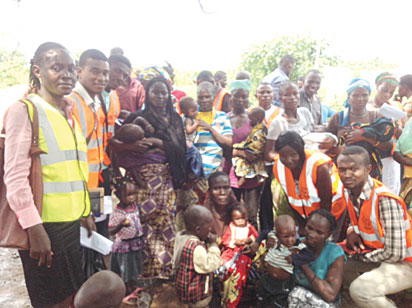
The authorities in Abuja have uncovered 358 Internally Displaced Persons (IDP) in the Federal Capital Territory (FCT).
FCT Minister, Senator Bala Mohammed, once boasted that his administration demolished 126,000 houses in Abuja thus leaving many people homeless, some of whom are the IDPs in a village.
Sunday Vanguard investigations revealed that the increase in attacks by the extremist group, Boko Haram, heavy-handed counter insurgency operations and inter-communal violence are reasons for the rise in IDPs across the country.

*IDPs … a people without home
The increasing attacks on border communities and the destruction of properties, businesses and farmlands have forced many inhabitants to flee their homes to nearby villages, towns and states.
The Director of FCT Emergency Management Agency, FEMA, Alhaji Idris Abass, in an interview with Sunday Vanguard, said the causes of IDPs are complex and often trigger significant challenges to government and philanthropists that wish to render support to them.
The FEMA boss said the agency learnt that the over 350 displaced persons have occupied an Abuja village for more than a month before the agency uncovered them, adding that it was an evangelist who informed FEMA about the IDPs.
“What we did was to first of take the figures of all of them in the camps, because the needs of the children are different from the needs of the adults and also the needs of the females are different from the needs of the males” he said.
“Now that we have the figures, we will now identify their immediate needs and call on stakeholders to join hands with us to ensure that we put them in good condition, rehabilitate them there; we don’t have the intention of moving them anywhere because they are already used to the environment. All we need to do is to improve on the environment that they are living pending when there would be time for them to go back to their various towns and villages”.
He said a number of the IDPs claimed they were from Liberia and living in uncompleted buildings, but had to move to the camps because the uncompleted buildings were either completed or demolished.
Abass said FEMA was concerned about ensuring there is no outbreak of disease in any form in the camps. “We are not talking of relief materials now. We are talking about the IDPs health. We have to ensure that the health facilities there can take care of women that are pregnant, the children that are born should also be taken care of”, the Director said.
“We are also talking to the Water Board and the FCT Millennium Development Goals, MDGs, to ensure that they have good water because in that place we are trying to prevent outbreak of epidemic”. He said Bala Mohammed’s administration was working assiduously towards catering for the needs of the IDPs.
On the size of the land occupied by the IDPs, Abbas said it was more or less like a village, adding that it was a settlement carved out from the village.
On how long the IDPs will occupy that village before they are resettled, the FEMA Director if they were displaced by outbreak of disease such as cholera etc, they could determine the next line of action but because their situation appeared to do with insurgency, “we don’t know when the insurgency will come to an end but as soon as relative peace returns to their environment, we are sure they will return because most of them will not like to stay elsewhere”.
Disclaimer
Comments expressed here do not reflect the opinions of Vanguard newspapers or any employee thereof.