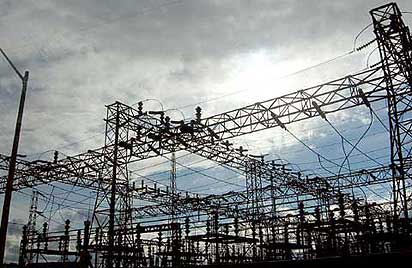
*A major power grid
“Power failure will be a thing of the past within six months.” Late Chief Bola Ige, Federal Minister of Power and Steel, June 1999.
It has become necessary to remind Nigerians that our unrealistic expectation about the Nigerian power sector is not a recent occurrence; in fact, it predated the Cicero of Esa Oke, as Ige was then known. Then, as now, the announcement prompted two responses from me. First, I went to Chief Ige and asked him to retract the statement as soon as possible. He refused. Then I went on my page to dispute the claim as being unrealistic. Yet Chief Ige was the last person I would have wanted to engage in public disagreement for some simple reasons.
I knew Bola Ige long before most people, including his wife and children knew him. My eldest brother, late Chief Sanu Sobowale and Ige were admitted to Ibadan Grammar School the same year and they finished the same year. Ige was known to their classmates as the Kaduna Boy, my brother was the Zaria Boy because our family lived in Zaria at the time. Ige sometimes came to spend time with the family.
The two classmates and friends later joined the Action Group on the same day and later went to read law – after reading different courses as undergraduates. In fact, Chief Obafemi Awolowo advised the two to read law. So, for me Ige was as much part of the family as anyone else.
But, by the time he became Obasanjo’s Minister in 1999, I was 55 and had nearly seven years of media experience behind me. It was, and still is, my cardinal principle that no public official would hoodwink the public by making claims which I know to be untrue. But, Ige was family. That was why I went to see him first; at my own expense. He received me well, calling me my nickname – Dele Ojuoto.
We soon got down to business. I asked him to retract the statement and he refused based on assurances given to him by the staff of the Ministry. I reminded him that the Ministry had never fulfilled its promises and they would not in December 1999 deliver Nigeria from power failure. Unused to arguments, Chief Ige, asked me to leave his office because he had no time for prophets of doom. My reply to him was simple.
“Egbo, I will be the happiest person to write that power failure became a thing of the past during your tenure as Minister. But, I think you are making a promise that will tarnish your image forever. Nigeria is so large that in six months time you would not have toured one quarter of the power establishment nationwide.”
He offered to pat for my travel expenses, but I declined it because as I told him, “I am honour bound to tell Nigerians that they should not go and sell their generators on account of your promise.”
As we enter the first month of 2014, millions of Nigerians are again making the mistake of thinking that privatization of the power stations will bring instant relief from incessant power failure. Some even imagine that the recent setbacks will soon be sorted out and increased power supply will be enjoyed. Nothing can be further from the truth. And, it is dounbtful if any of the companies which now control the power sector can promise uninterrupted power supply in the near future.
Commentators on the 2014 budget had tried all they can to provoke public outcry against the N860 million the Federal Government had budgeted for generator fuel for the offices of the President and Vice-President. Frankly speaking, the criticism is totally misplaced. The Federal government, more than any other stakeholder is aware of the obstacles facing the private owners of our distribution units.
Just as it is trite law that “you can’t give what you don’t have”, the distribution companies cannot distribute power that is not generated. The Achilles’ heel of our power sector remains generation. As long as we generate less than 10,000MW per day consistently, there is very little that the distribution companies can do.
Meanwhile, the constraints preventing Nigeria from generating and distributing 10,000MW remain largely unaddressed. Out two hydro-electric power stations, Kainji and Shiroro, are aging and their capacities cannot be expanded. In fact, prolonged drought in the north could sharply reduce their contributions to the national grid. The stations using gas also face multiple challenges.
Among these are regularity of supply, vandalism, wild cat strikes and also aging turbines. The Egbin Station in Lagos State serves to illustrate the point we are making here. The station is situated hundreds of hostile miles from its sources of gas supply. Damages, inadvertent or deliberate, almost invariably reduce power generation and supply. The privatization arrangement has not touched any of these problems and they will not soon be solved in order for the distribution companies to satisfy consumers with uninterrupted power supply.
Unfortunately, power supply is not the only problem facing the distribution companies. Finance is just as crucial. Virtually all of them are discovering that they need more funds than they assumed at the start and revenue collection is a greater challenge than they imagined. Unlike the Federal government, which could owe for gas for months and still obtain supply, the private companies must pay promptly or be refused gas supply. Yet, from reports reaching us, they are experiencing difficulties collecting revenue from consumers. They will soon face two additional problems.
Hitherto, consumers have paid estimated bills – even when they are called “crazy bills”. But, Power Holding Company of Nigeria, PHCN, National Electricity Power Authority, NEPA and ECN before both, were protected from law suits by law from aggrieved consumers. It is doubtful if consumers will continue to pay against estimated bills for much longer than middle of this year. That means that the private companies must very quickly supply millions of new metres to replace condemned old metres or face a consumers’ revolt. That would mean billions of naira in investments for which some of them might not be prepared.
The point needs to be made to Nigerians that we need to exercise patience with the private companies. The nation had taken the right step by starting to privatize its power sector. On the whole, the private sector does a better job that the public sector on purely commercial ventures such as power. But, when the public sector had been in control for so long and the sector is so large as power, time is needed for the adjustments. We should encourage the companies to succeed – if not for any other reason than that we have tried government for almost hundred years and we saw the result – stagnation, corruption, poor service delivery and economic backwardness. We should not even contemplate returning to that situation which had been tried and failed.
Incidentally, I went to Abuja, on January 2000, six months after Chief Bola Ige made his promise to make power failure a thing of the past. After, the pleasantries, laced with anger on his side, I reminded him of his promise and asked him what would follow. The late Chief told me privately: “Ojuoto, I now have the greatest regard for you journalists. You were the first, but not the only one, to warn me against public servants. I was totally misled. Now, I know that it will require nothing less than five years to solve the problem – if at all it is solved.”
Visit: www.Delesobowale.com
Disclaimer
Comments expressed here do not reflect the opinions of Vanguard newspapers or any employee thereof.