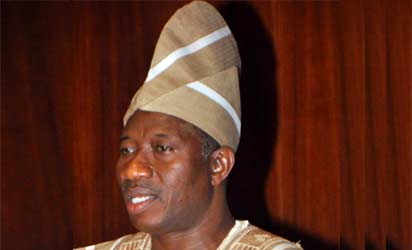
*Jonathan
By Femi Aborisade
Against the background of President Goodluck Jonathan’s setting up of a Committee to plan a National Conference, this paper seeks to examine the nature, character, prospects and limits of national conferences (whether National or Sovereign National Conference) in galvanizing socio-political change in Nigeria.
The stringent call for Sovereign National Conference in Nigeria may have been influenced, among other factors, by the 1989 Benin Republic’s National Conference. Here, a National Conference of civil society organisations successfully declared itself ‘sovereign’ in place of the then existing state power. The Conference overturned the Constitution, supplanted the authority of President Kerekou and spearheaded elections which brought in a new President.
Similarly, the National Conference of Congo was organized at the convention centre of Brazzaville under the pressure of mass movements by the then President of the Republic, Denis Sassou-Nguesso, in February 1991. The 1100 delegates represented civil society organisations including political parties, workers’ unions, professional organisations, religious denominations, as well as government representatives.
Thus, the success of the Benin Republic’s experience henceforth became the battle cry of opposition forces in other African countries, mainly in French speaking African countries but also in Nigeria, particularly since the annulment of the June 12, 1993 election and the murder in detention of the acclaimed winner, Chief MKO Abiola.

Jonathan
*TYPES OF NATIONAL CONFERENCE
National Conference may be broadly classified into three categories, namely:
1. (Non-sovereign) National Conference, which tends to be accommodative of the status-quo ante.
2. Sovereign National Conference, which tends to threaten the status-quo ante, and
3. Constitutional Conference
While the first type, that is, the (Non-sovereign) National Conference is subject to a higher authority and operates within limited scope, the second type, Sovereign National Conference, as the word, ‘sovereign’, suggests, is not subject to any higher authority. While the outcome of the first may strengthen the existing power structure, by rebalancing it on new but marginal basis, the second may supplant and sweep away existing order while heralding an entirely new order.
The third type, Constitutional Conference, as the name denotes, has a single specifically defined limited scope – making proposals for constitutional changes within the existing constitutional framework. It is thus, in essence, akin to the first type of conference, and may in fact be a subset of the first category. The idea of a constitutional conference refers to building or rebuilding the nation-state on democratic constitutions which define or redefine the driving rules and principles of political pluralism, the role of the state, citizenship rights and duties, protection of fundamental rights, including socio-economic rights, and so on. Each of the three types of conference is examined more closely below.
*CONSTITUTIONAL CONFERENCE
As stated above, the Constitutional Conference is concerned with the sole project of developing the constitutional framework. Nigeria has had a history of constitutional impositions. The constitution was either imposed by the colonial powers or the indigenous military juntas. Military dictatorships tended to introduce the Constitution unilaterally, either by public declaration or through a process of appointing a Constituent Assembly composed by handpicked individuals who put up constitutional proposals along lines dictated by their military appointers. Altogether, since 1914, Nigeria has experienced eleven constitutional experiments, including those brought about through sham constitutional conferences.
In all the constitutional experiments, the generality of the people were usually excluded. In other words, the constitutions have always been imposed. In addition, it is contended that a Constitutional Conference will be relevant where what is at stake is a mere constitutional lacuna. But in reality, the social crises in society require much more than mere marginal constitutional changes. The socio-political challenges tend to reflect deep contradictions which suggest the need for a completely new social order.
NON-SOVEREIGN NATIONAL CONFERENCE
An example of the Non-Sovereign National Conference in Nigeria’s history was the February – July 2005 National Political Reform Conference, NPRC, also referred to as the National Dialogue, which was established by President Obasanjo, without legislative consent . It comprised about 400 delegates who were handpicked by the President. The agenda of the Conference was delimited by the regime and included the following:
· Reform of the political party system
· Electoral reforms
· Judicial and legal reforms
· Civil Society reforms
· Police/Prison system reforms
· Intergovernmental relations
Indeed, there were also no-go areas or non-negotiable issues, which the Conference was ordered not to debate. They included:
· unity of the country;
· its federal character;
· federalism;
· multireligiosity;
· separation of powers, and
· Fundamental objectives and directive principles of state policy.
The Conference was merely consultative in nature. The Report of the Conference was submitted to the President. The President was to submit the Report to the national legislature, which could have used it as part of its sources of literature for legislative activity, if found useful. Indeed, the national legislature, at a stage, distanced itself from the Conference on the ground that it was put up without its consent.
The 2005 Conference was organised by President Obasanjo in the attempt to undermine the popular call by the opposition and pro-democracy movement for a Sovereign National Conference.
The coalition of opposition groups under the aegis of Pro-Sovereign National Conference
Group (PRONACO) validly rejected the Obasanjo conference for lacking popular support and falling short of popular expectations. The PRONACO thus organised an alternative conference, which the sponsors claimed to be sovereign, with powers to deliberate on all issues without ‘no-go’ areas. Organisations and ethnic groups were required to appoint specified number of representatives. The PRONACO conference produced a report, including a model constitution containing progressive provisions. But as it turned out, it lacked the capacity to implement or enforce its decisions and recommendations.
*SOVEREIGN NATIONAL CONFERENCE
This paper conceptualizes Sovereign National Conference, not as a tool to stabilise an existing system or regime, but as a transitional phase in the process of mass struggles to carry out fundamental system or regime change. Thus, it is conceptualized that resistance struggles under capitalism represent incapacity of the capitalist system to take society forward and reflect a striving, consciously or unconsciously, to carry out a socialist transformation of society. Within this understanding, in a revolutionary situation, the demand will not be for the convocation of a Sovereign National Conference; the challenge will be to goad the working masses to set up independent organs of political and economic control
of society. While political empowerment of the masses for a socialist reconstruction of society is the ultimate goal, that goal cannot usually be attained overnight. It will generally be necessary to raise democratic demands that can exhaust the democratic limits of the existing regime or system. Based on their own practical experiences, the masses may then come to the conclusion that their interests can no longer be protected unless and until they seize state power.
The slogan of the Sovereign National Conference is thus useful in a semi-revolutionary situation in which the existing regime is incapable of solving economic and political problems and is too weak to assert its authority; but the democratic opposition forces are equally not strong enough to effect instant regime or system change. The Sovereign National Conference is a demand suitable in such a dual-power situation. It was such a dual power situation in February 1990 that compelled Kérékou to convene a Sovereign National Conference to reconsider
the country’s political future. The Sovereign National Conference became the instrument for political transformation to a new, multiparty regime, which became the model for all of Francophone Africa. A similar context played out in Congo Brazaville. Sassou initially resisted the convocation of a conference. When he finally conceded, he sought to keep the Conference under his control. But opposition forces succeeded in wresting control from Sassou’s supporters. The Conference established an interim government, developed the framework for a new pluralist constitution and drew up a timetable for elections under a new regime.
The foregoing shows that the nature, character, capacity, competence, relevance and legitimacy of the Sovereign National Conference to chart a new course of history depend on concrete contexts in individual countries. Just as a competent physician may hardly make a single prescription for all ailments, the Sovereign National Conference is equally not an idea that is automatically suitable in all political situations and at all times, contrary to the impression being created in certain circles within the opposition and pro-democracy movement. The relevance of the Sovereign National Conference depends not only on the state of the economic crises from time to time, but also on the balance of political forces – that is, the ripeness or otherwise of the subjective and objective factors.
In the Nigerian situation, opposition and pro-democracy forces may justifiably, from time to time, resort to the call for Sovereign National Conference to take the Nigerian society forward. The existing economic and political structures appear incapable of holding the Nigerian society together on a peaceful, orderly and just basis. Constitutions have always been imposed on Nigeria; the people have never had any input in constitution-making.
Things appear to perpetually fall apart in Nigeria as presently constituted. Material poverty, stupendous corruption in the midst of abject poverty, opulence of a few in the midst of stark starvation, high unemployment levels, religious intolerance, political and socio-economic Boko Haram, kidnapping for ransom, armed robbery, frequent bomb explosions as a product of disaffection and disillusionment, pervasive insecurity, all indices of a breakdown in the social fabric of society have attained unprecedented degrees. In the face of these realities, there appears to be every justification for a platform such as the Sovereign National Conference that will bring together elected representatives of the fighting working people and the poor to deliberate on the future of the country.
But it is important that the Sovereign National Conference is not conceived as an assembly of ethnic nationalities. The Sovereign National Conference should be conceived as an assembly of elected representatives of organisations in which people are actively engaged, economically, politically, socially, culturally, and so on, to ensure and influence their continued existence and social interaction.
There are also are other realities such as economic categories or class stratification, gender, religion, age, vocational and professional variations.
Disclaimer
Comments expressed here do not reflect the opinions of Vanguard newspapers or any employee thereof.