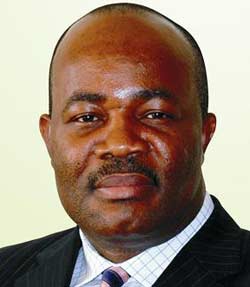
*Akpabio
This is the concluding part of this piece. The second part was published Monday.
THEREFORE, the assertion of Governor Godswill Akpabio that the sacking of Umana O Umana was to protect the Constitution was a constitutional blunder.
Although his Commissioner for Information, Mr. Aniekan Umanah, avers in the said advertorial that the Governor sought advice from relevant electoral and constitutional experts and that the governor was duty bound by his Oath of Office to defend the Constitution (which include the provisions of the Electoral Act which forbid public officers from declaring for electoral offices while still in office), we have gone through the entire 158 Sections of the Electoral Act as Amended on December 29, 2010, there is no single section of the said Electoral Act (as Amended) that deals with disqualification of a candidate to the office of a Governor of a State on grounds of non-resignation from public office.
We wonder and our wonder knows no bounds what kind of constitutional and electoral experts that the governor consulted before making such a public statement which is at variance with the provisions of the 1999 Constitution and as interpreted by the Court.
Constitutional slip-up
We do not know whether the office of the Attorney General in the Ministry of Justice had an input in this constitutional slip-up by the Governor. The Governor, therefore, goofed on the reasons he advanced for the sack of Umana O. Umana.
It is pertinent that before the Governor or any other government official makes categorical statements on constitutional matters they should seek the advice of constitutional experts so as not to reduce the office of the Governor of a State and the Attorney General to the status of a mere neophyte on matters to which our Courts have judicially pronounced on.
As was stated earlier, the Governor has the power to hire and fire the SSG. However, the modus operandi through which Umana O. Umana was sacked calls for concern under the democratic ethos. The State Security Service (SSS) sealed off the office of the former SSG and locked out the permanent secretary in the office of the SSG.
The question is whether it is part of the duties of the SSS to seal offices of political office holders when they are being removed or sacked by those who appointed them. Section 1(c) of the National Security Agency Act, Laws of Federation 2004 Cap N74, established the State Security Service (SSS).
Section 3 of the said Act clearly spelt out the responsibilities of the State Security Service (SSS) as follows:
“Section 3 The State Security Service shall be charged with responsibility for:
a.The prevention and detection within Nigeria of any crime against the internal security of Nigeria
b.The protection and preservation of all non-military classified matters concerning the internal security of Nigeria: and
c. Such other responsibilities affecting internal security within Nigeria as the National Assembly or the President, as the case may be, may deem necessary.
From the stated responsibility of the SSS under the National Security Agency Act, it is not the responsibility or duty of the SSS to seal the offices of political office holders and prevent the appointees from entering their offices. The use of SSS in the Umana O. Umana saga was averse, arbitrary and a crass abuse of power, which is a dangerous to our democracy. If His Excellency Governor, Godswill Akpabio wanted to remove the former SSG from office, he could just serve him a notice of removal without resorting to the use of SSS and that could have sufficed.
Ukutt practises law in Lagos
Disclaimer
Comments expressed here do not reflect the opinions of Vanguard newspapers or any employee thereof.