By EMMAN OVUAKPORIE
FIFTY companies that submitted papers but refused to appear before the Hon Farouk Lawan led investigative Panel on Fuel Subsidy Management and those that out rightly ignored the invitation of the panel may be the first to face the firing line of anti-graft agencies on their level of culpability in the fuel subsidy regime.
Their appearance or non-appearance, did not, however, stop the committee from asking them to make refunds.
In its recommendations, the Ad-hoc Committee recommended that they should be investigated by law enforcement agencies and all the anti-graft agencies.
Of the fifty companies, five companies submitted papers but did not show up during the public hearing they include:
1. Maizube Petroleum Ltd, Mercuria Global Energy,. Momats Oil and Gas, Nupeng Ventures Rainoil Ltd, The other forty five companies that refused to submit papers and ignored the panel to defend their level of involvement in the fuel subsidy bazaar include: Aquitane Oil, Bodej Investment Cadees Qil and Gas, Carnival Ltd, Colbert Energy, Crusteam Nigeria, Delmar Petroleum Co, Fargo International Ltd, Fargo Petrol and Gas Ltd, Grand Pet. And Chemicals, Ice Energy, Index Petroleum Africa, Mezcor S.A, Meglams Oil and Gas, Mut-Hass Petroleum Ltd, Nepal Oil and Gas Service Oilbath Nigeria, Practoil Nigeria, Oilforce Nigeria, Ronad Oil and Gas West Africa Ltd, PVN Capital Ltd, Supreme and Mitchells Oil Ltd, Port Harcourt, Tahil and Tahil (Nig.) Ltd, Techno Oil Ltd, Tempo Energy Nig. Ltd, Tridax Oil and Gas Ltd, Vitcam Services Ltd, Viva Energy Ltd, Zalex Energy Resource Ltd, Xalom Petroleum Ltd, July Seventh Oil Ltd, Zamson Nig. Ltd, Somerset Energy Services, Stonebridge Oil Ltd, Mobil Oil Nigeria, AX Energy Ltd, CAH Resources Association Ltd, Crust Energy Ltd, Fresh Synergy Ltd, Ibafon Oil Ltd, Lottoj Oil & Gas Ltd, Oakfield Synergy Network Ltd, Petro Trade Energy Ltd, Prudent Energy & Service Ltd, Rocky Energy Ltd.
Speaking with journalists on the report last week, Lawan said the anti-graft agencies have been urged to commence immediate investigations on the level of culpability of the companies involved in the fuel subsidy scam.
The report recommended that those who refused to appear before the panel are to refund various sums of money including the Petroleum Products Pricing Regulatory Agency, PPPRA.
The breakdown is as follows:
Companies that refused to appear before the panel – N41, 936,140,005.31; and
• PPPRA’s excess payment to self – N312, 279,000,000 bring the total money unlawfully collected by the agencies and others to N1, 067,040,466,171.31.
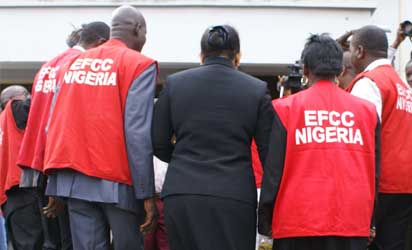
The EFCC had told the Vanguard immediately the eight-man Lawan led Ad-committee concluded its public hearing that all the companies involved in the collection of oil subsidy from the Petroleum Support Fund. PSF were already being investigated.
Press Briefing on ad-hoc committee findings
The presentation of the report by Lawan Farouk-led committee may have reduced the apprehension among the citizenry that some powerful forces were set to scuttle truncate the report.
Rep Lawan who doubles as House Chairman Committee on Education however did not mince words last Thursday during the House weekly press briefing when he said “there were tremendous attempts from government quarters and colleagues who wanted the report tilted to favour certain people and organizations” but we felt that it would be better for us to channel resources from the sector for the betterment of the generality of Nigerians rather than a few of us.”
Lawan said, “What we did is to look at 2009 till 2011 when the fuel subsidy started skyrocketing into billions because as at 2008 the fuel subsidy was just a little above 200billion and the companies involved then were only 20.”
“So we dug from 2009 where there was a proliferation of companies as we needed to limit ourselves because of time to ensure we do a very good work.”
“There were so many pressures from government officials and marketers who wanted to reach us through some of our colleagues. If we have compromised we wouldn’t have had the courage to ask them the questions we asked them.”
He, however, dismissed initial media reports by some newspapers alleging that the committee doctored the report before it was laid before the House.
“The report has revealed a lot of things, and we extended the scope of our investigation”’ said Lawan, stressing that “we are asking Mr President to reorganise the Federal Ministry of Petroleum Resources”, considering the spate of corruption revealed during the probe.
The committee also asked the Presidency to dissolve the Board of NNPC and PPPRA in the bid to sanitize the sector.
He maintained that there is “no need for importation of petroleum products for local consumption, if NNPC can effectively manage the local production stressing that government was losing too much money granting licence for importation of petroleum products.”
The legislator explained further that the escalation of money spent on fuel subsidy manifested when the committee resolved to extend the scope of the investigation to 2009. He added that the committee discovered proliferation of companies that participated in the subsidy rose during the period under review.
“If we decided to go to 2005 it will take us more time considering the expectations of Nigerians,” he added.
On the success recorded, Lawan stated that there was no quarrel among the eight member committee throughout the exercise “and none of us have any previous dealings in the sector.”
Asked how much was spent to conduct the investigation, Lawan said next to nothing was spent as they dedicated themselves towards performing a national duty.
Position of the House
Zakari Mohammed, the House Spokesman insisted that, “immediately the Report is adopted by the House; we will make sure it is strictly adhered to by the executive arm.”
“We will use all our legislative powers to ensure that after adoption the report sees the light of the day.”
Asked how the legislative arm can achieve this, Mohammed said, “we are ingenuous, the executive arm will come to us also for certain things and we can use this report as a pre-condition and tell them that let this be done or we won’t do certain things that you are requesting us to do.”
The report is coming a few days when President Goodluck Jonathan requested for an amendment to the Appropriation Act , 2012.
In a letter to the Speaker, House of Representatives, Aminu Tambuwal, it was stated that his request was based on the increase in the oil benchmark by the parliamentarians to $72 per barrel from the $70 per barrel upon which the 2012 proposal sent to the National Assembly was premised.
In the request, the President wants the National Assembly to alter the appropriation to the Amnesty Programme with the most notable being the request for the increase allocation for “reintegration of Niger Delta ex-militants from N924 million to N45.2 billion naira.
Jonathan told the lawmakers of the deficiency caused in the budget through the increase in the oil benchmark on the revenue expected to accrue to the Niger Delta Development Commission ,NDDC, and the Universal Basic Education ,UBE, which depends on percentage from the National budget to arrive on what should be given to them.
“You may wish to recall that the original 2012 Budget was predicated on a benchmark price of $70.00pb, while the passed budget has increased it to $72.00pb. As you are aware, the allocation to NDDC and UBE under the Statutory Transfer are normally computed as a percentage of the revenue accuring to the Federal Government.
“The increase in the benchmark price of crude oil from $70.00pb to $72.00pb requires that the allocation to these Agencies be adjusted to reflect the increment. It appears that the Appropriation Bill inadvertently retained the old figure thereby resulting in a shortfall of N1.91 billion for NDDC and N1.97 billion for UBE. I therefore, seek your cooperation to adjust these allocations to reflect the higher benchmark price.
“The Subsidy Re-investment Programme (SURE-P) was designed specifically to address the infrastructural challenges as social safety net. In order to monitor the implementation of the programme, a Board was set up to monitor the implementation and report on its progress.
“The 2012 Appropriation Bill did not separate the SURE-P from the rest of the Budget. I therefore, seek your cooperation to reflect it separately in the Bill to make it easier for the Board to effectively perform their monitoring mandate.”
In his request for the change in allocation to the amnesty programme, President Jonathan stated that the request was borne out of the need for release of more resources for the implementation of the core aspects of the programme as against the cost of administering the programme.
In his request for readjustment, the President requested for a reduction in Overhead of “stipend and Feeding Allowance” under the programme from N48.2 billion to N20.7 billion” increase in Re-Integration of Niger Delta Ex-Militants from N924 million to N42.2 billion, reduction of “Operations Cost of the Programme from N16billion to N3.1 billion” while allocation for Reintegration of Transformed Niger-Delta Ex-Militants (2010 Arrears) put at N4.1 billion was scrapped totally.
However, a subhead “Reinsertion/Transition Safety Allowance which had zero allocation was asked to be allocated the sum of N924 million.
This letter could just be the first negotiation meeting point between the House and the Presidency on the fuel subsidy report.
The House could have taken this position pending when the report is considered by the legislators.
But the views of 360 members of the House consisting mainly of green horns who are just having the feel of politics might just change things.
Nigerians had seen so many reports in the past but they were slaughtered at the very last minute and rested forever.
Disclaimer
Comments expressed here do not reflect the opinions of Vanguard newspapers or any employee thereof.