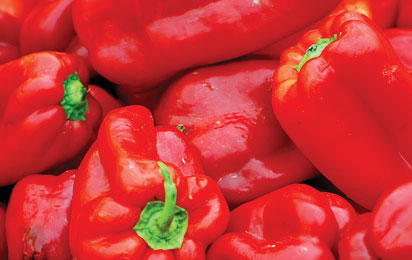
File image.
By Funke Oshifuye
Bell pepper, popularly called “tatase” is that ingredient that gives colour to our stew. Without it, that red colouration of our stew that makes it attractive is absent. For people that do not know, bell peppers are not ‘hot’. The primary substance that controls “hotness” in peppers is called capsaicin, and it’s found in very small amounts in bell peppers.
Higher heat cooking can damage some of the delicate phytonutrients especially the flavonoid called luteolin in bell peppers. In one recent study from Turkey, the effects of grilling on sweet green bell peppers were studied with respect to one particular phytonutrient. It’s a lot better to cook your peppers using lower heat for a very short period of time.

It is so amazing that this vegetable is very low in fat. One cup of sliced bell pepper contains a total fat of less than I gram. However, this very small amount of fat is enough to provide a reliable storage spot for bell pepper’s fat-soluble nutrients, including its fat-soluble carotenoids and vitamin E.
Bell pepper is a very good source of vitamin E. A cup contains about 1.45 milligrams of vitamin E, and it contains more than 30 different carotenoids, including excellent amounts of beta-carotene and zeaxanthin. Both of these carotenoids provide antioxidant and anti-inflammatory health benefits.
Bell pepper is also an excellent source of vitamin C at 117 milligrams per cup. (That’s more than twice the amount of vitamin C found in a typical orange.) If you want to maximize the availability of vitamin C and carotenoids from bell pepper, allow this amazing vegetable to ripen.
Recent studies have shown that the vitamin C content and the carotenoid content of bell pepper both increase with ripening. When the vitamin C and carotenoid content of bell peppers increases, so does their total antioxidant capacity, which can be a source of great health benefits.
Just one cup of sweet green bell pepper slices provides us with 314 micrograms (combined) of the carotenoids lutein and zeaxanthin. These two particular carotenoids are found in high concentrations in the macula of the eye (the centermost part of the retina), and they are required for protection of the macula from oxygen-related damage.
Routine intake of bell peppers can, in effect prevent age-related macular degeneration, or AMD, (a condition in which the macula of the eye can become damaged and vision can become lost) due to their strong antioxidant benefits. Bell peppers also contain potassium, vitamin K, molybdenum manganese, magnesium, and vitamins B1, B2, B3 and B5 in large amounts.
Disclaimer
Comments expressed here do not reflect the opinions of Vanguard newspapers or any employee thereof.