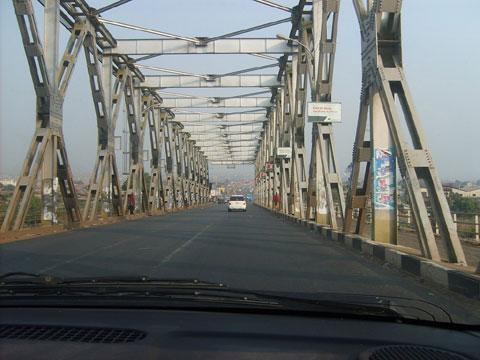
Niger Bridge
By MICHAEL EBOH, FAVOUR AGBI & OLABISI MOSHOBA
The International Finance Corporation, IFC, a member of the World Bank Group, has said it will finance the construction of the second Niger Bridge.
The IFC in a statement made available to Vanguard, said its decision to finance the project is coming on the heels of a request by the Federal Government of Nigeria to that effect.
The IFC also said that it will provide advisory services for a new public-private partnership to build a hospital in Cross River State.
Speaking at the opening session of the Africa Regional Public-Private Partnership Conference, sponsored by IFC, the World Bank’s Public-Private Infrastructure Advisory Facility, and Nigeria’s Infrastructure Concession Regulatory Commission, in Lagos, Jean Philippe Prosper, IFC Director for Eastern and Southern Africa, said the financing of the second Niger bridge is in realization of the fact that Africa requires more than $90 billion annually in investment in maintenance and new projects, but is spending less than half of that.

Niger Bridge
According to him, well-structured Public-Private Partnerships in physical and social infrastructure are a priority for IFC because they can help African governments raise the large sums of capital required to meet infrastructure needs in energy, health, logistics, transportation, and water and sanitation.
Prosper said the IFC Advisory Services mandate will help the Cross River State government identify a private company to build and operate a new hospital.
”It builds on a successful mandate IFC received to help the government of Lesotho attract a private investor to build a world-class hospital in Maseru that opened in October. IFC will also consider the feasibility of a public-private partnership that would lead to investment for a second Niger River bridge crossing,” he said.
Also speaking, Yolande Duhem, IFC Director for West and Central Africa said, “There is a large body of economic research that shows infrastructure investment results in more growth and poverty reduction. We thank the Public-Private Infrastructure Advisory Facility, PPIAF and the government of Nigeria for working together with IFC on this conference to promote these important partnerships.
“The impact of the infrastructure deficit is enormous. The World Bank, for example, estimates that the Nigerian manufacturing sector must bear additional indirect costs amounting to 16 percent of sales because of bottlenecks in the business environment, much of it related to infrastructure. Losses due to power outages alone amount to 10 percent of sales.”
Disclaimer
Comments expressed here do not reflect the opinions of Vanguard newspapers or any employee thereof.