By Apollos Ibeabuchi Oziogu
In Nigeria, abundant hair on a woman’s head is a sort of pride and dignity. A long and abundant hair of a woman is a sort of power of sexual attraction, thus, in the past, if not to the present, Nigerian women show great care and concern for hairstyling to enhance their beauty and flesh out their relevance and value in the society.
Hair is the beauty of every woman. Abundant hair on a woman’s head is considered one of the major attributes of feminine beauty, and this concept has been as old as the world.

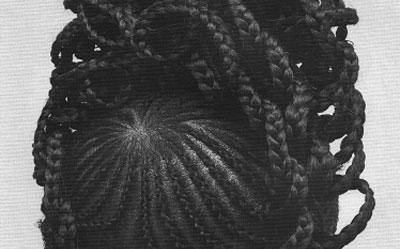
Samples of Traditional Hairstyles
A long hair on a woman’s head is a thing of pride, honour, glory, joy and blessing which God has given her as a covering. The Bible encapsulates it as follows: “But wearing long hair is a woman’s honour. Long hair is given to the woman to cover her head” (1 Corinthians 11 :5, WTBC; RBV).
The early Jews showed much affinity or held a great value for woman with long hair on her head. But they subjected someone, both man and woman who had little or no hair on his or her head to untold suspicion of suffering from leprosy.
In Nigeria also, a woman, who does not have a sizeable amount of hair on her head is usually looked at with repugnance and revulsion. Thus, such a woman with little hair does not feel cozy and gratifying.
The problem of a woman with little hair on her head is further compounded by the infestation of troublesome minute insects and mite on the head. Again, certain experience of abnormal conditions like hair dryness, and hair dullness, caused by physical and chemical agents is an added problem to women .
As a result of these debilitating factors enumerated above and perhaps more, a woman therefore does her utmost best to jealously guard her hair against hair dryness, hair dullness, hair infestation, and to adequately groom, nurse and beautify her hair through the process of hairdressing.
Hairdressing among women simply means the process by which a woman takes much care, time and resources to beautify, adorn and decorate her hair with choice style as well as protect it from diseases of all kinds.
Generally, hairdressing is a process employed in lending greater beauty to the hair of the head which includes colouring, cutting, setting, curling, performing, bleaching, dyeing, powdering, shampooing, brushing, waxing of the hair and the addition of false hair such as a wig, a fall, a headdress or other special adornments.
Hairdressing has been practised universally right from the prehistoric times by various peoples of various civilizations with various hairstyles for various purposes and ceremonies.
The ancient Egyptian women curl their hair and hold it in place with hair pins. They make long black wigs from sheep’s wool or woman hair and they often use dye to decorate their wigs with stripes. There are three main hairstyles prevalent among the ancient Egyptian women:
First, the hair is divided into numerous locks or tresses, each thickly plaited. Second, the hair is divided into numerous long parallel braids, grouped into two masses, the smaller falling in the front of the shoulder while the larger, behind.
Third, the hair is divided into two broad and flat braids,one on each side of the head, the back hair being cut short. The ancient Greek women too dress their hair elaborately.
They part their hair in the centre of the crown; bring it down over the temples, and carry the two divisions toward the back, then fastening them over the point where the part begins or tying them into a tuft or knot on the back of the head.
They wear wigs also, The Hebrew women themselves wear long hair .Their hairdressing includes curling and plating. It could be century AD, Jewish women crop their hair at marriage and wear sheitels or wig, a custom being practised by orthodox women. The Roman women are not left behind they wear blond wigs. They too dye their hair but sprinkle it with gold dust.
In Nigeria, abundant hair on a woman’s head is a sort of pride and dignity. A long and abundant hair of a woman is a sort of power of sexual attraction.
Thus, in the past, if not to the present, Nigerian women show great care and concern for hairstyling to enhance their beauty and flesh out their relevance and value in the society.
Apart from grooming of their hair and protecting it from diseases, women thus adopt varieties of hairdos for beautification, decoration and adornment.
They pleat, plait, and top-knot as well as apply some extraneous objects in form of elaborately carved woods or ivory combs, strings, beads, cowries and wigs of human hair. There are however special hairdos for special occasions and for special cases like birth, marriage, burial, initiation to cults or societies and age-group etc.
Symbolic hairstyles
Indeed, in the past , various symbolic hairstyles, designated for special cases and for special classes of people in the society. For example, there was a symbolic hairstyle, designated for spinsters, unmarried women, elderly women or women who passed child – bearing age and childless women among others.
A childless woman coated her head thickly with camwood-paste and stuck cowries into it, aimed at bringing out the message of her case nearer home to the public.
Cowries were regarded as a symbol of fertility, and so when a childless woman wore this type of hairstyle in the olden days, the message was vividly understood by individual members of her community.
In such a situation, all good-spirited elderly women and men would always give her words of encouragement and blessings, each time she came in close contact with them.
Again, women that were about to have a child also had their own kind of hairstyle, so also those who had passed the child-bearing age or who committed abomination in the community. In the past too, there was a special hairstyle for the grief-stricken or mourning women or widows.
Disclaimer
Comments expressed here do not reflect the opinions of Vanguard newspapers or any employee thereof.