Stock image
By Funmi Olasupo
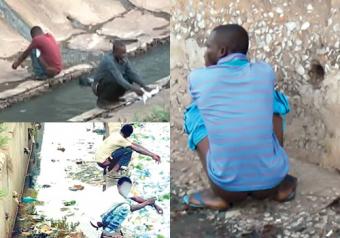
Recently, the first ‘State of the World’s Toilets’ report by WaterAid uphold the fact that Nigeria is one of the most failing countries in the world on access to proper hygiene and sanitation.
Also, data has shown the worsening trend in Nigeria with a disheartening and steady decline in the number of people with access to improved sanitation facilities and an increase in Open
Defecation (ODF) in urban areas, the number of people defecating in the open has more than doubled over the past 25 years.

The body in a workshop organised to train members of the press on WASH Media Network sanitation in Otukpo, Benue State recently, maintained that it is commitment to ensure that women and girls who are more vulnerable have full access to water, sanitation and proper hygiene most especially at the their menstrual period.
However, it engulfs a lot of risks for women and girls around the globe where millions of girls and women carry the responsibility for collecting water for their families.
It cost women and girls in the rural areas who do not have access to potable water to travel very far to get water for their families and for domestic use.
Most women and girls in the villages go very far as it takes them hours of their time everyday, preventing them from going to school, earning a living and spending quality time with their families.
In a presentation at the workshop, the RLCC WaterAid West Africa Clarisse Baghnyan, who spoke on Menstrual Hygiene which is a woman’s monthly bleeding, said when a women menstruates, her body sheds the lining of the uterus (womb).
She explained that the natural process linked to the reproductive cycle of girls and women and a biological process just like defecation and urination should not be abuse either by societal belief or the lack of basic amenities to keep the woman or the girl clean.
She said, “Articulation, awareness, information and confidence to manage menstruation with safety and dignity using safe hygienic materials together with adequate water and agents and spaces for washing and bathing, disposal with privacy and dignity.
“Is not just the production and distribution of sanitary pads or hygiene education on its own, rather, the combination of all three dimensions is essential for ensuring that girls and women are able to break taboos and demand adequate facilities for Menstrual Hygiene Management (MHM) that suit their needs.”
She maintained that MHM is not just about the management of the menstrual period but also the need to address societal beliefs and taboos surrounding the issue Menstruation.
Explaining further, Clarisse stated that females menstruate for approximately 3000 days (8 years) during their life and they need water to wash their body and materials used,
“Proper disposal of used materials in a safe and dignified way, yet, there is no mechanism for the international community to track this issue, and menstruation is surrounded by stigma, silence and taboo.”
On the impact of lack of menstrual hygiene for women and children in the rural communities and even in public schools on education, statistics has shown that, in Benue, Bauchi and Plateau states respectively, about50% of girls in one school missed between 1-3 days of school days per month due to menstruation period.
To this end, menstrual hygiene requires access to accurate and pragmatic information, access to menstrual hygiene materials, and work with both genders (both Male and Female).
There should be adequate access to water and soap within a place that provides an adequate level of privacy for washing body, cloths and clothes, access to disposal facilities for used menstrual materials.
Disclaimer
Comments expressed here do not reflect the opinions of Vanguard newspapers or any employee thereof.