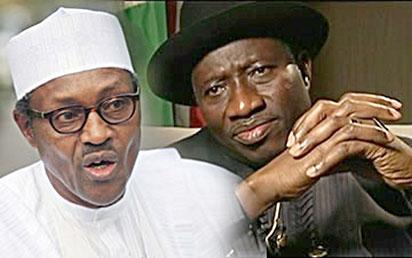
Jonathan-Buhari
By Obi Nwakanma
Whoever wins this forthcoming elections, will contend with profound challenges, and there is no doubt about that. Two of the critical challenges have to do with Nigeria’s economic security and the security of its homeland: the first, essentially, will be the challenges in grappling with massive revenue loss that might necessitate new, biting, austerity measures that will be a throw-back to the middle and late 80s.
The dip in global oil prices and its impact on Nigeria’s revenue profileis not the only problem Nigeria has to deal with going forward. There is the tricky situation of market loss – the market for Nigeria’s oil, according to experts in the oil trade, has dried up significantly. In the past, oil prices might fall, but there would still be demand for Nigeria’s oil, and sales – in spite of the shortfall- would fund our credits. This situation is different.
The United States, once Nigeria’s chief importer of oil, is now so flush with its own oil, so much indeed that it is talking now of exporting rather than importing. Since the oil embargo of the 1970s, the US oil production and strategic national reserve has never been flusher, particularly with its discovery of huge reserves of Shale oil. Nigerian oil exporters on the other hand have attempted to remedy this by shifting sales to the burgeoning Asian market – to China and India – two rising global behemoths.
 The problems is that the Chinese and the Indians are finding Angolan oil more to their liking. So, Nigeria is producing oil, but the market is shrinking. It is bound to shrink further, these experts say, with developments in alternative energy coming increasing on stream. These were scenarios built long ago for Nigeria’s policy makers and political leaders, which demanded that Nigeria made strategic long term investment like the Norwegians, and create rainy-day reserves that might shield it from the shock of inevitable revenue loss. Nigeria did not.
This is not to sound alarmist, but Nigeria is in for very difficult times ahead, and the winner of the coming election must better brace up to the fact and the dreary reality of these challenges. These facts of Nigeria’s dismal revenue prospects and its implications, and the ways and means either of the parties and the candidates aim to address them, should have been at the center of the current national political and electioneering debates. Neither of the parties, nor any of the candidates has however directly addressed this looming and quite serious situation; none of the parties seems ready with any fresh insight, or ideas, or any actionable blueprint that could guide the debate; Nigerians, including our journalists, seem rather totally obsessed with their various cults of personalities, and have refused in any of the campaigns to ask deep questions, and seek clear answers about the darkening plains of Nigeria’s political economy.
The projections are dire, I should report now, and it will be refreshing to get the Buhari or Jonathan campaign to answer this question: in the face of dire revenue forecasts, and in the stark prospect of a fragile purse, what means are available to this nation to stave-off a looming national economic crisis and a long recession? Nigeria steps into the second decade of the 21st century with a large millstone on its neck. With a fierce, terrorist onslaught at its borders and international waters, and increasing domestic insecurity, it seems to me quite clear that a deep recession will deepen the gloom and weaken Nigeria’s prospects of containing mass revolt. This possibility must be avoided, and it is imperative for the elected president to explore lateral and horizontal policies to stem a potential collapse of the state.
Here in sum are, in my view possible agenda for the new or incoming government. Nigeria needs a very revolutionary fiscal policy that would galvanize internal production, absorb our excess human capital, and stem the possibility of new, mass layoffs. A massive reform of Nigeria’s national education policy should, as a matter of urgency invest heavily in technical and craft education. It is imperative to rebuild Nigeria’s Technical Colleges, and upgrade the Polytechnics, and offer retraining possibilities to millions of University graduates who are currently unemployed. It is imperative to reform and re-orient the National Directorate of Employment (NDE).
This is one of the more brilliant ideas of the Babangida administration which did not live up to its possibilities. NDE is currently over-bureaucratized, and static. It is actually very busy doing nothing. But the NDE requires new imagination, and could be instrumentalized and used as the fulcrum to expand Nigeria’s national production capacity. The NDE should establish new field offices and partner local authorities to expand direct training programs; establish new modern workshops with contemporary tools nation-wide, and design new training programs, protocols, and business incubation platforms.
NDE should also design new, young business partnerships, start-ups, and young entrepreneur programs, and must get the banks to open up credit and loans schemes/facilities for these new businesses guaranteed by a Federal Loans program, while it provides strategic technical monitoring for growth. To put it plainly, the new government must have a radical work policy. It could review and adopt the model of the American “new deal.” Whoever wins this election must move quickly to stem the rising tide of discontent and despair, the result of multi-digit national unemployment. It is a far more dangerous threat to national security than Boko Haram.
To balance the compass of the Nigerian administration and its capacity to deliver real value, two important, strategic reforms must take place: whoever wins this election must embark on deep-level reform of the Civil Service and of the National Police Service. Civil service reform and Police reform are imperative on two critical levels: Nigeria cannot develop, or sustain development, without a highly skilled, modern civil service; nor can it establish clear law and order without a highly technical, well-led, properly educated, and properly-oriented National Police system.
Nigeria’s police service is colonial and antiquated, and its civil service, inefficient and decadent, and this is why we have serious corruption in the public system. The Civil service is the “thinking arm” of the state, andthe office of the Chief Secretary of State (Secretary to the Federal Government) is the engine house of government policy.
The capacity of that office must be expanded and strengthened; and I would, were I to have the ears of either man to be elected president, seek out and recommend a guy, by the name, Dr. Peter Ozo-Eson, currently SG of the Nigerian Labour Congress, as the secretary of state. Why? Because he has intellectual heft – he is a highly trained Economist, a specialist in international and domestic trade, with broad research and administrative capacities.
Whoever is elected President must look for Dr. Ozo-Eson.He must also review Nigeria’s Defence and National Security policies, create or expand the Research and Development Arm of the Ministry of Defence, and connect it to a national Research and Development platform or grid that would synergize national defence and national security with researches in Nigeria’s National Universities, Polytechnics, Research Centers and Institutes. Nigeria must quickly embark on the development of its own domestic national defence tools/equipment program, and save money, and reduce the corruption associated with international arms procurement, as well as create jobs for Nigerian designers, Technicians, and Engineers. Besides no nation, desirous and serious about its own freedom, can afford to trust or depend on another nation to supply its means of self-defence. This is imperative.
Disclaimer
Comments expressed here do not reflect the opinions of Vanguard newspapers or any employee thereof.